



Floral Marquetry Chairs
These floral marquetry chairs bring intricate timber inlay and botanical motifs into daily domestic seating.
Floral Marquetry Chairs
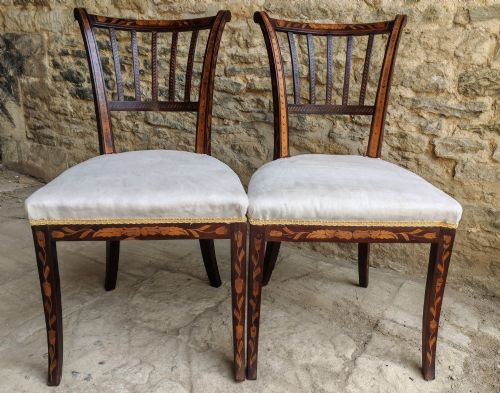
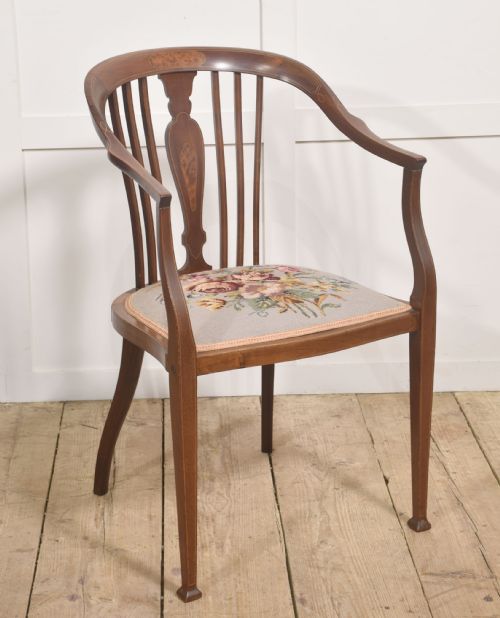
When you search for floral marquetry chairs, you encounter seating decorated with pictorial wood veneers arranged to form botanical and floral patterns. The inventory spans dining chairs, side chairs, occasional chairs, elbow chairs, and armchairs.
The pieces you meet most often on this page date from the 18th century through the Edwardian era, with strong representation from Dutch workshops alongside Georgian and 19th-century British interpretations.
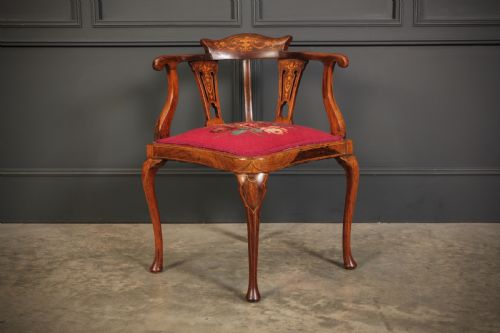
Forms range from high-back dining sets and corner chairs to tub chairs and salon armchairs, demonstrating how makers adapted elaborate veneering techniques to diverse seating functions over centuries of production.
How they were made
Craftsmen built the foundational frames of these chairs using timbers such as mahogany, walnut, beech, and rosewood, ensuring structural integrity for everyday seating. They then applied contrasting veneers to the surfaces to create detailed pictorial designs.
The floral inlay work relies on meticulously cut pieces of fruitwood, satinwood, and boxwood, sometimes shaded with hot sand to achieve naturalistic depth. Additional detailing on select examples incorporates brass elements and upholstered pads in fabric or needlepoint tapestry.
A solitary corner chair waits quietly to corner the market on botanical elegance.
What varies in quality
The distinction between standard and superior pieces rests on the precision of the veneer cutting and the complexity of the botanical composition. Finely executed marquetry displays tight joints between contrasting woods without excessive filler, rendering petals and leaves with sharp definition.
Structural harmony also dictates quality, separating robustly joined frames from those weakened by excessive timber shrinkage or clumsy historical repairs. The depth of the primary timber and the sophistication of the carved or shaped supports further elevate the standing of an individual chair.
The Floral Marquetry Chairs Glossary
- Marquetry
- A decorative technique where small pieces of veneer are assembled into pictorial designs and glued to a wooden carcase. This method transforms plain structural timber into an elaborate canvas of contrasting grains and colours.
- Fruitwood
- Dense timber harvested from fruit-bearing trees such as pear, apple, or cherry, prized for its smooth texture and even grain. Makers utilised these woods extensively in floral inlays for their subtle natural tones.
- Satinwood
- A durable tropical timber with a lustrous, golden sheen that catches the light. Craftsmen favoured it to highlight specific botanical details and provide bright contrast against darker background woods.
- Boxwood
- A pale, hard wood with a very fine grain used traditionally for delicate stems and light-coloured petals. Its density allows for extremely sharp cutting in intricate marquetry compositions.
- Carcase
- The underlying structural framework of a chair upon which decorative veneers and upholstered elements are mounted. The stability of this foundational structure determines the longevity of the piece.
Floral Marquetry Chairs: Frequently Asked Questions
Are floral marquetry chairs sturdy enough for daily use?
Most examples function well for regular seating provided the underlying frame remains sound and free from movement. Periodic checks of the joints help maintain stability.
Heavier dining chairs and sturdy armchairs handle daily duty better than delicate salon or occasional chairs, which suit lighter tasks.
How do I clean the wooden surfaces?
Dust the marquetry gently with a soft, dry cloth to prevent accumulation in the fine veneer seams. Avoid harsh chemical polishes that can degrade historical finishes.
Applying a traditional beeswax occasionally nourishes the timber and enhances the natural lustre of the contrasting fruitwoods and satinwood.
How can I distinguish 18th-century Dutch chairs from later revival pieces?
Early Dutch pieces often feature high, shaped backs and dramatic walnut frames with dense, naturalistic floral and bird inlay. The choice of native European timbers and heavier construction methods point to this earlier period.
Edwardian and Sheraton revival pieces typically utilise lighter mahogany or satinwood carcases with more stylised, symmetrical floral motifs characteristic of later manufacturing techniques.
How do I protect the veneer from damage?
Keep these chairs away from direct sunlight and strong heat sources such as radiators to prevent the delicate wood veneers from drying out and lifting. Stable indoor humidity levels preserve both the timber and the glue beneath.
Placing felt pads under the feet prevents dragging stress on the lower legs when moving the seating across hard floors.