



Floral Inlay Tray
A floral inlay tray brings botanical artistry to the table, combining natural wood marquetry or bone with practical serving design.
Floral Inlay Tray
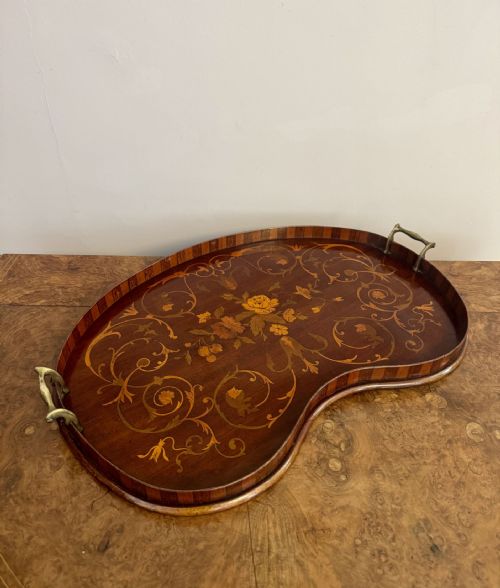
A floral inlay tray is a decorative and functional household object designed for serving or display. When searching for a floral inlay tray, you encounter pieces spanning from the eighteenth century through the Edwardian era.
Origins include British, French, Dutch, and Anglo-Indian traditions, often reflecting Victorian, Edwardian, and Rococo styles. These items serve equally well as tabletop display pieces or functional serving implements.
How they were made
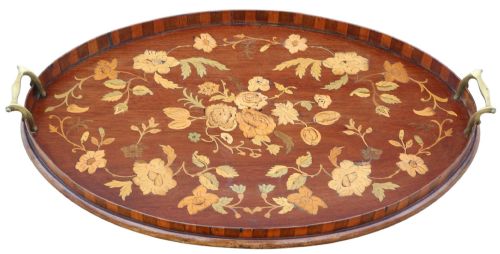
Maker's workshops employed cabinetmaking techniques utilising timbers such as mahogany, walnut, satinwood, and kingwood. Artisans cut thin sections of contrasting woods to create detailed floral marquetry patterns across the surface.
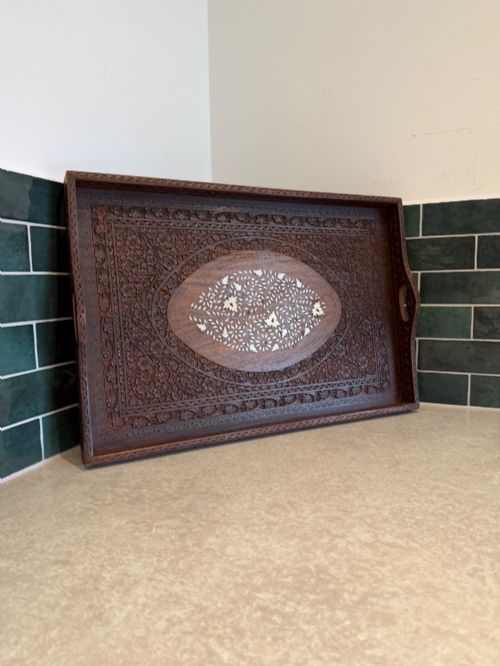
Alternative examples incorporate bone inlay or papier-mache foundations finished with lacquer. Surface decoration often includes botanical motifs depicting flowers and birds embedded directly into the timber base.
Floral Inlay Tray Retail Price Guide 2026
Typical asking prices for floral inlay tray among the pieces listed under this phrase on Sellingantiques today, from the lower quarter to the upper quarter. They describe what is for sale here now, not the wider market.
Current listings feature items from the 18th century, 19th century, and Edwardian period, incorporating materials like brass, mahogany, and lacquer.
What varies in quality
Structural integrity of the base and the preservation of the inlay define the upper tier of the range. Simpler papier-mache versions or plain mahogany examples sit at a different level of craftsmanship.
The Floral Inlay Tray Glossary
- Marquetry
- The art of forming decorative patterns by fitting together small pieces of veneer. This technique creates the floral designs seen on many trays.
- Kidney shaped
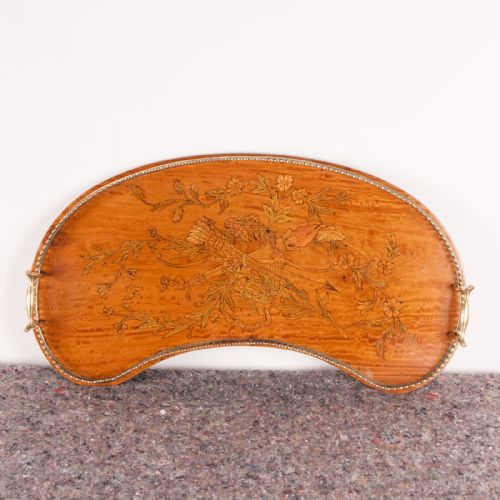
- A curved furniture form popular in Edwardian pieces. This contour makes serving trays comfortable to hold against the body.
- Papier-mache
- A composite material made from paper pulp mixed with glue and oil. Pressed and dried, it forms a sturdy dark tray base.
- Kingwood
- A dense exotic timber used for fine cabinetmaking. Its rich dark grain provides contrast in inlaid panels.
Floral Inlay Tray: Frequently Asked Questions
What were floral inlay trays used for?
These trays served primarily for carrying tea sets, beverages, or calling cards in formal domestic settings.
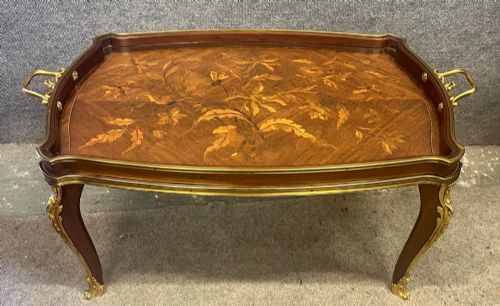
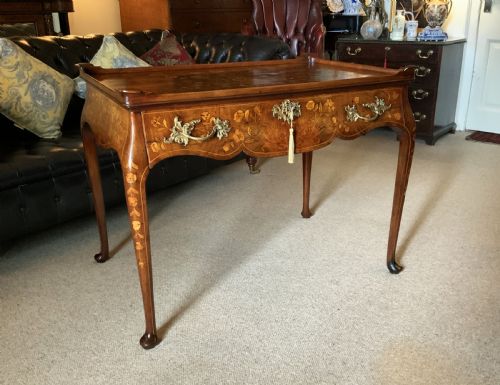
Over time, many found a secondary life as decorative display pieces or tabletop surfaces when mounted on stands.
How do I care for an antique tray?
Keep wooden and papier-mache trays away from direct sunlight and excessive moisture to protect the delicate surface veneer.
Apply a traditional wax polish sparingly to nourish the timber without damaging the inlay work.
How do I date a marquetry tray?
Examine the underlying timber, base construction, and the style of the floral motifs to establish the period of manufacture.
Edwardian pieces often feature satinwood and kidney shapes, while eighteenth-century examples display Dutch Rococo marquetry.
Can these trays be used as coffee tables?
Several examples are mounted on dedicated stands to function permanently as side tables or coffee tables.
Portable serving trays should be used with care on stands to avoid putting stress on the antique handles and edges.