




Floral Hearth Screen
These floral hearth screen pieces protect rooms from radiant heat while displaying needlework, tapestry, and cut glass across Victorian and Regency interiors.
Floral Hearth Screen
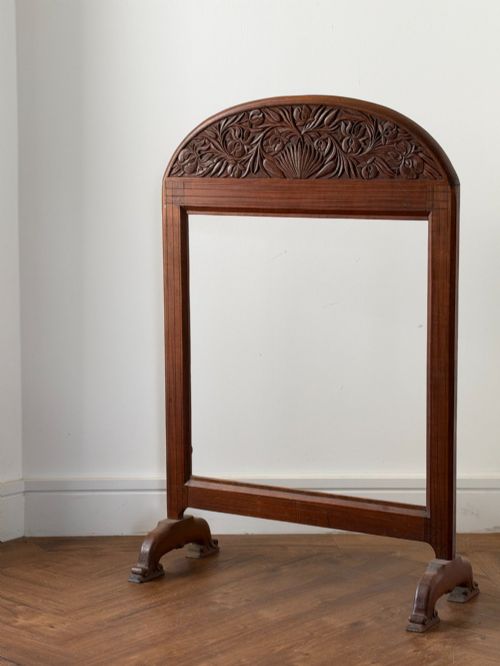
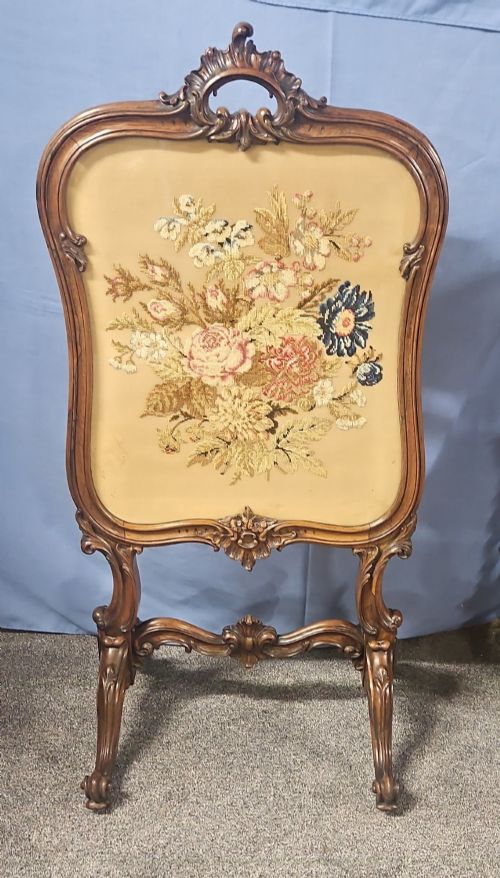
A floral hearth screen serves as an ornamental barrier placed before an unused fireplace, combining practical draft or heat management with decorative textile art. When exploring a floral hearth screen, buyers encounter both standing frame designs and adjustable pole screens featuring central panels.
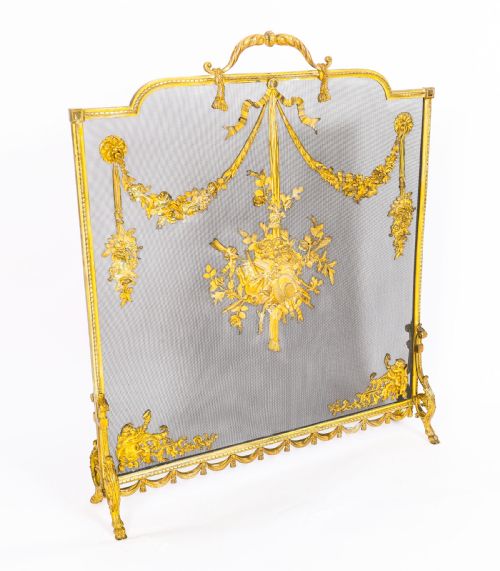
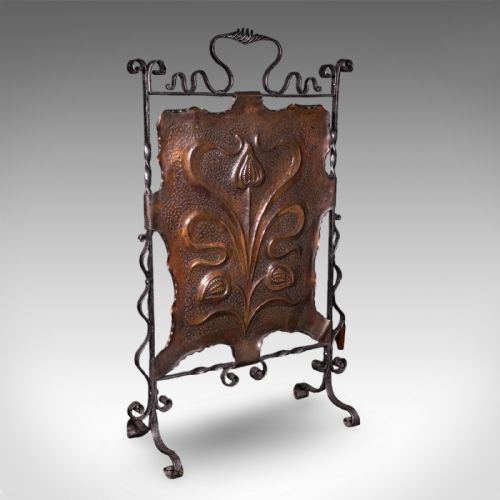
The selections here span the Victorian, Regency, and Art Nouveau periods, taking the form of fire screens and fireplace reflectors. Woods such as rosewood, mahogany, walnut, and satinwood appear alongside brass, copper, and wrought iron frames.
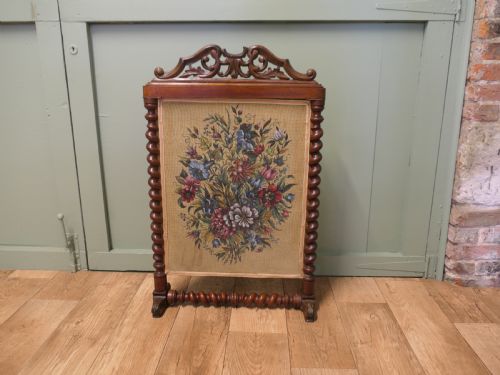
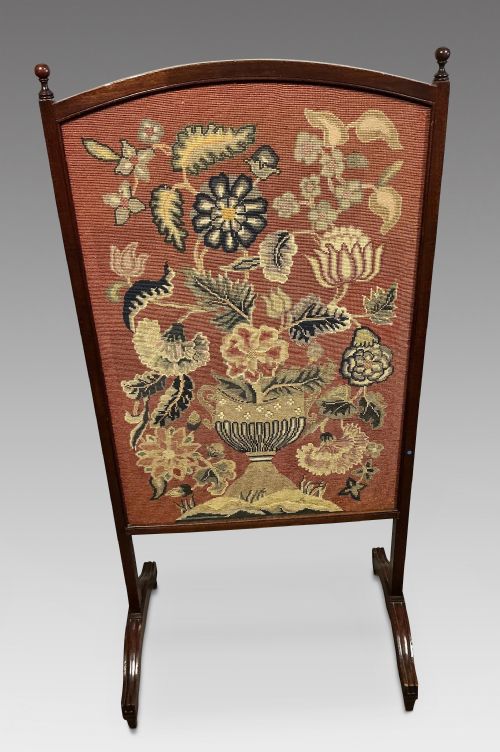
Many examples incorporate textile elements such as woolwork panels, needlepoint tapestry, and embroidery depicting floral motifs. These pieces reflect the interior styling of the nineteenth century and early twentieth century, utilising traditional framing techniques.
Materials and construction methods
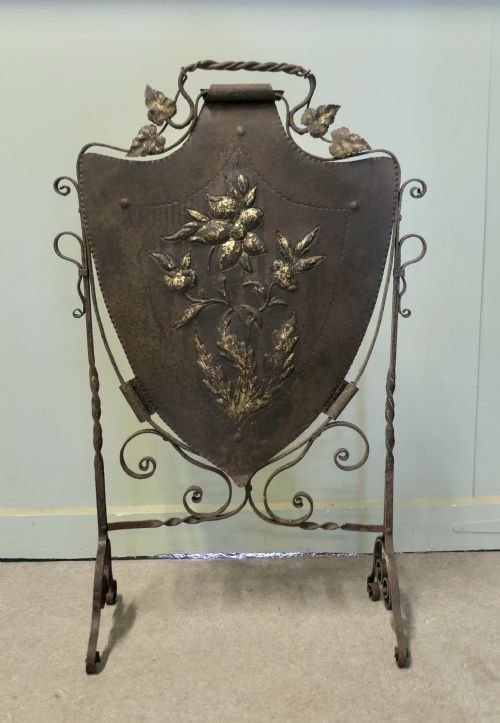
Frames are constructed from timbers like rosewood, mahogany, and walnut, frequently shaped through turning or carving to support the central viewing panel. Metal variants utilise brass, copper, and wrought iron to form freestanding or folding hearth protectors.
The central display relies on textiles, including wool, tapestry, and embroidery, mounted within wooden or gilded borders. Certain Art Nouveau pieces incorporate cut glass or brass framing to catch the light near the fireplace.
Floral Hearth Screen Retail Price Guide 2026
Typical asking prices for floral hearth screen among the pieces listed under this phrase on Sellingantiques today, from the lower quarter to the upper quarter. They describe what is for sale here now, not the wider market.
Some pole screens double as portable sunshades, designed to save delicate complexions from the scorching glare of an open parlour fire.
Evaluating craftsmanship and detail
Quality rests in the precision of the timber carving and the tightness of the joinery supporting the frame. Pole screens demonstrate superior execution when the adjustable mechanism holds its height securely without slipping.
The distinction in textile panels lies in the fineness of the needlework and the complexity of the embroidery. Dense tapestry stitching and well-preserved woolwork indicate higher standards of period craftsmanship.
The Floral Hearth Screen Glossary
- Pole screen
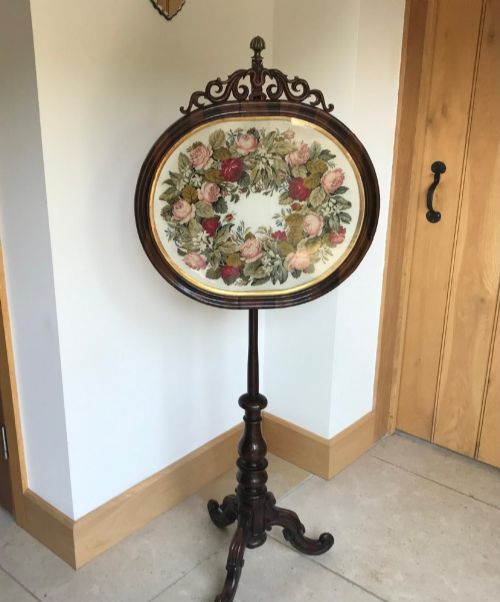
- A vertical stand with an adjustable sliding panel designed to shield the face from fireplace heat. The panel moves up and down on a central wooden shaft.
- Tapestry
- A form of textile art woven on a loom or worked with needlepoint stitches upon a canvas ground. These panels frequently display floral and botanical scenes within fire screens.
- Giltwood
- Timber that has been coated with a thin layer of gold leaf or gilt pigment for decorative effect. This finish appears on nineteenth-century frames.
- Bobbin turned
- Timber shaped on a lathe into a series of rounded, spool-like swellings and depressions. This decorative turning technique characterises certain Victorian supports.
Floral Hearth Screen: Frequently Asked Questions
How do you use a hearth screen?
These screens are placed directly in front of a fireplace opening during warmer months when fires are not lit. They serve to conceal the empty hearth and add colour to the room.
Adjustable pole screen variants allow the user to slide the viewing panel up or down to block heat when sitting near a burning fire.
How do I date a Victorian fire screen?
Dating relies on timber choices, such as rosewood, walnut, or mahogany, alongside the specific decorative vocabulary of the period. Victorian pieces often incorporate bobbin turning, rich carving, or elaborate needlework.
Art Nouveau examples from later decades show flowing, organic metalwork frames and cut glass rather than heavy timber supports.
Are the tapestry panels original?
Many screens retain their original nineteenth-century woolwork, embroidery, and needlepoint tapestry panels mounted within the wooden frames. The condition of the textiles depends on their exposure to light and heat over time.
Close inspection of the stitching and the backing materials helps determine whether the textile work corresponds to the period of the frame.