





Floral Fire Screen
A floral fire screen shields a room from the sudden glare of hearth coals using framed needlework or glass.
Floral Fire Screen
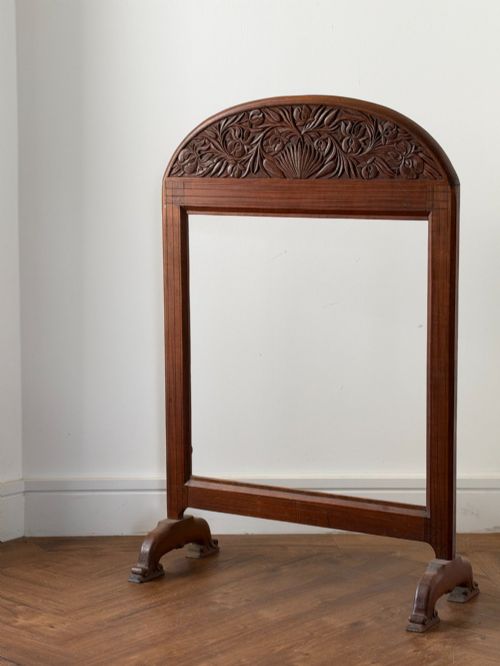
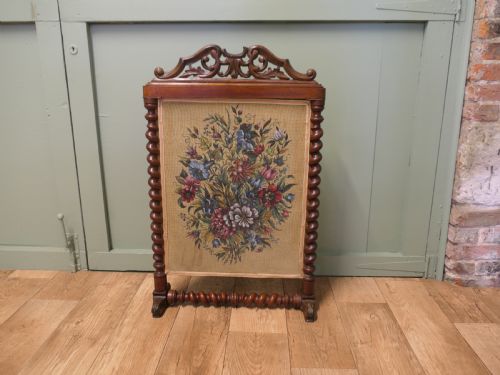
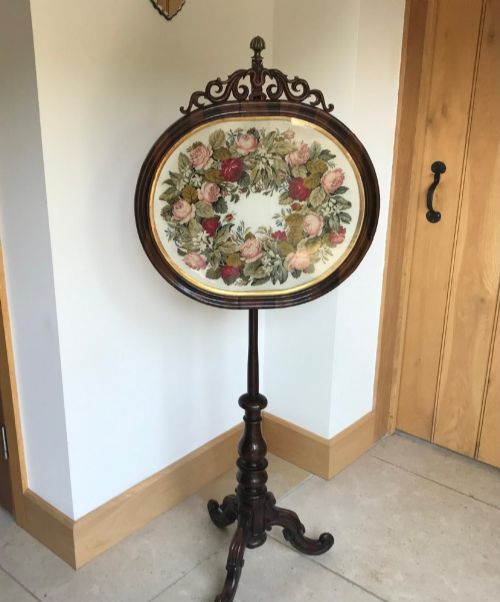
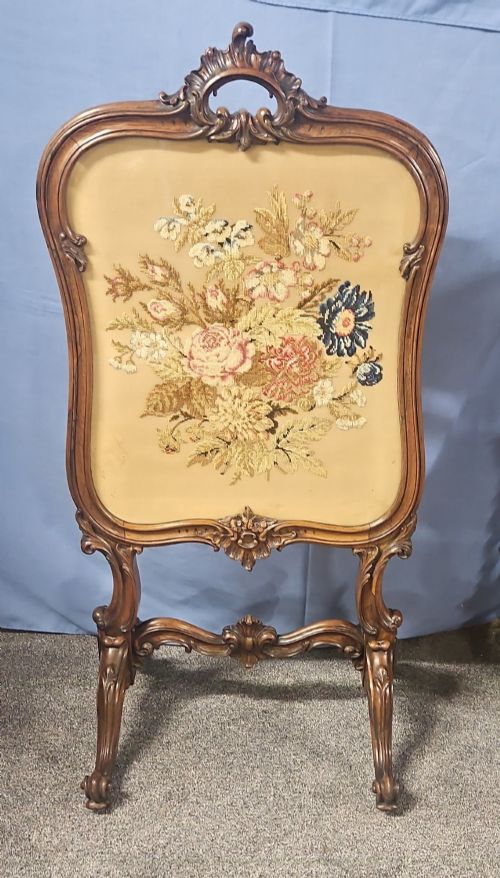
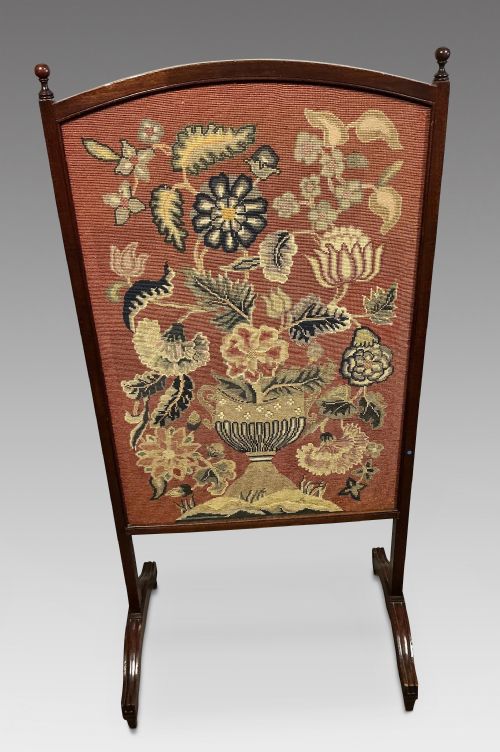
A floral fire screen stands by the hearth to deflect heat and decorative panels include Victorian and Regency pole screens alongside folding or standing frames. These pieces appear in rosewood, mahogany, and walnut, often housing woolwork, tapestry, or silkwork botanical scenes.
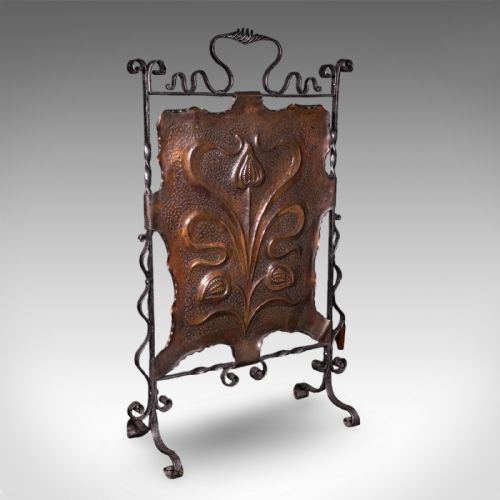
The selections span from the Georgian era through the nineteenth century, taking in Victorian Rococo Revival, Gothic Revival, and Art Nouveau interpretations. Pole screens utilise a vertical adjustable panel on a tripod base, whereas standing screens use fixed wooden or metal frames.
Materials and construction
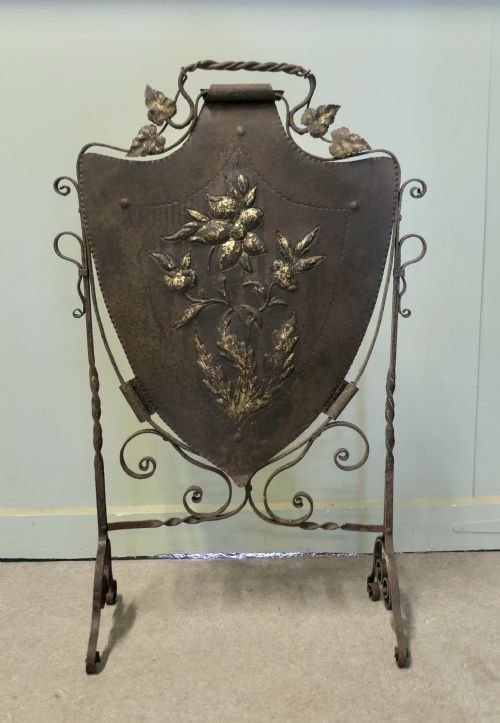
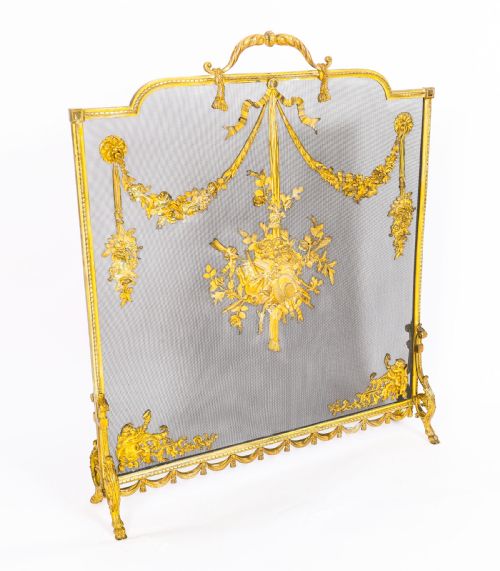
Timbers such as rosewood, mahogany, walnut, and satinwood form the structural frames and turned tripod bases of these pieces. Metal elements appear in brass, copper, iron, and gilt bronze, particularly in Art Nouveau and reflector designs.
Textile panels employ wool, silk, canvas, and tapestry needlepoint to render floral and botanical subjects. Glazed panels incorporate cut glass and silkwork protected behind frames.
Floral Fire Screen Retail Price Guide 2026
Typical asking prices for floral fire screen among the pieces listed under this phrase on Sellingantiques today, from the lower quarter to the upper quarter. They describe what is for sale here now, not the wider market.
Listings feature rosewood, mahogany, walnut, brass, copper, and cut glass alongside wool and silk tapestry panels.
Judging the standard of execution
The distinction between tiers rests upon the crispness of timber carving, the tightness of joint construction, and the density of the needlework panel. Fine examples demonstrate balanced proportions and careful timber selection across the pole, tripod base, or frame.
Surface finish and the preservation of original textiles govern the standing of an individual piece. Hand-carved details and secure mounting of the central panel indicate superior workshop execution.
The Floral Fire Screen Glossary
- Pole screen
- A vertical decorative panel mounted on a slender central pole with an adjustable height mechanism. It typically stands on a tripod base before a fireplace.
- Dummy board
- A painted wooden figure or panel cut to shape to represent a person or object placed by the hearth. These flat boards create a visual presence in an empty fireplace.
- Needlepoint
- A form of counted thread embroidery stitched onto a stiff canvas mesh. It provides the durable floral imagery seen on nineteenth century screen panels.
- Tripod base
- A three-legged support structure commonly found beneath the upright shaft of pole screens. This design ensures stability on uneven floorboards.
Floral Fire Screen: Frequently Asked Questions
How did people use a pole screen?
A pole screen stood between the hearth and the seated occupants of a room to shield the face and eyes from the fierce glare and heat of an open coal fire. The sliding panel could be adjusted vertically along the central rod to suit the height of the person.
Over time, these pieces also functioned as decorative room furnishings when the hearth was cold, displaying intricate hand-stitched needlework.
How do I care for antique tapestry panels?
Protect antique wool and silk needlework panels from direct sunlight to prevent the fading of natural dyes over time. Keep the textiles away from excessive moisture and sources of direct heat.
Dust the framed panels gently with a soft, dry brush to maintain the fabric without disturbing the vintage threads.
How can I tell a Regency screen from a Victorian one?
Regency screens often feature classical restraint in their rosewood or mahogany frames, accompanied by delicate brass mounts or architectural turned supports. Their needlework tends towards neoclassical or restrained botanical motifs.
Victorian pieces frequently embrace bolder carving, including Rococo Revival curves or heavy bobbin-turned mahogany, paired with dense floral woolwork and tapestry panels.