




Floral Etched Vase
These floral etched vase examples bring together botanical forms and glass techniques, offering plant motifs from the Victorian period through the Art Nouveau era.
Floral Etched Vase
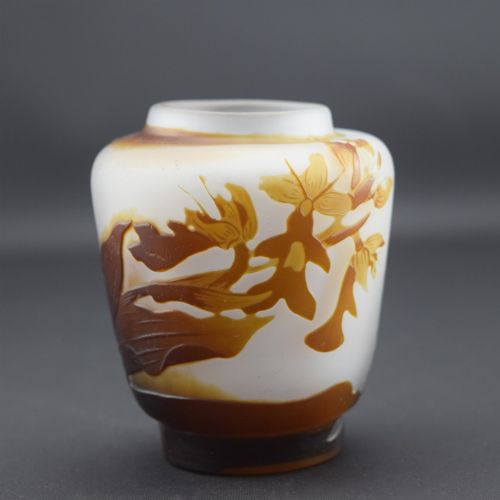
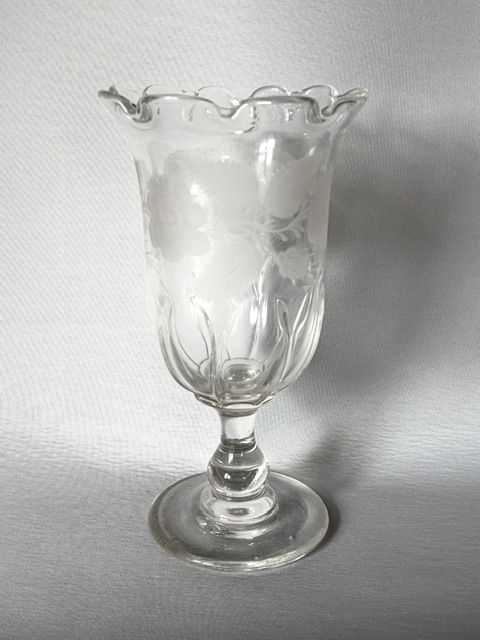
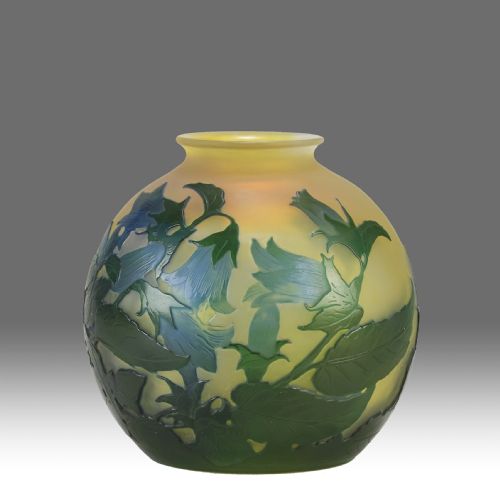
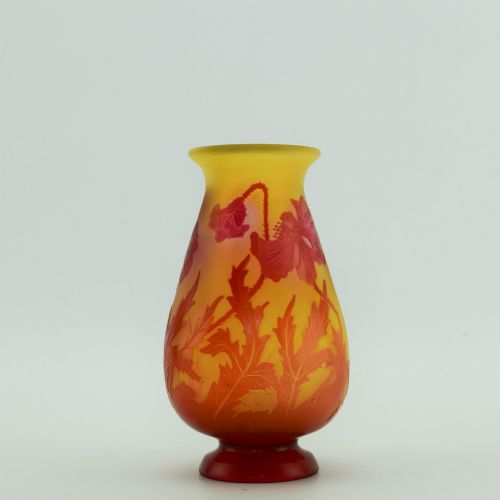
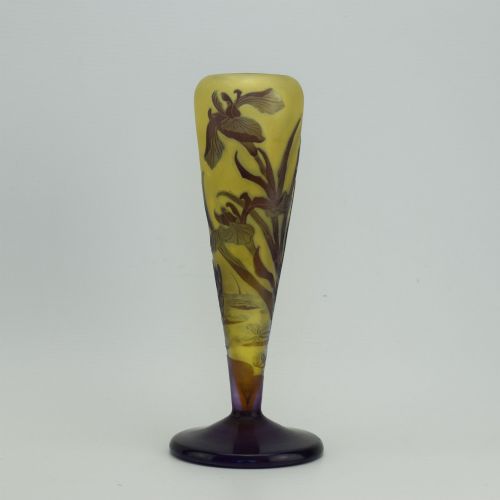
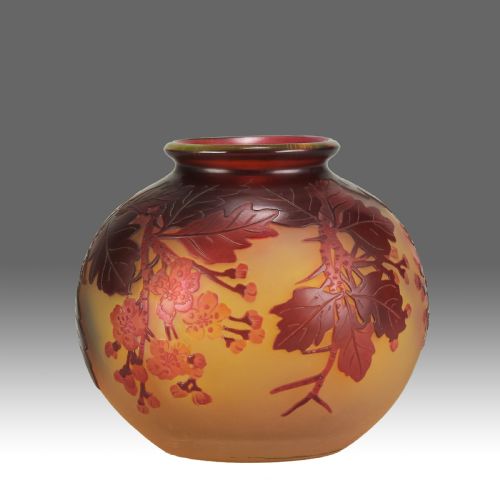
A floral etched vase displays botanical subjects rendered across glass surfaces, ranging from simple celery vessels to complex multi-layered cameo forms. These objects emerge primarily from the Victorian and early twentieth century periods, reflecting distinct design movements across these decades.
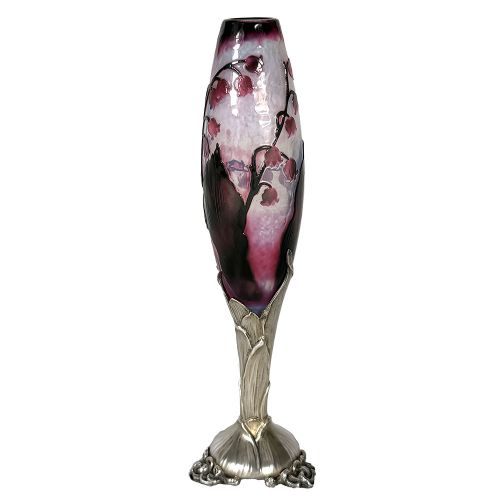
The most common version met on this page is the Art Nouveau glass vase featuring layered cameo motifs such as irises, cornflowers, poppies, and water plants. French workshops dominate the selection, alongside pieces from British makers and Chinese export brass.
Forms span from small cabinet pieces to tall banjo and footed shapes, capturing specific flowers like lilies of the valley, honeysuckle, and campanula. The execution bridges functional vessel design and sculptural botanical illustration.
How they were made
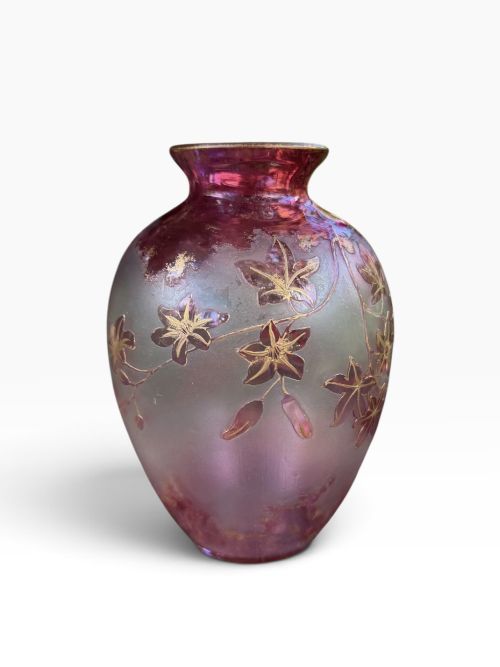
Makers utilised glass as the primary medium, applying cameo techniques, acid etching, wheel carving, and frosting to build depth and texture. Layers of coloured glass were cut back or chemically dissolved to reveal floral designs against contrasting backgrounds.
Certain vessels integrate additional materials, incorporating silver mounts, enamel detailing, gold leaf, and brass structures to frame the glass bodies. These supplementary elements require precise metalworking and enamelling skills to complement the underlying floral compositions.
Floral Etched Vase Retail Price Guide 2026
Typical asking prices for floral etched vase among the pieces listed under this phrase on Sellingantiques today, from the lower quarter to the upper quarter. They describe what is for sale here now, not the wider market.
Materials recorded across the inventory include cameo glass, acid-etched glass, silver, enamel, and gold leaf.
What varies in quality
The sophistication of the cameo carving dictates the upper tier of the range, where depth, undercut relief, and subtle shading define the botanical motifs. Lesser examples rely on flatter surface etching with simpler colour contrasts and less nuanced detail.
The integration of metal mounts and the complexity of the glass body itself separate standard production from masterworks. Pieces featuring multi-coloured glass layers and detailed wheel-carved accents demonstrate superior workshop execution.
Georg Adam Scheid·Emile Gallé·Daum Frères·Thomas Webb and Sons·Paul Nicolas
The Floral Etched Vase Glossary
- Cameo Glass
- A form of luxury glass produced by fusing layers of different colours and then cutting away parts of the outer layer to create carved designs. This technique yields high-relief floral ornamentation.
- Acid-Etched Glass
- Glass treated with hydrofluoric acid to eat away exposed surfaces, creating frosted or textured patterns. It allows for precise reproduction of delicate plant stems and petals.
- Wheel Carved
- Glass shaped and detailed using a rotating abrasive wheel, producing sharp lines and deep cuts. This method adds tactile definition to leaves and blossoms.
- Frosted Glass
- Glass with a milky, matte appearance achieved through acid treatment or sandblasting. It provides a soft background for contrasting coloured glass motifs.
Floral Etched Vase: Frequently Asked Questions
What is a floral etched vase?
A floral etched vase is a glass or metal vessel decorated with plant motifs using techniques like cameo carving, acid etching, or wheel cutting.
These pieces typically date from the Victorian era into the early twentieth century, spanning Art Nouveau and Art Deco styles.
How do I identify Art Nouveau pieces?
Art Nouveau examples feature flowing, organic lines inspired by natural plant forms such as irises, poppies, and water lilies.
Look for asymmetrical designs, cameo glass layers, and soft, naturalistic colour palettes characteristic of French workshops from this period.
Where were these vases made?
The majority originate from French workshops and glasshouses, particularly in Nancy and Paris, alongside British makers and Chinese export operations.
Regional techniques and specific glass formulas help distinguish the output of individual makers and countries.
How should I display them?
Place these vases where natural light can pass through the translucent glass layers to highlight the etched or cameo botanical details.
Ensure they sit on stable surfaces away from high-traffic edges, particularly pieces featuring delicate silver mounts or extended footed bases.