



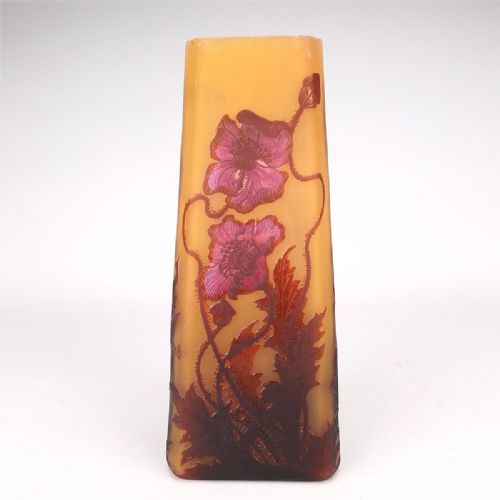

Floral Etched Glassware
These floral etched glassware pieces bring delicate botanical motifs into your home, offering tactile charm and historical elegance.
Floral Etched Glassware
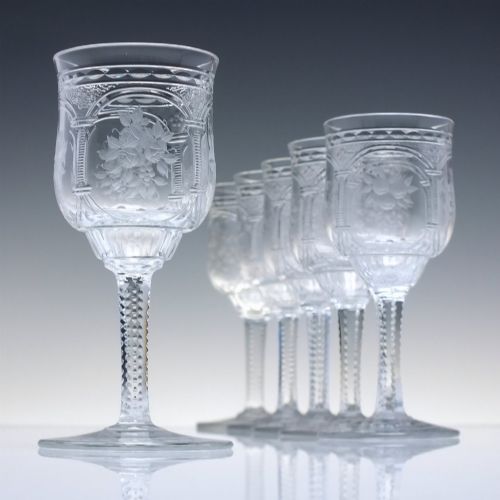
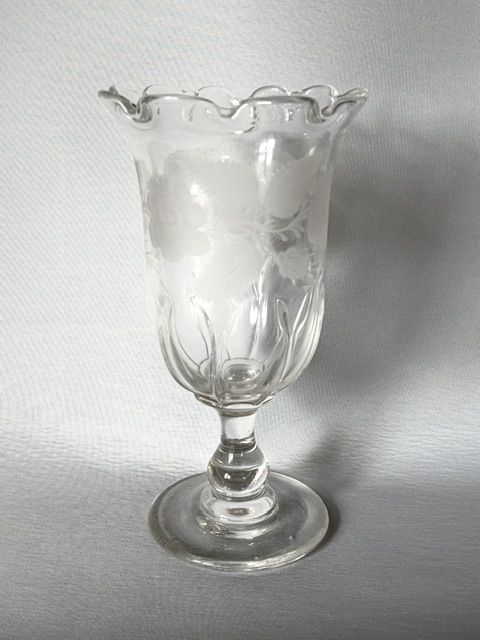
Floral etched glassware encompasses vessels and drinking sets featuring plant and flower motifs, spanning the Victorian era through to the early twentieth century. You will frequently encounter items such as wine glasses, celery vases, rummers, and decorative vases.
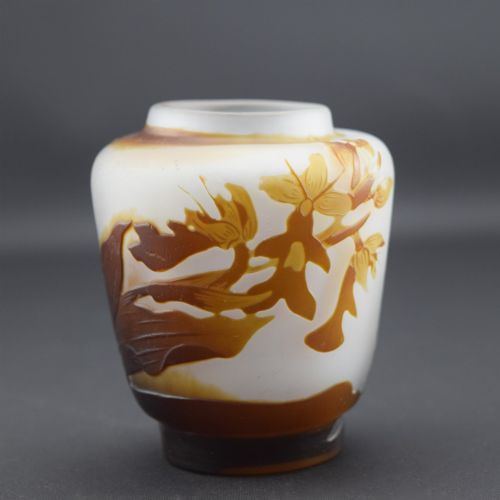
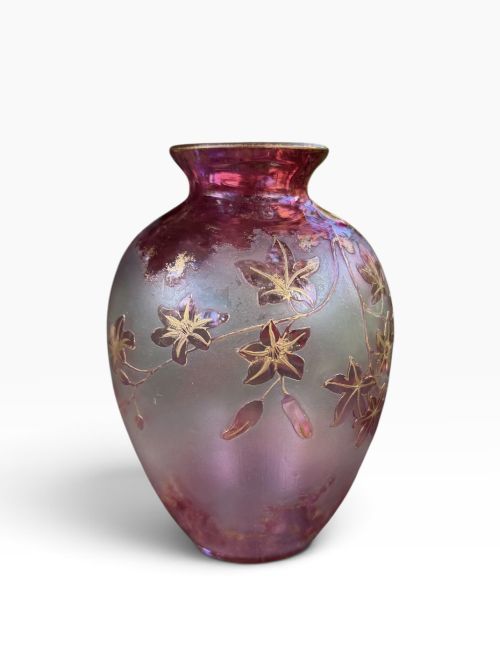
The selection ranges from nineteenth-century Victorian tablewares to French Art Nouveau cameo glass vases. The forms draw heavily on natural botanical subjects like honeysuckle, poppies, and begonias.
Pieces originate from British and French makers, combining functional tableware with decorative glass artistry. The aesthetic shifts from formal Victorian cutting and etching to fluid Art Nouveau cameo techniques.
How they were made
Makers utilised clear glass, lead crystal, frosted glass, and cameo glass as foundations for their designs. Acid etching and cameo techniques allowed artisans to carve intricate floral layers into the material.
Some vessels incorporated delicate applications of gold leaf to accentuate the botanical forms. Artisans shaped vases and drinking glasses by hand, frequently employing multi-layered glass colouring for cameo effects.
Floral Etched Glassware Retail Price Guide 2026
Typical asking prices for floral etched glassware among the pieces listed under this phrase on Sellingantiques today, from the lower quarter to the upper quarter. They describe what is for sale here now, not the wider market.
Victorian diners required specialist tall vessels simply to hold celery upright at the dinner table.
What varies in quality
Quality rests upon the depth and precision of the etching or cameo carving, where crisper botanical detail distinguishes finer work. The choice of material, such as heavy lead crystal versus standard glass, alters the weight and brilliance of the vessel.
Artistic execution also dictates value, particularly in French Art Nouveau pieces where shaded layers and hand-finished motifs command attention. Sets display varying degrees of uniformity across matching glasses, affecting their desirability.
Baccarat·Galle·Paul Nicholas for D'Argental
The Floral Etched Glassware Glossary
- Cameo glass
- A form of luxury glassware produced by overlaying multiple layers of glass of different colours and carving away parts to create a raised design. This technique allows for striking contrast and detailed botanical relief.
- Etched glass
- Glassware decorated by the use of acid or abrasives to eat into the surface and create frosted patterns. It creates permanent designs ranging from simple borders to elaborate floral scenes.
- Lead crystal
- A type of glass containing lead oxide that increases refractive index and clarity, making the material heavier and more resonant. It provides a superior medium for fine cutting and etching.
- Rummer
- A large drinking glass popular in the nineteenth century, typically featuring a short stem and a capacious bowl. They were frequently etched with floral or commemorative patterns for everyday dining.
- Celery vase
- An tall, footed glass vessel designed in the Victorian period to display stalks of celery upright on the dining table. These pieces often showcase elaborate cut and etched decoration.
Floral Etched Glassware: Frequently Asked Questions
How do I care for antique glassware?
Wash these pieces gently by hand in lukewarm water using a mild detergent, avoiding sudden temperature changes that can stress old material. Dry them carefully with a soft cloth to preserve the surface.
Keep them away from direct sunlight and extreme heat to protect any delicate gold leaf or coloured glass layers.
How do I date Victorian glassware?
Examine the weight, pontil marks on the base, and the style of the floral motifs to gauge the manufacturing era. Victorian pieces often feature heavier proportions and characteristic floral or fern engraving.
Comparing the form to documented nineteenth-century tablewares helps confirm the period of origin.
Where were these pieces made?
The pieces originate predominantly from British and French glassworks active during the nineteenth and early twentieth centuries. French production often leans towards Art Nouveau cameo glass, while British workshops frequently focused on table glass.
Regional techniques and signatures can sometimes trace a vessel to a specific kiln or designer.