



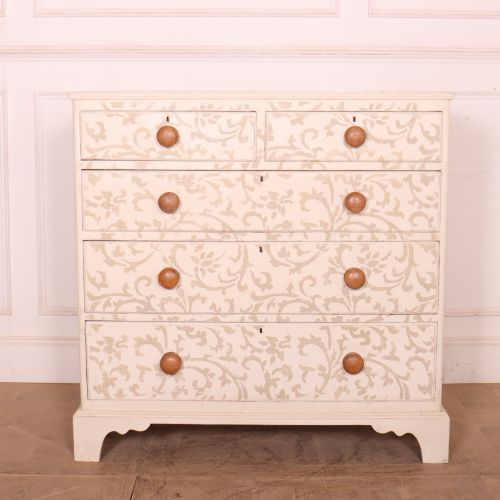
Floral Commode Chest
These floral commode chest pieces combine practical storage with elaborate inlaid floral designs spanning several centuries.
Floral Commode Chest
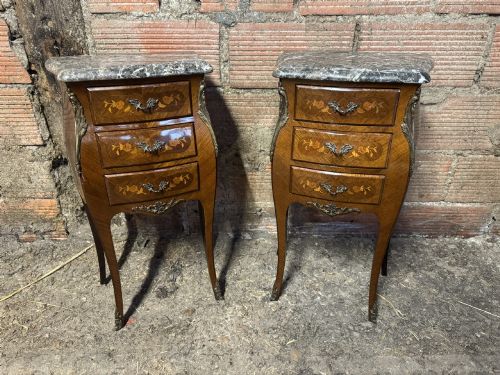
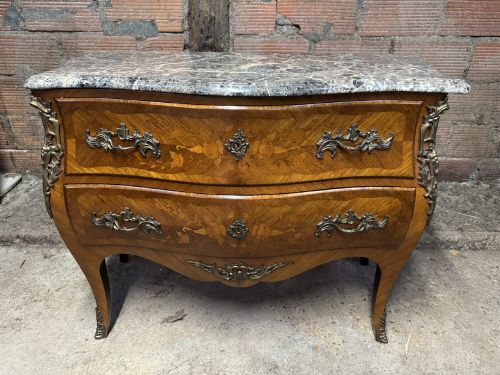
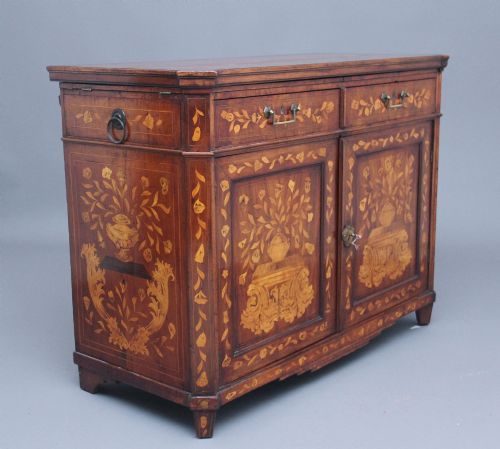
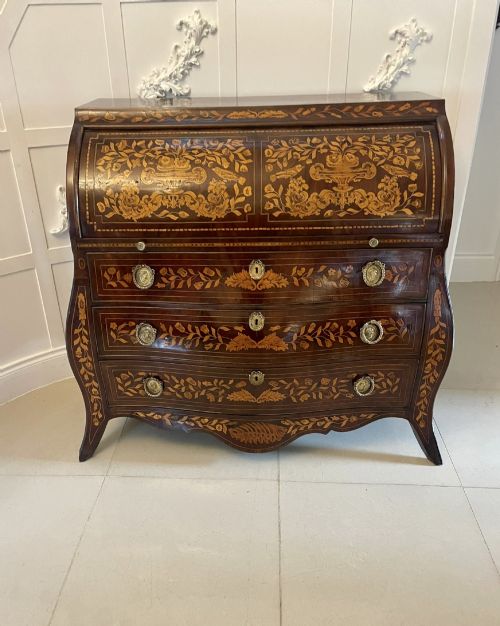
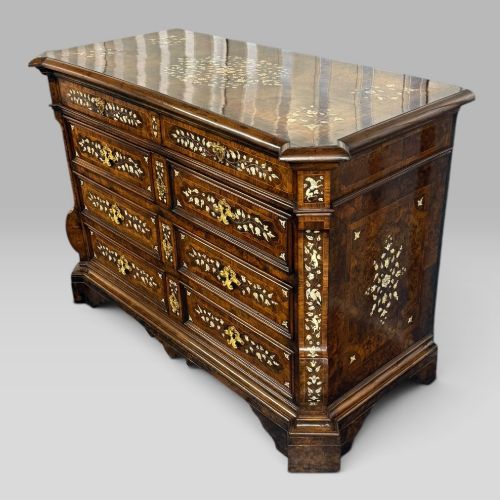
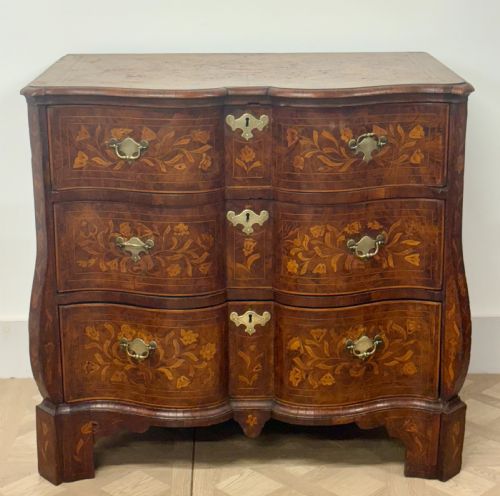
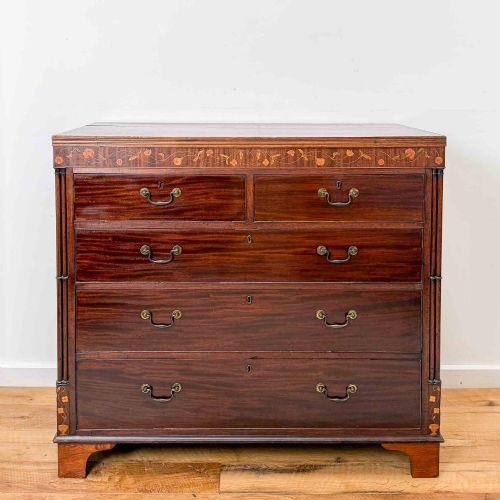
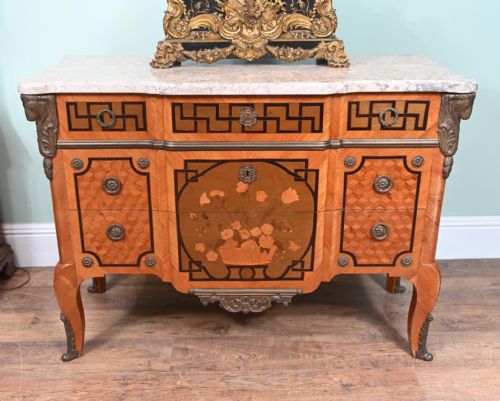
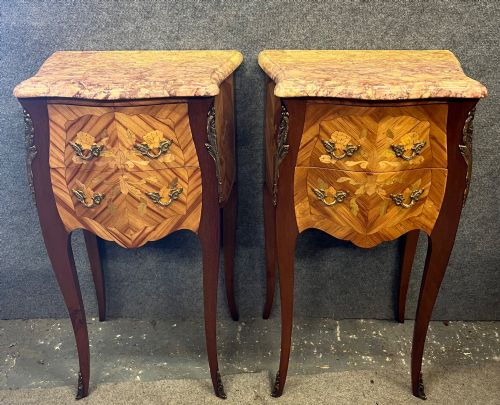
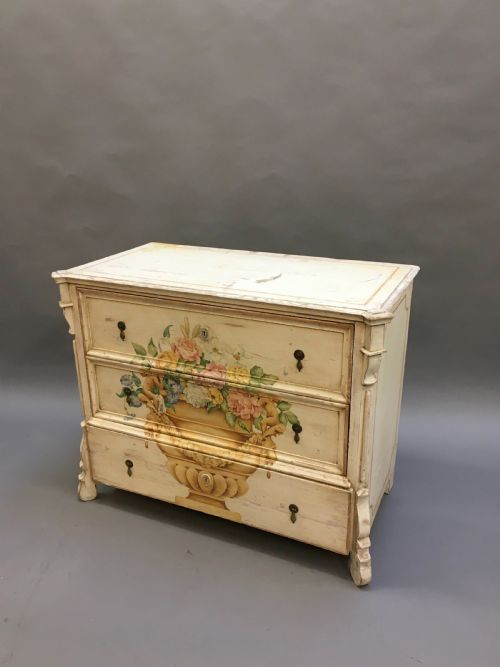
A floral commode chest is primarily a storage unit or drawer-based cabinet distinguished by decorative botanical surface work. The pieces appearing here span from the seventeenth century through the early twentieth century, taking the form of commodes, chests of drawers, and small bedside tables. Continental European traditions, particularly Dutch marquetry and French revival styles, dominate the selection.
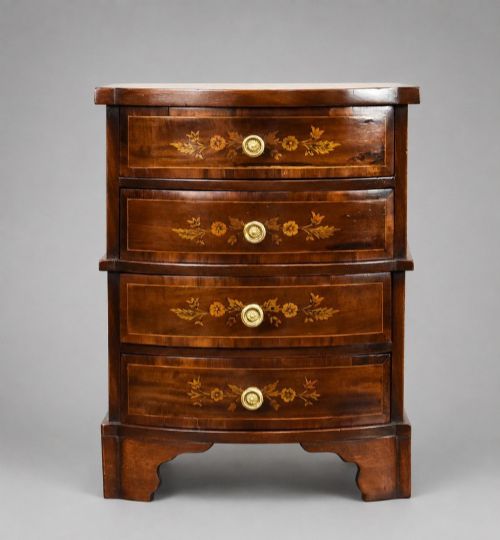
Buyers encounter substantial variety in scale, ranging from tallboys and bombe forms to compact bedside lamp tables and miniature furniture. Materials such as walnut, mahogany, and rosewood serve as the ground for intricate floral marquetry panels. These items function equally as practical furniture and as focal points for traditional interiors.
Materials and Construction Techniques
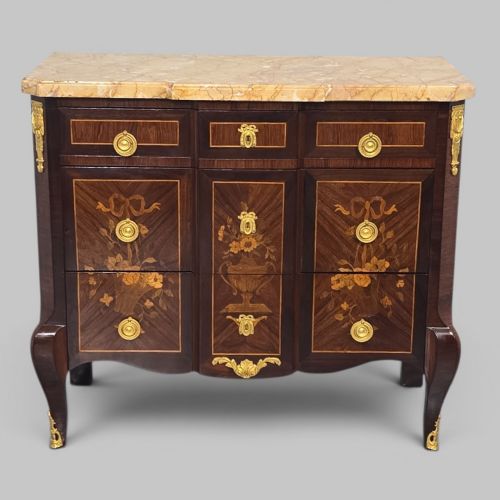
Cabinet makers utilised fruitwoods, satinwood, and exotic timbers laid over solid carcases of oak or pine. Marquetry involves cutting thin veneers of different coloured woods to form floral motifs, which are then assembled and glued to the surface. Ormolu mounts and marble tops frequently complete the construction on French and Italian examples.
Surface detailing relies heavily on precise hand-cutting and inlay work rather than painted decoration. Walnut and mahogany provide the foundational dark tones, allowing lighter fruitwood floral inlays to stand out with distinct contrast.
Floral Commode Chest Retail Price Guide 2026
Typical asking prices for floral commode chest among the pieces listed under this phrase on Sellingantiques today, from the lower quarter to the upper quarter. They describe what is for sale here now, not the wider market.
Listings feature floral commode chests across walnut, mahogany, and rosewood, spanning periods from the seventeenth century to the 1930s.
Distinctions in Quality
Quality rests upon the precision of the marquetry cutter and the complexity of the botanical compositions. Finer pieces display tight, seamless joints in the veneer work and naturalistic shading within the floral petals and leaves.
The choice of secondary timbers and the integrity of the underlying carcase structure also determine the standard of an item. Superior examples maintain crisp carving on mounts and well-fitted drawers that operate smoothly within period constraints.
Edwards and Roberts
The Floral Commode Chest Glossary
- Marquetry
- Decorative veneer work formed by fitting together small pieces of wood, bone, or ivory to create pictorial designs. It differs from inlay by covering the entire surface of the carcase.
- Bombe
- A swollen or bulging out-curved shape found on the sides and fronts of certain continental chests and commodes. This baroque outline requires specialised bending techniques.
- Ormolu
- Gilded bronze mounts and decorative trimmings applied to the corners, feet, and handles of French furniture. The technique involves applying a mercury and gold amalgam to bronze.
- Tallboy
- A tall chest of drawers consisting of one chest stacked on top of another. This form maximises vertical storage space in domestic rooms.
Floral Commode Chest: Frequently Asked Questions
How do I care for a marquetry chest?
Keep wooden chests away from direct heat sources and strong sunlight to prevent the veneer from drying and lifting. Regular dusting with a dry cloth maintains the finish without needing heavy polishes.
Avoid excessive moisture on marble tops and wooden surfaces alike. Professional wax application preserves the natural sheen of walnut and mahogany timbers over time.
Where were these pieces originally made?
The pieces originate predominantly from workshops in the Netherlands, France, and Italy across different historic periods. Dutch makers specialised in floral walnut and oak marquetry, while French artisans favoured rosewood and kingwood.
English interpretations also appear, drawing on continental design influences during the Georgian and Victorian eras. Each regional workshop brought distinct structural proportions to the furniture.
How do I distinguish between periods?
Seventeenth and eighteenth-century examples often feature walnut or oak with dense, multi-coloured floral marquetry and bombe silhouettes. Later nineteenth-century revival pieces display mahogany or satinwood with crisper, more standardised machine-cut veneers.
Examining the internal drawer construction and timber shrinkage helps confirm the age of the carcase. Hardware and lock styles also align with the manufacturing era of each piece.
Can I use a commode as a bedside table?
Compact commodes and bedside lamp tables function well next to modern beds for holding lamps and small items. Their drawer space offers practical enclosed storage for personal belongings.
Ensure you check the height and surface dimensions of the specific chest before placement. Marble-topped versions offer durable surfaces resistant to everyday bedroom use.