




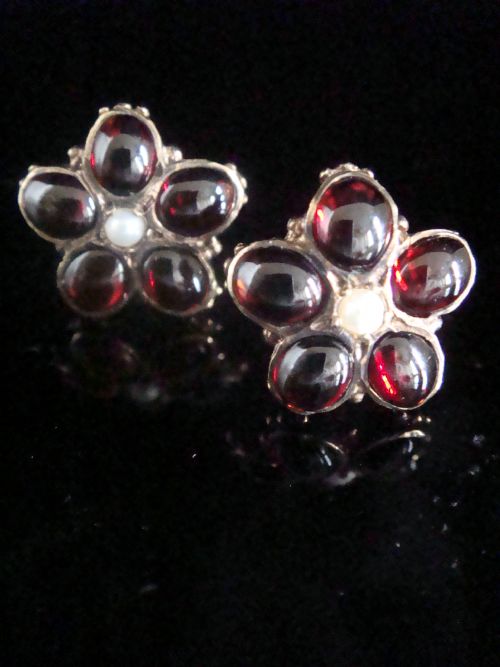


Floral Cluster Stud Earrings
Floral cluster stud earrings bring together precious stones and delicate metalwork to form timeless flower motifs that sit neatly against the earlobe.
Floral Cluster Stud Earrings
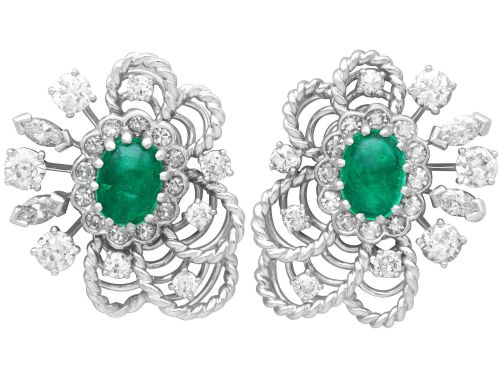
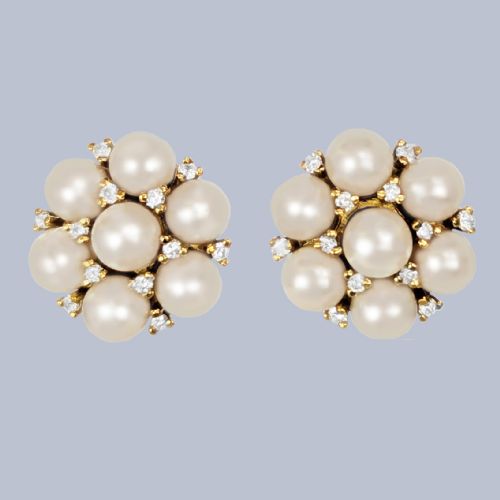
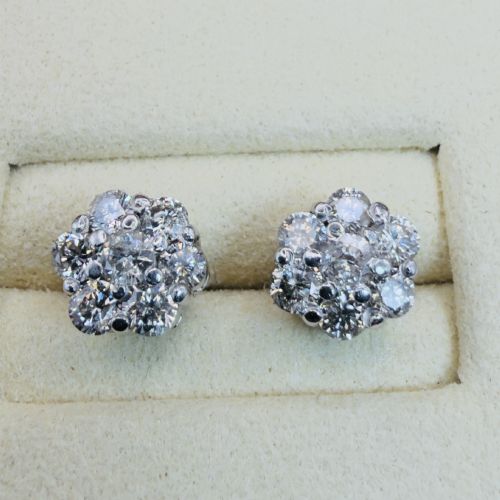
When searching for floral cluster stud earrings, you are looking at small, intricate items of jewellery designed to resemble blooming flowers. These pieces arrange central stones surrounded by smaller gems to create distinct petal patterns, making them a charming choice for everyday wear or special occasions.
The most common examples on this page feature gold or white gold settings combined with diamonds, garnets, pearls, or amethysts. From Victorian and Edwardian examples to mid-century creations, these earrings span multiple decades of jewellery design while maintaining a clear botanical theme.
How they were made
These earrings rely on traditional goldsmithing techniques, utilising nine-carat or eighteen-carat yellow and white gold, alongside platinum and silver. Artisans set precious and semi-precious stones such as diamonds, rubies, sapphires, and garnets into clustered configurations to mimic the natural geometry of flowers.
Gemstones are typically secured using claw settings or close-set arrangements that highlight the central stone while keeping the surrounding petal stones firmly in place. Fastenings range from traditional screw backs and post backs to clip-on mechanisms depending on the specific period of manufacture.
Floral Cluster Stud Earrings Retail Price Guide 2026
Typical asking prices for floral cluster stud earrings among the pieces listed under this phrase on Sellingantiques today, from the lower quarter to the upper quarter. They describe what is for sale here now, not the wider market.
Listings span periods from the Victorian era and 1830 through 1930, 1950, and 1960, utilising materials such as diamond, pearl, garnet, amethyst, and platinum.
What varies in quality
The overall standard of these earrings depends heavily on the precision of the stone setting and the quality of the materials utilised. Finer examples display well-matched gemstones with consistent colour and clarity, ensuring the floral motif reads clearly from a distance.
Construction details also dictate the tier of the piece, particularly the neatness of the metalwork on the reverse and the security of the mountings. Older items that retain their original settings without modern alterations generally hold greater appeal for collectors.
The Floral Cluster Stud Earrings Glossary
- Cluster
- A style of jewellery where multiple smaller gemstones are grouped closely around a larger central stone. This arrangement maximises visual impact and sparkle.
- Stud
- An earring design featuring a decorative front that sits directly on the earlobe without dangling. It is held in place by a post passing through the piercing.
- Cabochon
- A gemstone shaped and polished with a smooth, convex surface rather than being faceted. This cut is frequently seen on garnets and opals.
- Rose cut
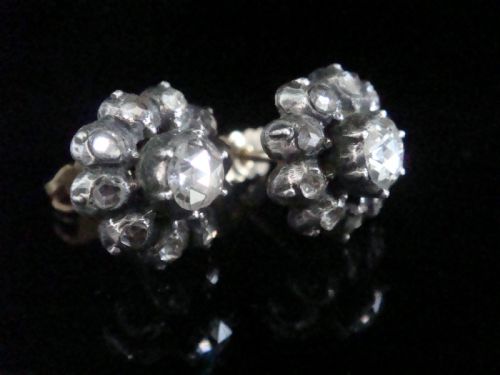
- An antique diamond cut featuring a flat base and a domed crown composed of triangular facets. It produces a soft, subtle glow rather than sharp brilliance.
- Screw back
- A mechanical earring fastening where a threaded post receives a tiny nut screwed down to secure the piece. This design predates modern butterfly clutches.
Floral Cluster Stud Earrings: Frequently Asked Questions
How do I care for antique cluster earrings?
Clean these delicate pieces gently using a soft brush and warm soapy water, avoiding harsh chemical dips that might harm softer stones like pearls.
Store them individually in lined boxes to prevent the stones from scratching neighbouring pieces during storage.
Were these earrings always worn as studs?
While many historic examples feature post and screw fittings, some mid-century designs were originally produced as clip-ons for unpierced ears.
Jewellers can sometimes convert clip-on backs to posts, though original fastenings are generally preferred by purists.
How can I tell a Victorian pair from a 1950s pair?
Victorian examples often employ lower-carat yellow gold or silver-topped gold settings housing rose-cut diamonds or natural seed pearls.
Mid-century versions frequently utilise white gold or platinum with brilliant-cut stones and cleaner, more uniform metal casting on the reverse.
What metals are commonly found in floral clusters?
Yellow gold appears across almost every period, whilst platinum and white gold become prominent in mid-century and Art Deco pieces.
Silver is occasionally encountered in nineteenth-century designs, often paired with gold to provide a bright contrasting background for diamonds.