


Vintage Diamond Cluster Studs
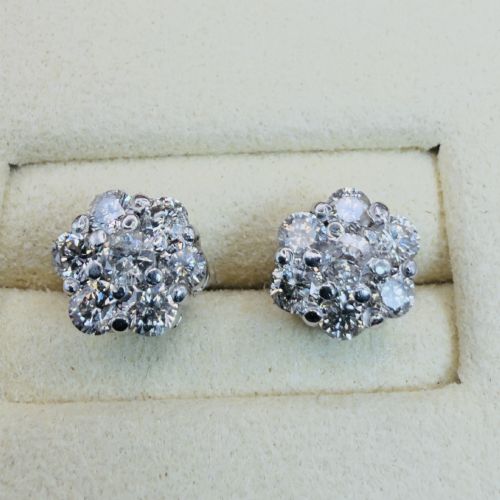
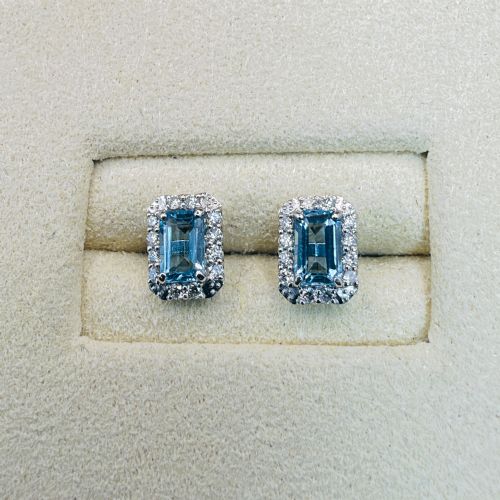
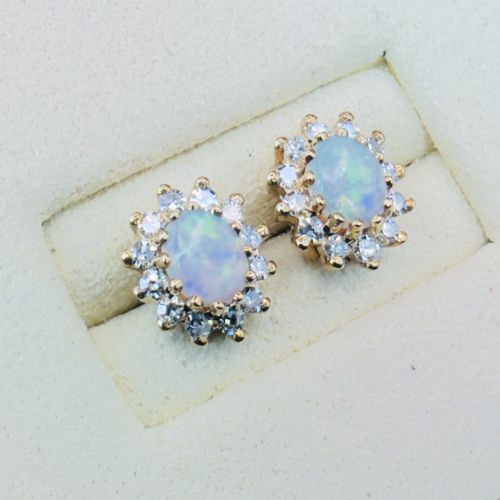
Vintage diamond cluster studs gather smaller stones around a central gem, delivering concentrated sparkle in pieces spanning from Victorian work to mid-century modern designs.
Vintage Diamond Cluster Studs
Vintage diamond cluster studs bring together a central gemstone encircled by a tight ring of smaller diamonds, forming distinct floral and geometric motifs. When you search for vintage diamond cluster studs, you will encounter button-like forms designed to sit closely against the earlobe. The pieces on this page span from Victorian and Edwardian iterations through to Art Deco, Retro, and mid-century modern designs.
The materials paired with diamonds in these clusters include sapphires, emeralds, aquamarines, pearls, and garnets, set alongside white gold, yellow gold, rose gold, and platinum. Mid-century and 1950s examples often favour white gold settings to enhance the brightness of the stones, whereas Victorian and Edwardian items regularly incorporate yellow gold or silver-topped gold. Screw backs and clip-on mechanisms frequently appear alongside standard post fixtures in this selection.
Materials and construction methods
Craftsmen built these clusters using precious metals like platinum and 18ct white or yellow gold to securely house the principal gems and surrounding melee diamonds. Platinum offered the strength required for delicate Edwardian and Art Deco claw settings, allowing maximum light to enter the stones.
The diamond cuts vary from old mine and rose cuts in nineteenth-century examples to single cuts and brilliant cuts in later mid-century pieces. Stones were hand-set into floral or daisy configurations, often utilising grain settings or millegrain edges to finish the metalwork.
Vintage Diamond Cluster Studs Retail Price Guide 2026
Typical asking prices for vintage diamond cluster studs among the pieces listed under this phrase on Sellingantiques today, from the lower quarter to the upper quarter. They describe what is for sale here now, not the wider market.
Materials represented across the inventory include aquamarine, emerald, sapphire, garnet, pearl, opal, and andalusite.
Distinctions in quality and execution
Quality in these clusters rests on the matching and selection of the central stone relative to the surrounding diamond halo. Superior pieces display uniform colour and high clarity grades in the accent diamonds, which intensifies the overall visual impact.
The finesse of the metalwork defines the higher tier of these earrings, particularly where hand-cut settings and delicate gallery work remain intact. Well-preserved fasteners, whether original screw backs or secure posts, contribute to the durability and wearability of the piece.
The Vintage Diamond Cluster Studs Glossary
- Cluster stud
- An earring design featuring a central stone framed by a ring of smaller stones, positioned closely to the ear.
- Millegrain
- A decorative technique involving a row of tiny raised metal beads along the edge of a setting, common in Edwardian and Art Deco jewellery.
- Old cut diamond
- A hand-faceted diamond shape from the nineteenth or early twentieth century, characterised by a smaller table and a high crown.
- Melee
- Small diamonds used alongside a larger focal stone to add brilliance and form the outer border of a cluster.
- Cabochon
- A gemstone shaped and polished with a smooth, rounded surface rather than faceted edges.
Vintage Diamond Cluster Studs: Frequently Asked Questions
How do I secure vintage screw back earrings?
Vintage screw back earrings utilise a threaded post paired with a small backing nut that twists down towards the earlobe. Adjust the nut gently until the earring rests securely against the skin without applying excessive pressure.
Take care not to over-tighten the screw mechanism, as this can strain the threaded post over time. Regular cleaning of the threads helps maintain a smooth movement.
What defines an Art Deco cluster design?
Art Deco cluster designs favour geometric symmetry, sharp lines, and strong contrasts, frequently pairing diamonds with calibre-cut sapphires or emeralds. Platinum and white gold settings were standard during this era to support clean, architectural silhouettes.
The layout of the stones typically forms a square, rectangle, or stylised floral motif that sits flat against the ear.
How should I clean vintage diamond cluster studs?
Clean vintage cluster studs by soaking them briefly in warm water mixed with a mild washing-up liquid. Use a soft-bristled brush to remove accumulated oils from beneath the stones.
Avoid harsh chemical dips or ultrasonic cleaners, particularly when the cluster includes softer gems like pearls, opals, or emeralds.
How can I tell a Victorian cluster from a mid-century piece?
Victorian clusters often feature rose-cut or old mine-cut diamonds set in yellow gold or silver-topped gold with closed-back settings. The overall aesthetic tends to be organic, incorporating floral motifs and softer metal edges.
Mid-century pieces shift towards brilliant-cut diamonds, platinum, and 18ct white gold, displaying cleaner lines and brighter, more uniform stone arrangements.