
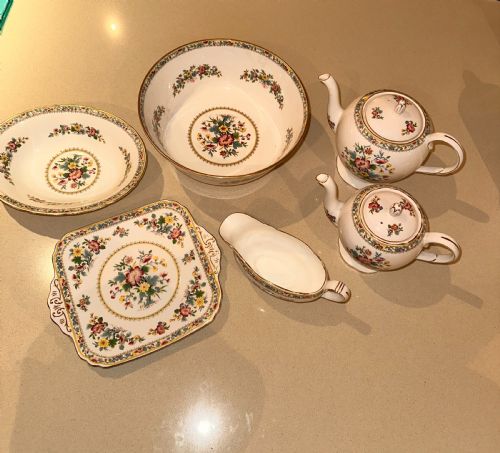


Floral Ceramic Tea Set
A floral ceramic tea set brings painted botanicals and porcelain craftsmanship directly to the table.
Floral Ceramic Tea Set
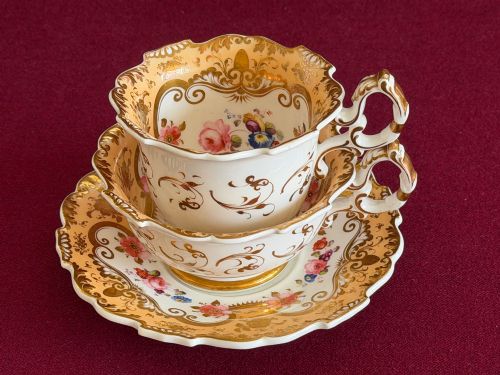
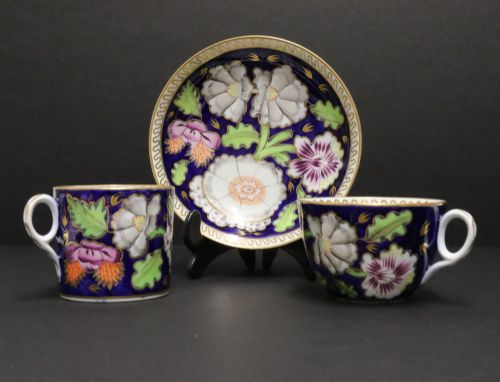
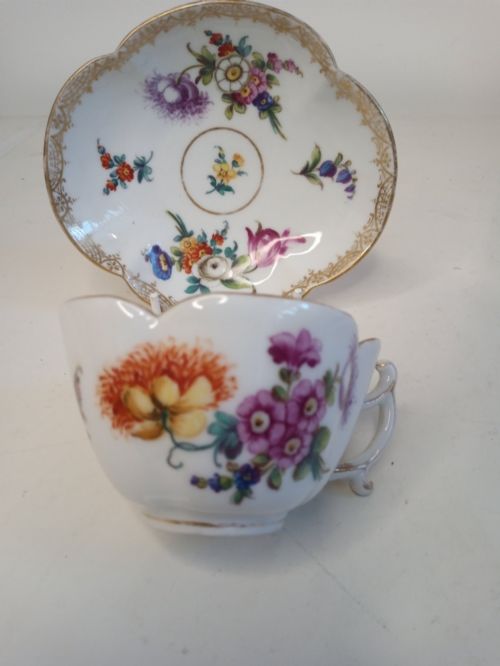
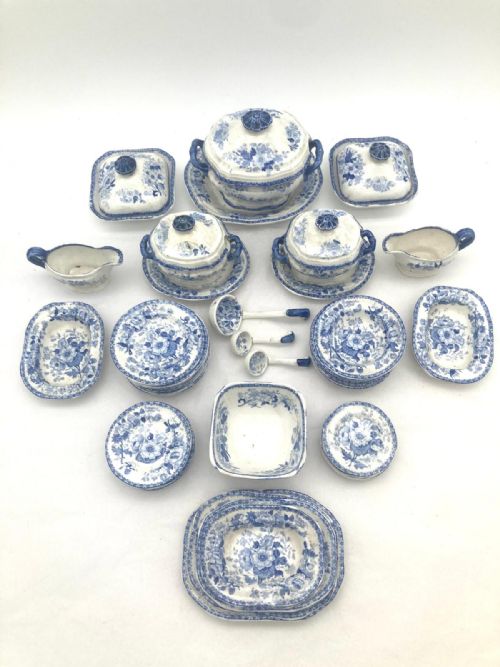
A floral ceramic tea set brings together matching cups, saucers, teapots, and serving pieces decorated with botanical motifs. You will encounter everything from individual cabinet trios and children's services to large breakfast sets and twenty-piece gatherings spanning the Georgian, Regency, and Victorian eras.
The selection here encompasses English porcelain, bone china, earthenware, and creamware, alongside Japanese Satsuma ware and French Old Paris porcelain. Forms range from simple teacups and saucers to complete tea services and breakfast sets featuring transfer-printed or hand-painted floral patterns.
Makers and potteries such as Minton, Coalport, Royal Worcester, and Newhall dominate the English pieces, while firms like Macintyre and Foley represent later developments. These services reveal how domestic tea drinking evolved from an exclusive luxury into a central ritual of British and European social life.
How they were made
Potters shaped these wares using porcelain, bone china, creamware, and stone china, firing the clay bodies at high temperatures to achieve durability and refinement. Artisans then applied glazes to create smooth, glossy surfaces suitable for intricate decoration.
Decoration relied on hand-painted enamel colours, blue and white transfer printing, and applied gold leaf or gilt detailing. Many pieces combined underglaze transfer prints with subsequent hand-enamelling to add vibrant floral hues to the finished surface.
Early nineteenth-century potters gave charmingly eccentric pattern names like 'Crazy Cow' and 'Bengal Tiger' to their floral and pastoral tea wares.
What varies in quality
The distinction between standard domestic ware and top-tier cabinet pieces lies in the finesse of the body and the execution of the painting. Finer services display translucent porcelain bodies, crisp transfer lines, and meticulous hand-applied gilding that remains sharp and even across every component.
The complexity of the form and the integrity of the original design separate routine production from exceptional work. Pieces featuring bespoke shape names, extensive hand-painted palettes, or complete matching sets demonstrate superior studio capability and higher artistic ambition.
A H & R Daniel·Newhall·Minton·Royal Worcester·Coalport·Clarice Cliff·Royal Albert Crown China·Ridgway·William Moorcroft for Macintyre·Wileman Foley Shelley·Hutschenreuter·Davenport
The Floral Ceramic Tea Set Glossary
- Trio
- A matched set consisting of a teacup, a saucer, and a matching tea plate. This combination became a standard unit in British porcelain services.
- Transfer printing
- A mechanical method of applying complex decorative patterns to ceramic ware by pressing a paper sheet printed from an engraved copper plate onto the clay or biscuit body.
- Creamware
- A refined earthenware developed in Yorkshire featuring a warm, pale yellow or cream-coloured transparent lead glaze.
- Gilt
- A thin layer of gold applied to the surface of ceramic pieces to highlight rims, handles, and decorative motifs.
- Cabinet piece
- An ornamental ceramic item intended for display in a glass-fronted cabinet rather than everyday domestic use.
Floral Ceramic Tea Set: Frequently Asked Questions
How do I date an old tea set?
Dating relies on identifying backstamps, ceramic bodies, and stylistic markers recorded by the manufacturer.
Changes in glaze composition, shape names, and painting techniques help narrow the production period to a specific decade or reign.
Are these tea sets safe to use?
Many antique and vintage pieces contain lead in their glazes or delicate gold leaf that degrades with modern detergents.
Collectors generally treat older porcelain and earthenware as display items or handle them with care rather than using them for daily dining.
What is the difference between porcelain and bone china?
Porcelain uses fine white clay fired at high temperatures to create a dense, semi-translucent material.
Bone china incorporates animal bone ash into the paste, resulting in a whiter, stronger body that allows for thinner walls.
How should I store my tea set?
Store pieces on sturdy shelves away from direct sunlight and temperature fluctuations that might stress the glaze.
Use felt dividers between stacked plates and saucers to prevent scratching the hand-painted surfaces and gilt rims.