



Floral Cameo Glass
Floral cameo glass brings together layered vessels and botanical motifs, capturing natural forms in coloured relief.
Floral Cameo Glass
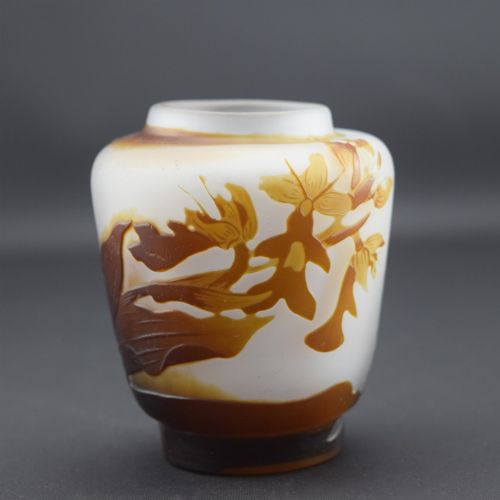
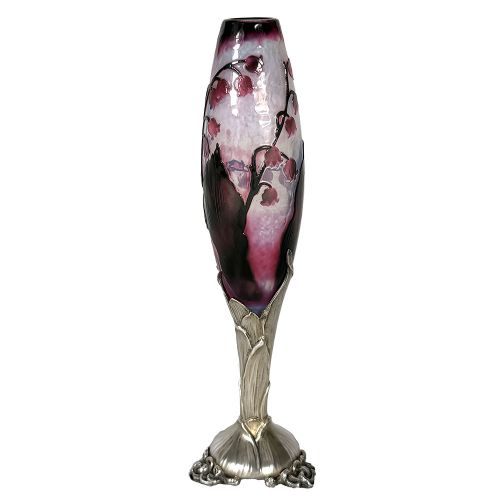
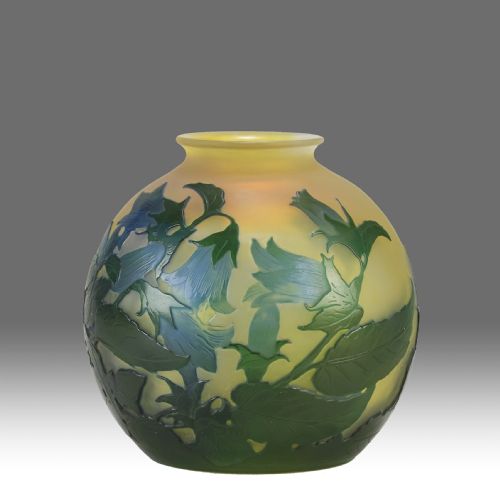
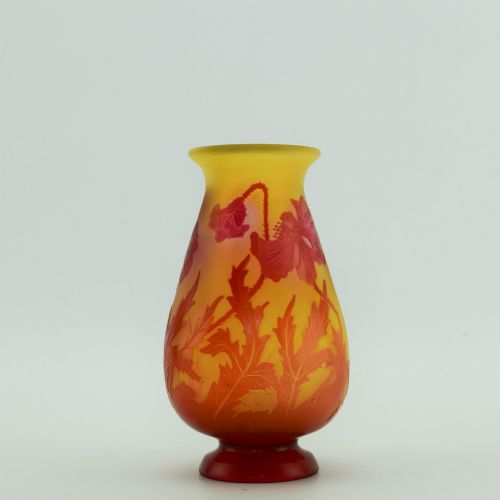
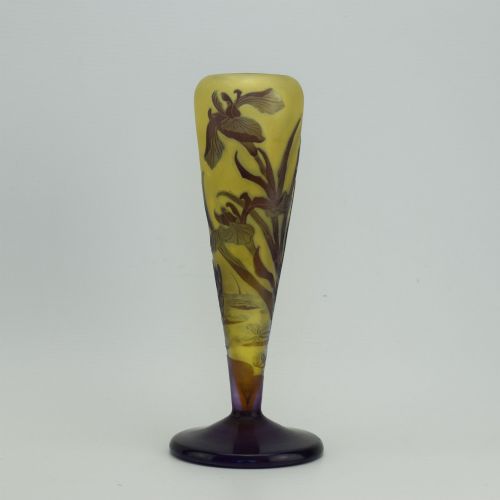
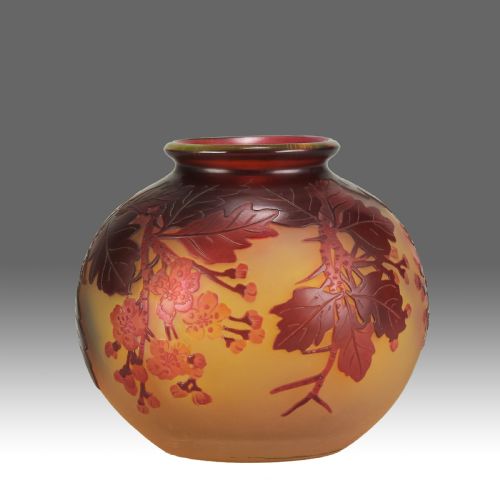
Floral cameo glass encompasses decorative bowls and vases produced primarily during the Art Nouveau and Art Deco periods, spanning the late Victorian era into the 1930s. When exploring floral cameo glass, collectors encounter vessels depicting specific plants such as lilies of the valley, poppies, irises, and cornflowers.
The pieces on this page lean heavily towards French manufacture, notably featuring works associated with Emile Gallé, Daum Frères, and Baccarat. Vases dominate the selection, ranging from compact banjo shapes to large display pieces.
Makers utilised contrasting glass layers to render botanical subjects in sharp relief. The resulting objects combine sculptural depth with translucent colour.
Materials and technique
Makers created floral cameo glass by casing multiple layers of coloured glass together before carving or etching the outer layer away to reveal the design. Acid-etching provided a reliable method for biting back the background glass while leaving the frosted or polished floral motifs standing proud.
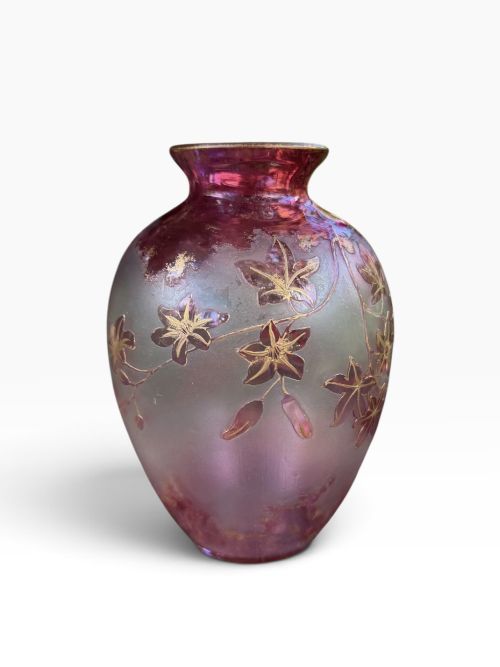
Selected works incorporated wheel carving to add fine detail and depth to the stems and petals. Artisans occasionally enhanced these surfaces with enamel, gold leaf, or silver mounts to enrich the finished appearance.
Floral Cameo Glass Retail Price Guide 2026
Typical asking prices for floral cameo glass among the pieces listed under this phrase on Sellingantiques today, from the lower quarter to the upper quarter. They describe what is for sale here now, not the wider market.
Sweet peas, montbrecia, and bleeding hearts rub shoulders on these glass stems, proving that Victorian gardeners found permanent immortality in acid.
Assessing quality and execution
Quality in floral cameo glass rests upon the crispness of the carving and the deliberate control of the glass layers. Superior examples demonstrate precise depth, allowing light to pass through the coloured motifs in a balanced manner.
The sophistication of the botanical drawing largely dictates the standing of a piece. Master workshops achieved subtle gradients of tone and shade that elevate standard floral designs into distinctive sculptural works.
Emile Galle·Daum Freres·Baccarat·Thomas Webb and Sons·Paul Nicolas·Georg Adam Scheid·Orivit
The Floral Cameo Glass Glossary
- Cameo Glass
- Glass vessels formed of two or more distinct layers of contrasting colours, carved in relief. This technique allows the upper layer to form the design against a recessed background.
- Acid-Etched Glass
- Glass exposed to hydrofluoric acid to eat away exposed areas. This chemical process creates frosted textures and defines intricate patterns without manual cutting.
- Wheel Carved Glass
- Glass shaped and detailed using small rotating abrasive wheels. This mechanical carving achieves sharper undercut details than acid-etching alone.
- Souffle Glass
- A technique where glass is blown into a metal cage or mould to expand into a textured shape. It produces sculptural, bulbous forms with integrated surface decoration.
- Enamel
- Opaque or translucent glass paste applied to the surface and fired to fuse permanently. It adds vibrant surface colour and fine linear detail to the cameo relief.
Floral Cameo Glass: Frequently Asked Questions
What is floral cameo glass?
Floral cameo glass consists of layered glass vessels carved or acid-etched with plant and flower designs. Artisans cut away the outer strata to leave botanical motifs standing in relief against a contrasting background.
These pieces emerged predominantly during the Art Nouveau period in France and England. They function primarily as decorative vases and bowls.
How do I distinguish Galle from Daum?
Emile Gallé pieces often carry signature marks incorporating a star or the maker's full name worked directly into the cameo design itself. Daum Nancy signatures typically appear engraved on the base, frequently accompanied by the cross of Lorraine.
Stylistically, Gallé focused heavily on naturalistic woodland flora with subtle colour gradients. Daum embraced heavier acid-etching and frequently combined enamelling with gold leaf.
How were these vases displayed originally?
Homes during the Victorian and Art Nouveau eras showcased these vessels on mantelpieces, pedestals, and central tables to catch natural light. Their translucent qualities allowed windows and lamps to illuminate the coloured layers.
Collectors today place them where directional lighting can pass through the glass body. This highlights the carved depth of the flowers and leaves.
Are all pieces French?
While French ateliers such as Gallé, Daum, and Baccarat produced the vast majority of surviving examples, English makers also contributed. Thomas Webb and Sons manufactured cameo glass during the late Victorian period.
Continental firms outside France, including Orivit in Germany, occasionally provided metal mounts for these glass bodies. Each regional school maintained distinct approaches to colour and carving.