

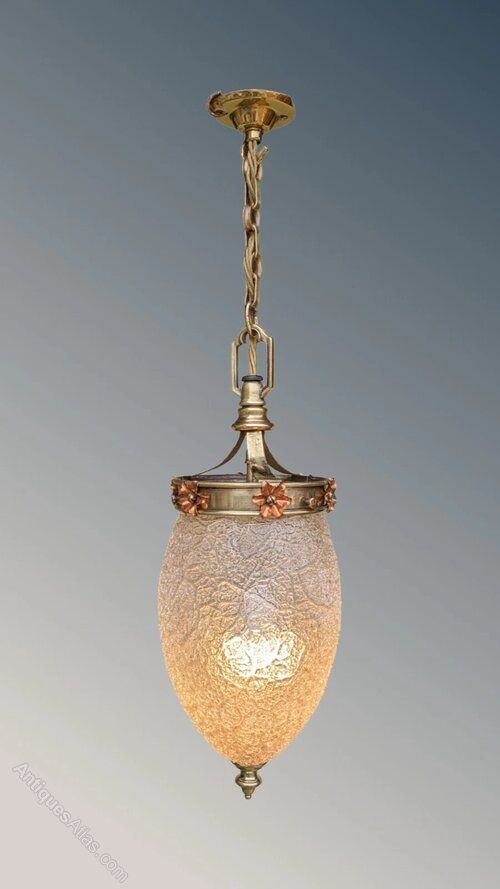


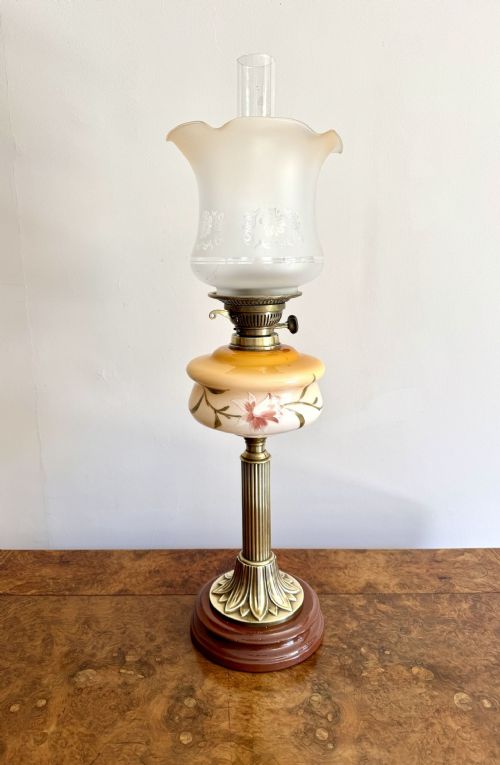
Floral Brass Lamp
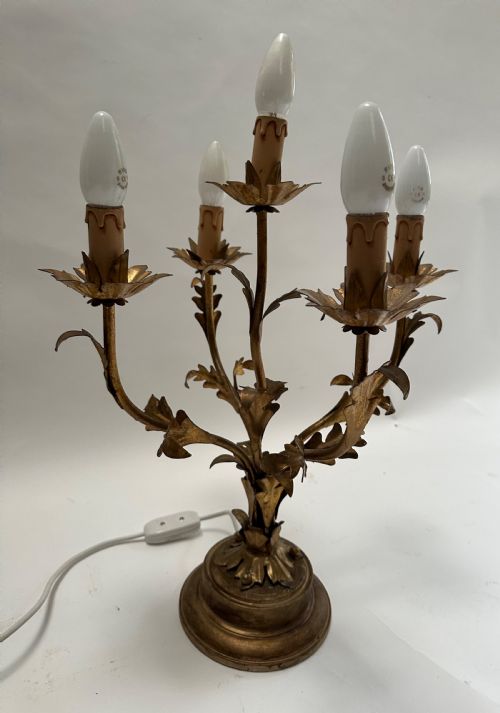
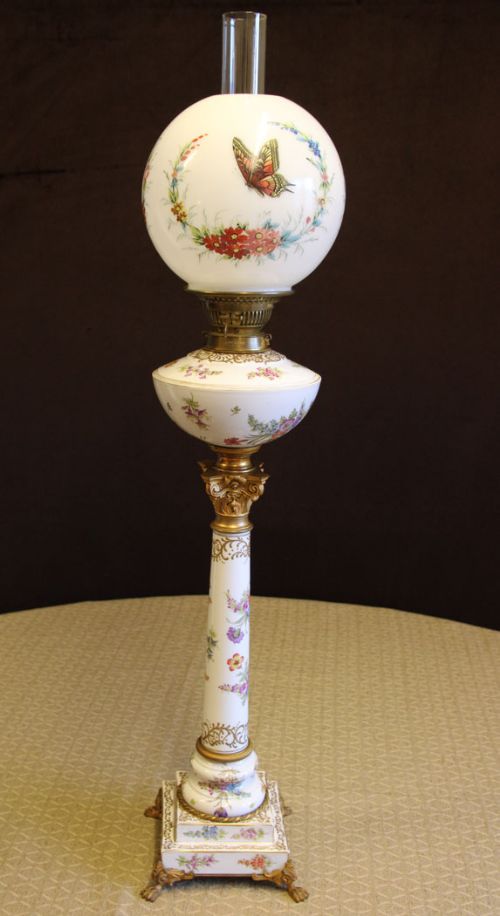
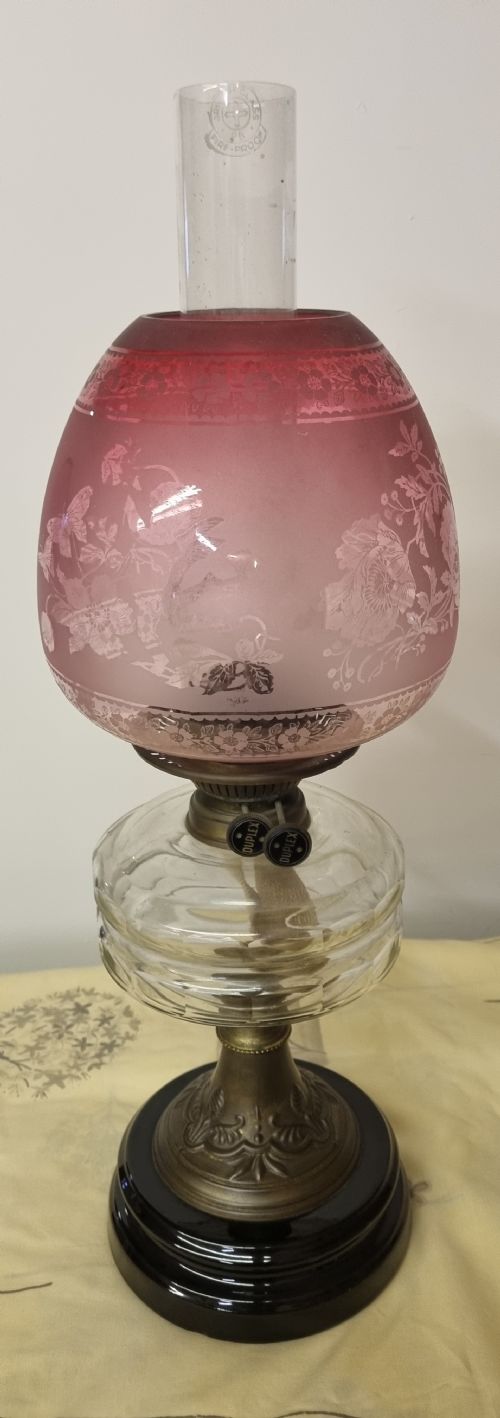
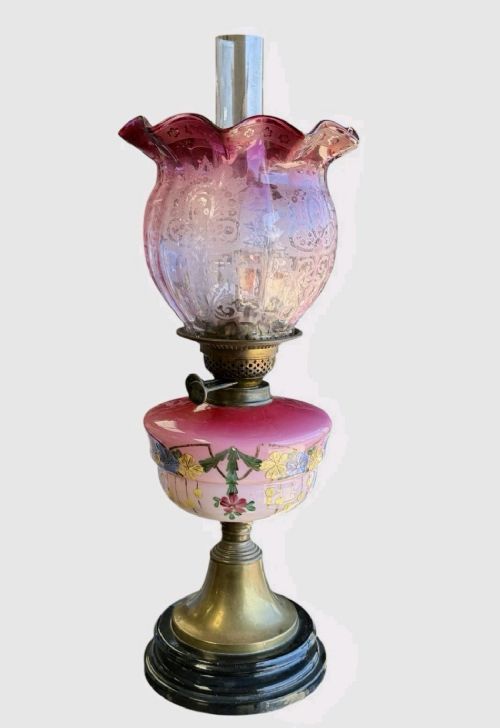
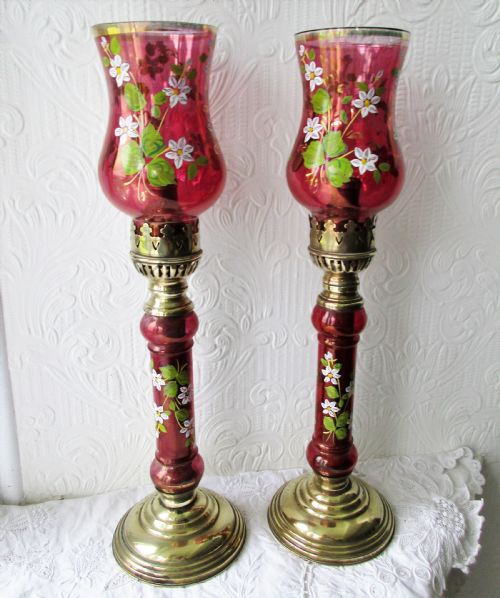
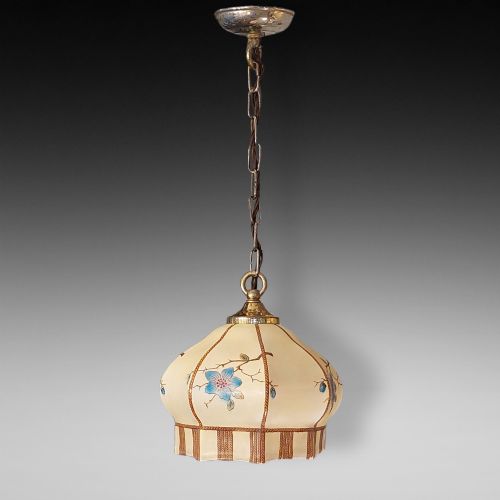
A floral brass lamp brings botanical warmth to a room through cast metal bases and hand-painted glass shades.
Floral Brass Lamp
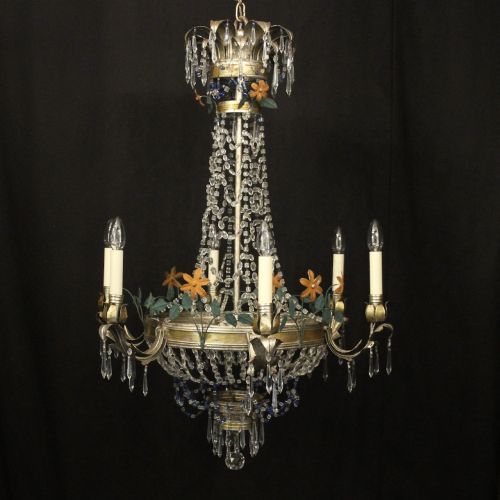
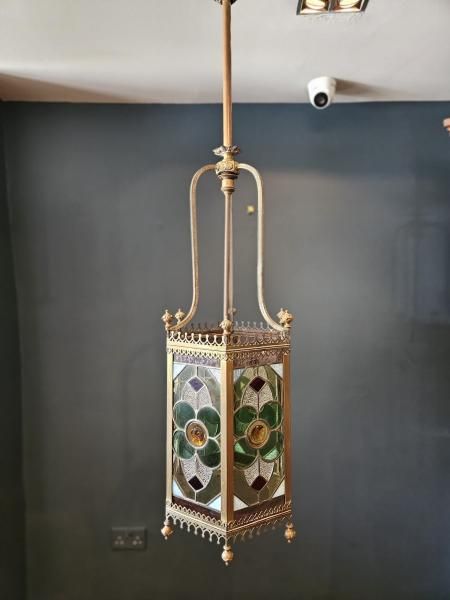
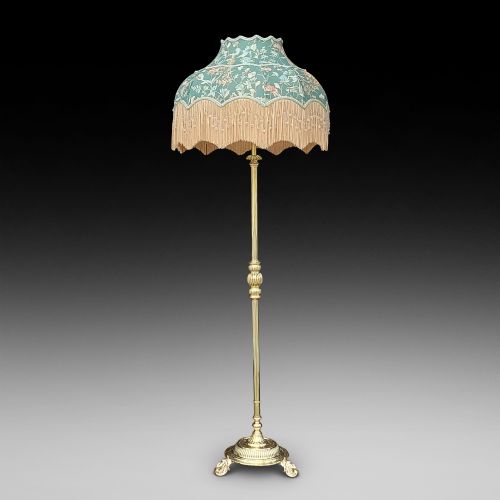
When you search for a floral brass lamp, you encounter lighting fixtures that unite metalwork with botanical motifs across several periods. The selection on this page centres primarily on Victorian, Edwardian, and early twentieth century pieces.
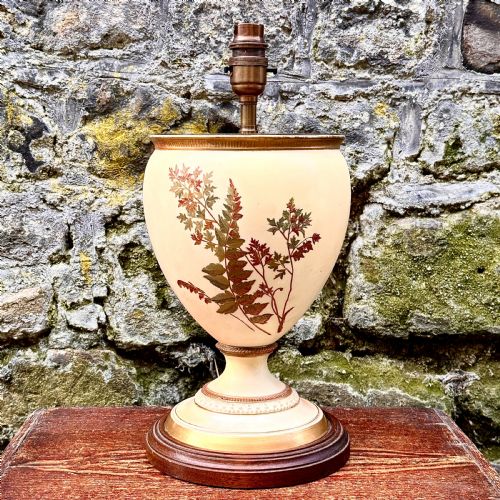
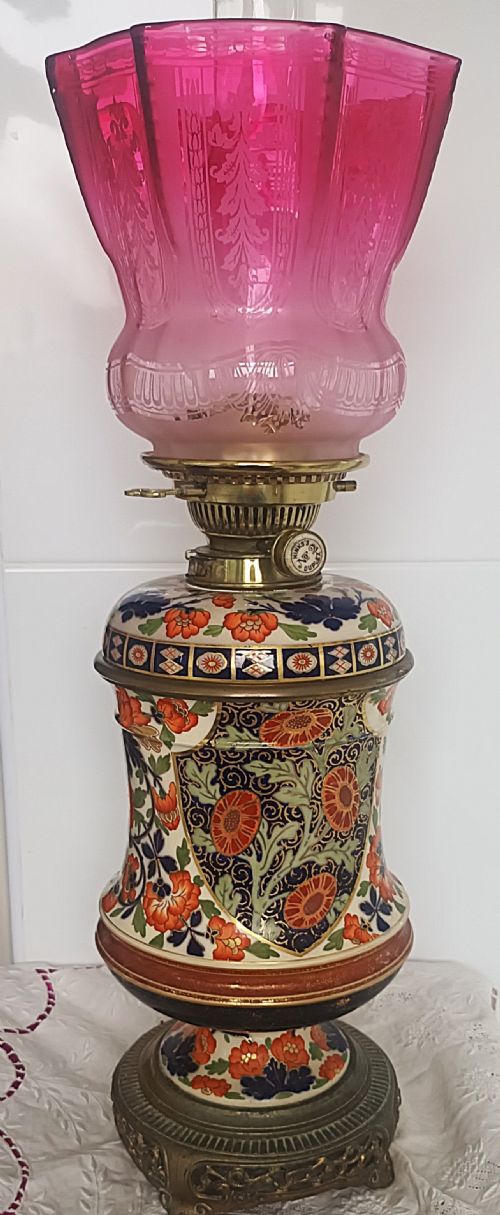
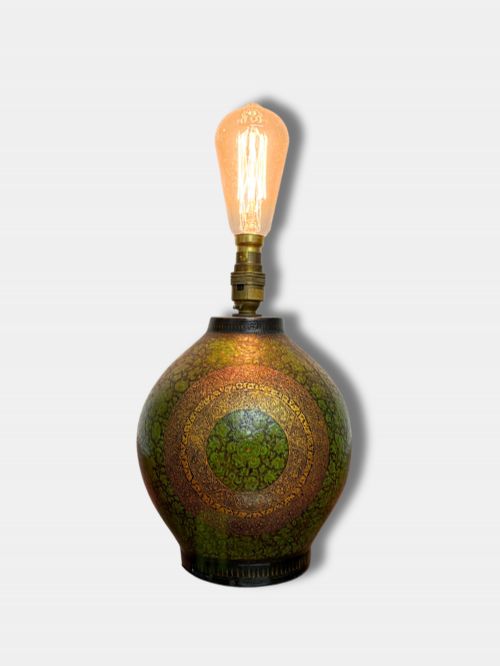
Most examples take the form of table lamps, oil lamps, and standard floor lamps featuring brass components paired with glass, ceramic, or porcelain elements. These domestic lighting pieces reflect historical shifts from oil burning to electrical wiring.
Makers utilised diverse regional styles, ranging from English and French designs to Chinese cloisonne and Famille Verte vases adapted into lamps. This variety means you find both functional desk lighting and substantial decorative floor standards.
How they were made
Craftsmen built these lamps using cast and spun brass, often combining the metal with hand-painted glass shades, porcelain fonts, or enamel bodies. Many pieces incorporate elaborate openwork bases and gilt metal detailing.
Makers such as Hinks and Taylor Tunnicliff supplied ceramic reservoirs, while factories like Sitzendorf and Royal Worcester provided porcelain components. Glass elements frequently involved cranberry tints, frosted finishes, or hand-painted floral decoration.
Floral Brass Lamp Retail Price Guide 2026
Typical asking prices for floral brass lamp among the pieces listed under this phrase on Sellingantiques today, from the lower quarter to the upper quarter. They describe what is for sale here now, not the wider market.
Some nineteenth century engineers clearly believed every floral lamp needed a cherub guarding the oil reservoir.
What varies in quality
The standard of a floral brass lamp depends on the weight of the metal casting and the intricacy of the floral openwork. Heavy brass bases and finely detailed mounts distinguish superior production from simpler commercial work.
Artistic execution in the painted or moulded floral components also defines the grade. Pieces featuring hand-painted porcelain or layered glass shades demonstrate greater workshop skill than plain or mechanically printed alternatives.
Hinks·Taylor Tunnicliff·Royal Worcester·Sitzendorf·Samson
The Floral Brass Lamp Glossary
- Brass
- An alloy of copper and zinc used extensively for lamp bases and structural components. It takes polish well and permits detailed casting.
- Cloisonne
- An enamel technique where metal wire creates compartments on a vessel surface before filling with coloured paste. These vases often serve as lamp bodies.
- Famille Verte
- A Chinese ceramic palette dominated by green enamel overglaze, seen on porcelain vases later converted to table lamps.
- Cranberry glass
- A rich pinkish-red glass created by adding gold chloride to the molten batch, frequently utilised for Victorian lamp shades.
Floral Brass Lamp: Frequently Asked Questions
Are these lamps wired for modern use?
Many antique lamps undergo rewiring to meet contemporary electrical standards while preserving their original fittings and structure. Dealers frequently note if a piece has been adapted for current plugs.
Buyers should check the cord and bulb holder with a qualified electrician before daily use in a home.
How do I clean a brass lamp base?
Gentle dusting with a soft cloth preserves the natural patina accumulated on antique metal over the decades. Avoid harsh chemical polishes that strip historical surface character.
Glass shades benefit from warm soapy water, provided you remove them carefully from the brass mount first.
Can I replace a broken glass shade?
Finding a period-appropriate replacement shade requires matching the fitter size to the original brass gallery. Edwardian and Victorian shades come in various frosted and coloured glass styles.
Matching the exact floral motif demands patience across specialist antique lighting markets.
What rooms suit a floor standard lamp?
Tall brass standards provide ambient illumination in living rooms and studies, often positioned beside armchairs or reading desks. Their substantial height creates a vertical focal point.
Ensure the heavy base rests on stable flooring to support the weight of the extended brass stem.