




Flemish Oak Carvings
These flemish oak carvings are heavy timber panels and devotional figures offering rich historical depth for serious interiors.
Flemish Oak Carvings
When buyers search for flemish oak carvings, they encounter architectural fragments, wall panels, and religious sculptures originating from the Low Countries. These pieces span several centuries, reaching from medieval periods and the sixteenth century through to nineteenth-century revivals.
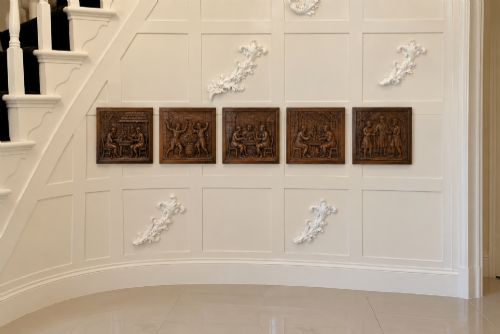
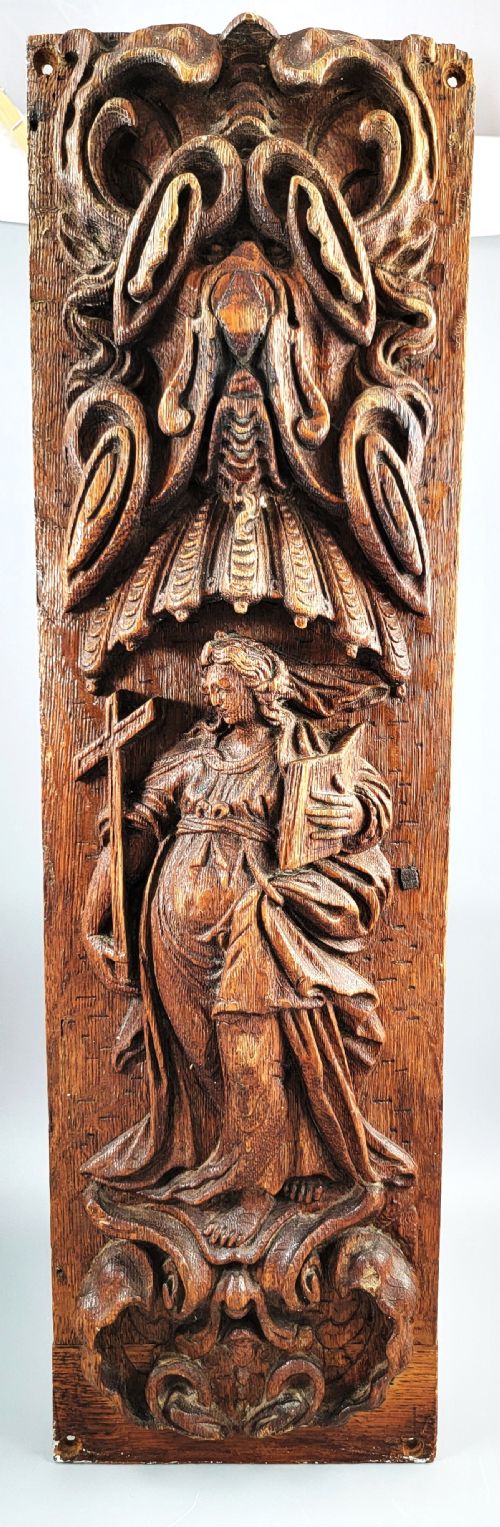
The objects most frequently met on this page include carved oak panels depicting allegorical scenes, tavern interiors, and devotional subjects like the Corpus Christi or Pietà. They function well as wall reliefs or integrated architectural elements within traditional interiors.
Dating ranges from pre-sixteenth century examples to late seventeenth-century Baroque works, alongside Victorian revival pieces produced around eighteen eighty and eighteen ninety. Each form displays the characteristic dense grain and sculptural depth typical of Northern Renaissance and Baroque traditions.
Materials and construction methods
The primary material across these listings is solid oak, selected for its durability and capability to hold deep, crisp chisel work. Certain panels incorporate parcel gilt highlights to accentuate drapery folds and architectural details against the dark timber.
Makers shaped these items through direct woodcarving techniques, utilising hand chisels and gouges to create high relief panels and freestanding sculptures. Iron fixings occasionally appear as structural elements in architectural fragments and panels.
Flemish Oak Carvings Retail Price Guide 2026
Typical asking prices for flemish oak carvings among the pieces listed under this phrase on Sellingantiques today, from the lower quarter to the upper quarter. They describe what is for sale here now, not the wider market.
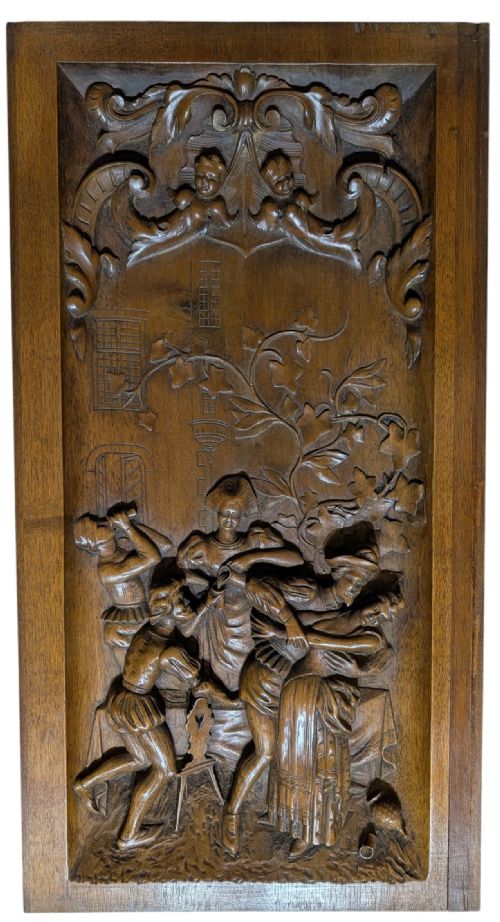
One unexpected panel captures a lively seventeenth-century village tavern scene carved entirely from heavy British and continental oak.
Factors that distinguish quality
The crispness of the chisel marks and the preservation of the original wood surface distinguish superior period panels from later revival iterations. Compositional complexity, such as multi-figure tavern scenes or detailed allegorical narratives, marks out the most accomplished workshops.
The Flemish Oak Carvings Glossary
- Parcel Gilt
- Woodwork decorated with applied partial gilding, usually leaf gold placed on specific raised details to contrast with the dark oak beneath.
- Architectural Fragment
- A surviving portion of a larger building structure, such as a carved frieze or panel removed from its original interior context.
- Baroque
- An artistic style prevalent in the seventeenth century characterised by theatrical movement, dramatic contrast, and exuberant sculptural forms.
- Corpus Christi
- A sculptural representation of the body of Jesus Christ on the cross, often carved in wood during the medieval and seventeenth-century periods.
- Wall Relief
- A sculptural technique where figures and ornaments project from a flat background of the same timber material.
Flemish Oak Carvings: Frequently Asked Questions
What periods do these carvings come from?
The inventory includes items from the pre-sixteenth century, sixteenth century, and seventeenth century, alongside nineteenth-century revival pieces from eighteen eighty and eighteen ninety.
Buyers find both genuine period antiquities and later Victorian interpretations that emulate earlier styles.
How were these wooden panels originally used?
Many originated as architectural fragments, wall panels, or devotional sculptures within domestic and ecclesiastical interiors in the Low Countries.
They served as decorative wall reliefs or narrative elements within larger interior woodwork schemes.
How should I hang heavy oak panels?
Due to the substantial weight of solid oak carvings, secure wall fixings attached to structural studs or masonry are necessary.
Professional mounting ensures the timber supports its own weight without placing undue stress on historical joints.
How do I distinguish sixteenth-century work from revival pieces?
Early pieces display authentic tool marks, natural timber ageing, and wear consistent with centuries of handling.
Revival pieces from the late nineteenth century often show more uniform patination and machine-assisted preparation beneath the hand carving.