



Flat Pack Armoire
A flat pack armoire offers the practicality of disassembly alongside period charm, making it a clever choice for rooms with tight access.
Flat Pack Armoire
When you search for a flat pack armoire, you encounter historic wardrobes designed to come apart for transport and installation. The pieces appearing here span the Georgian and Victorian eras up to the early twentieth century, alongside specific Arts and Crafts and French Provincial expressions.
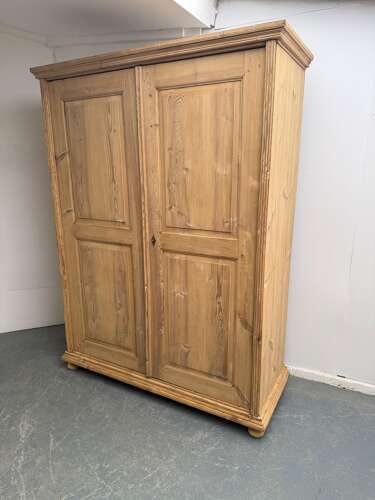
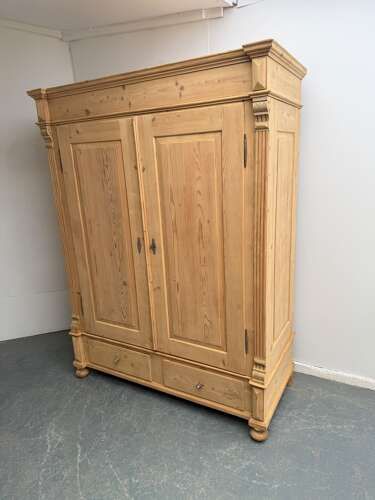
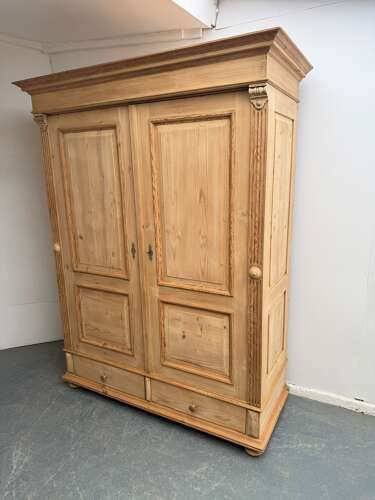
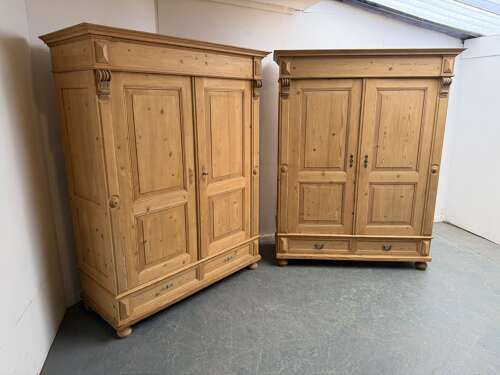
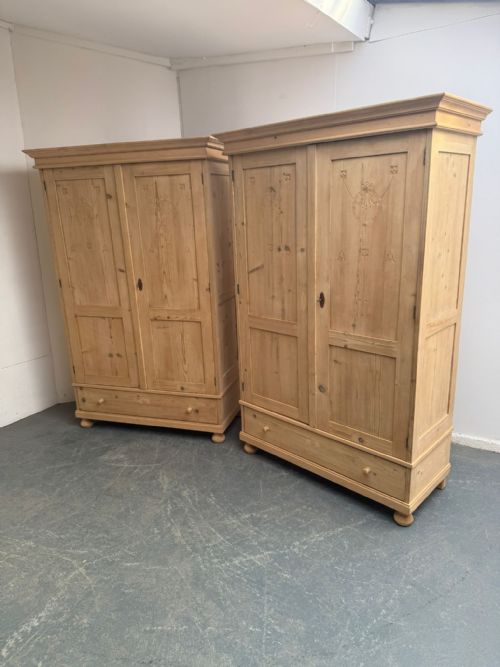
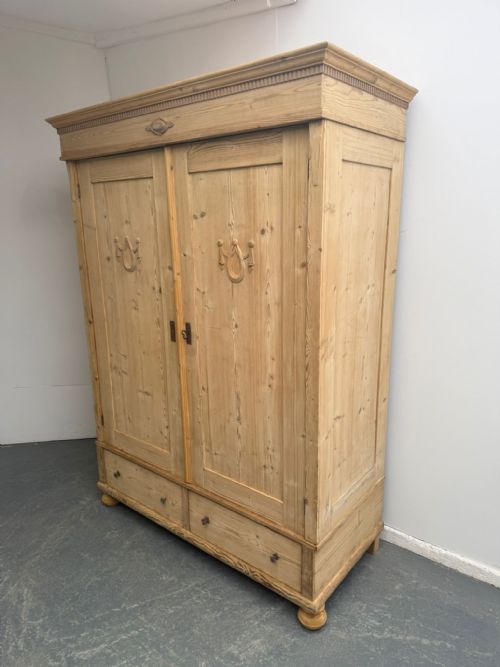
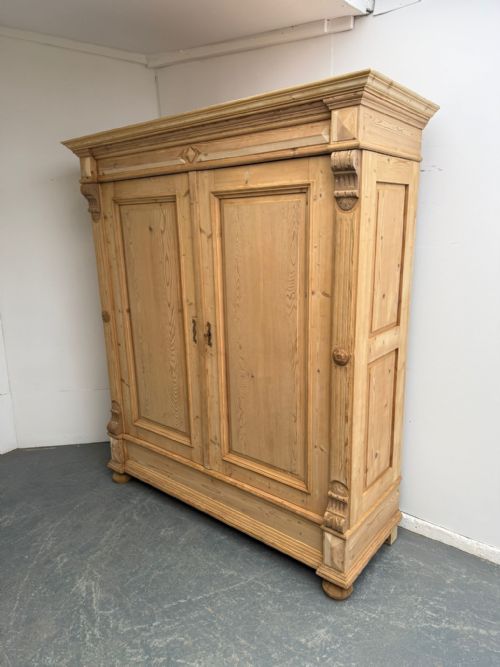
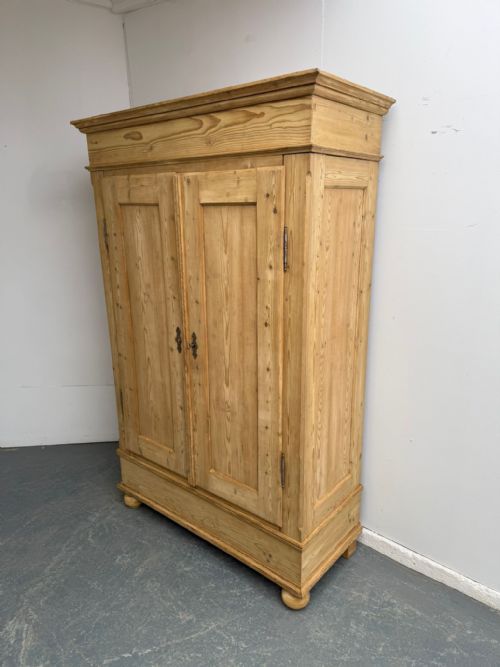
You are most likely to meet substantial pine two-door knockdown wardrobes intended for finishing with wax or paint. These practical storage items also appear in oak and metal forms, serving as flexible bedroom furniture built to travel.
How they were made
Makers constructed these knockdown wardrobes primarily using solid pine and oak, relying on robust timber to withstand repeated assembly and dismantling. Iron and metal components reinforced the joints and internal fittings.
Joinery techniques allowed panels, cornices and bases to interlock or bolt together securely without permanent glue. This clever engineering ensured the furniture remained sturdy despite being completely portable.
What varies in quality
The sophistication of the timber preparation and the subtlety of architectural details define the upper tier of these wardrobes. Finer examples feature thoughtful proportions, clean interior shelving configurations and well-executed columned or arched mouldings.
Simpler vernacular pieces prioritise plain utility over decorative ornament. The integrity of the original knockdown mechanism and the soundness of the surviving wood ultimately govern the standard of each item.
The Flat Pack Armoire Glossary
- Knockdown
- A piece of furniture designed to be dismantled into flat sections for easy moving. This term describes the historic precursor to modern flat pack furniture.
- Armoire
- A tall cupboard or wardrobe used primarily for hanging or shelving garments. These large storage pieces often form the visual centrepiece of a bedroom.
- Combination
- A wardrobe layout that pairs hanging space with internal shelving or drawers. This configuration offers versatile storage options within a single carcass.
- Cottage
- A vernacular style associated with simpler, unpretentious rural dwellings. Pieces bearing this descriptor generally feature straightforward joinery and modest ornamentation.
- Cornice
- The decorative moulded projection that crowns the top of a wardrobe. This architectural element adds proportion and visual balance to the piece.
Flat Pack Armoire: Frequently Asked Questions
How do flat pack armoires assemble?
These historical wardrobes rely on bolts, wooden pegs or interlocking tongue-and-groove joints to connect the top, base, sides and doors without permanent adhesives.
This method allowed historical households to move large furniture pieces through narrow stairwells and doorways before reassembling them securely in place.
Where were knockdown wardrobes used?
They served as primary bedroom storage in period homes, particularly in townhouses and country properties where moving bulky furniture between floors proved difficult.
Their modular nature made them especially popular for upper-floor chambers and rented properties requiring flexible furnishing solutions.
How do I care for a waxed pine armoire?
Maintain the timber by applying a traditional beeswax polish periodically to nourish the grain and protect the surface from drying out.
Avoid placing the wardrobe near direct heat sources or in damp environments to prevent the wood from warping and to keep the knockdown joints fitting correctly.
How do I distinguish Georgian from Victorian examples?
Georgian pieces often display cleaner, restrained lines and lower proportions typical of eighteenth-century and early nineteenth-century cabinetmaking. Victorian versions tend to be larger, incorporating bolder architectural elements such as heavy columns, arched panels and combination drawers.