

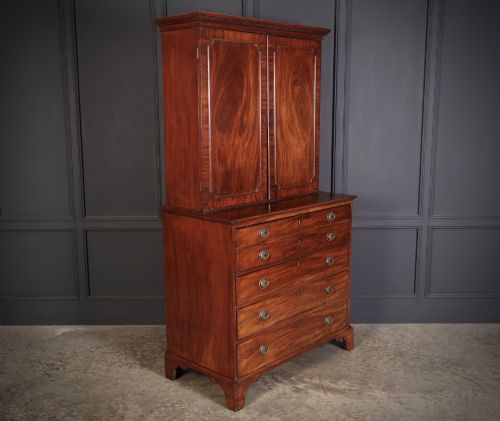
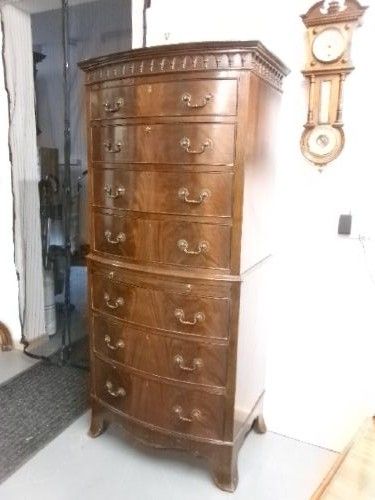
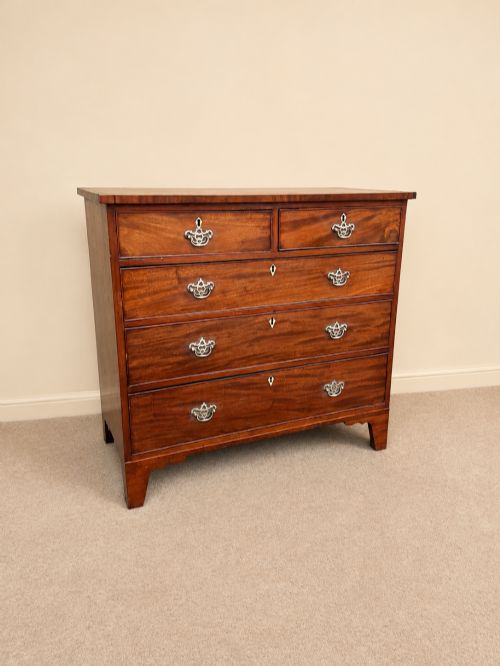
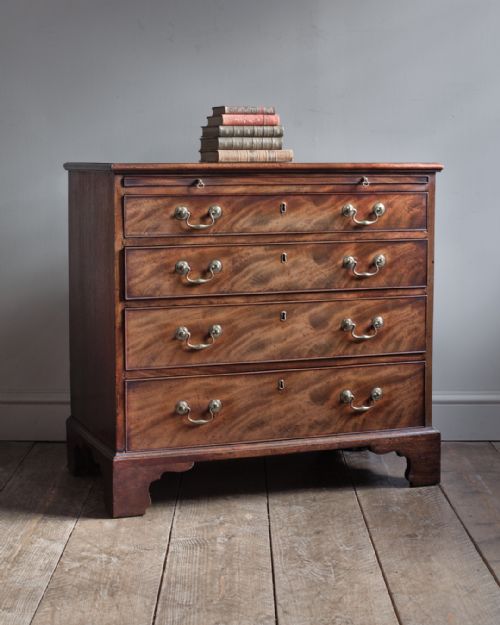
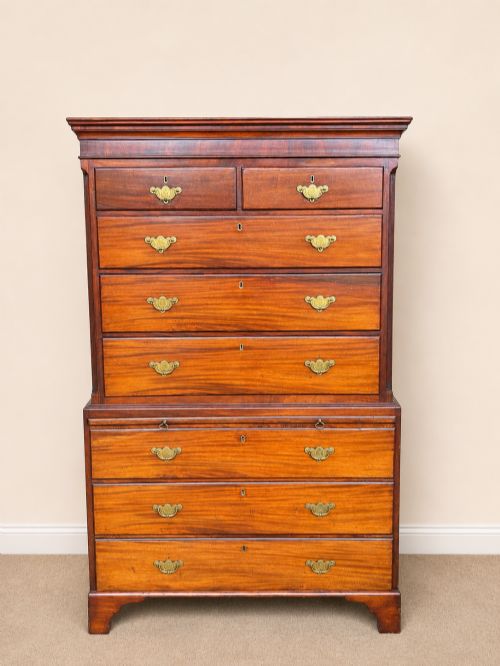
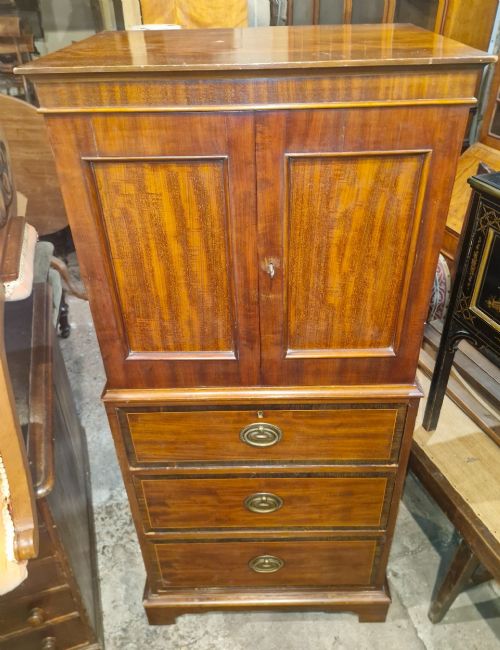
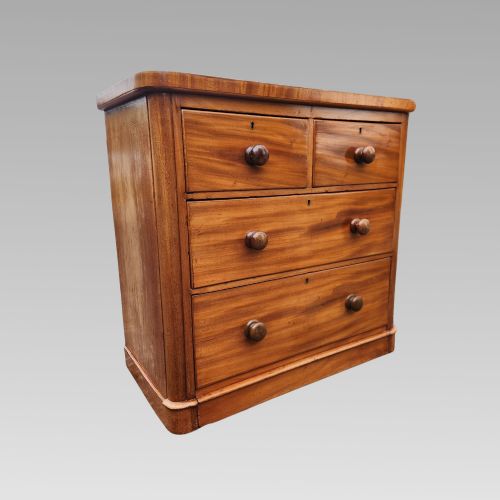
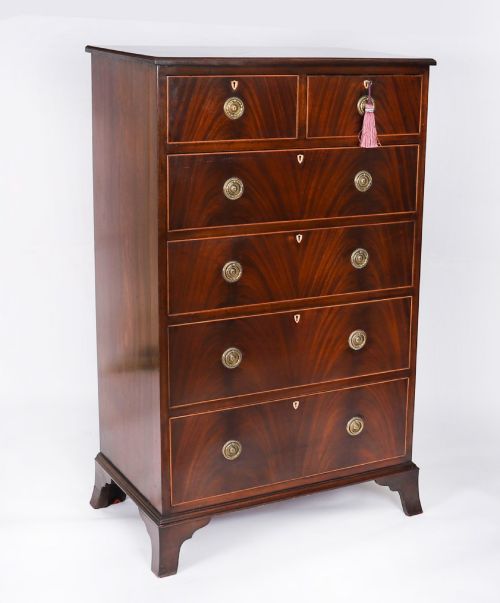
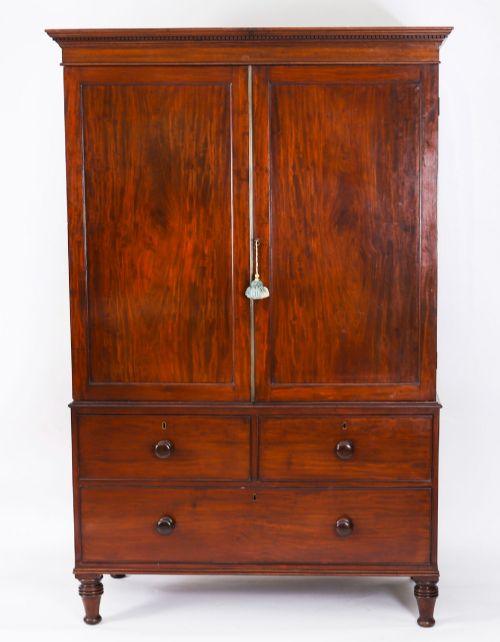
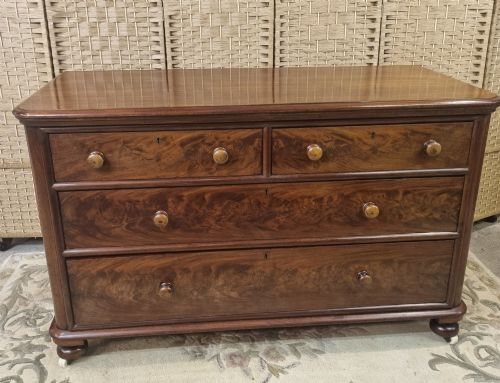
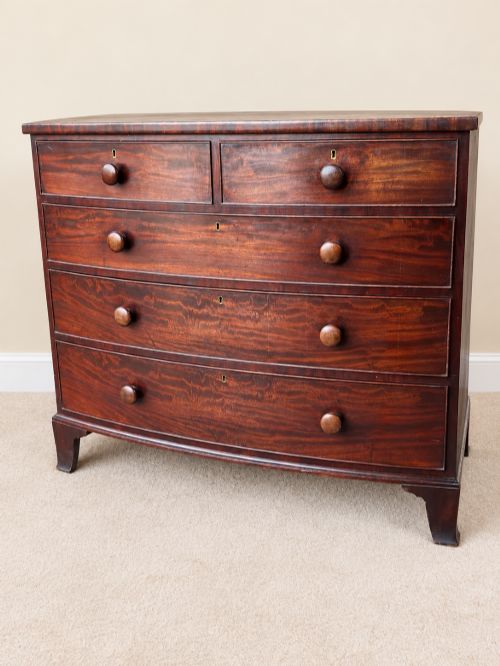
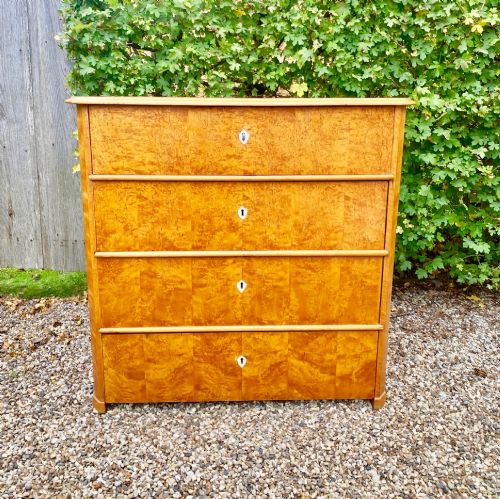
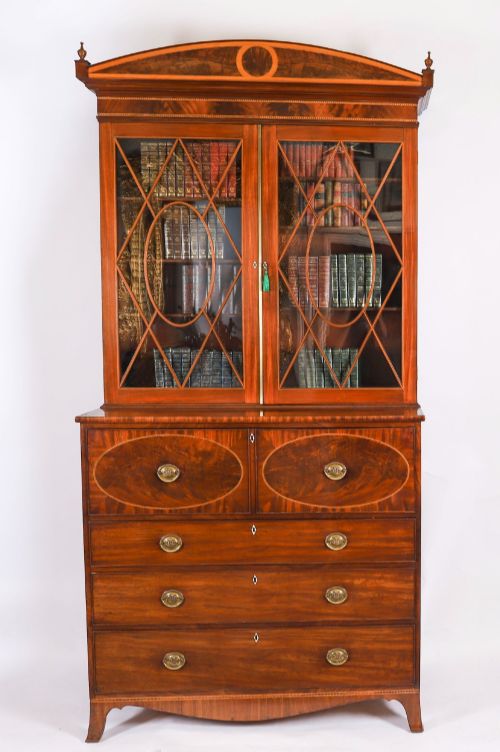
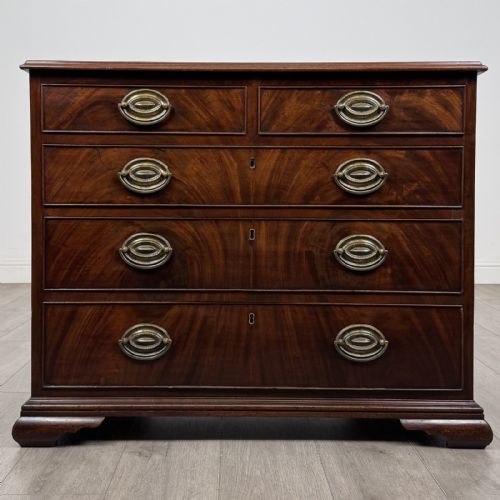
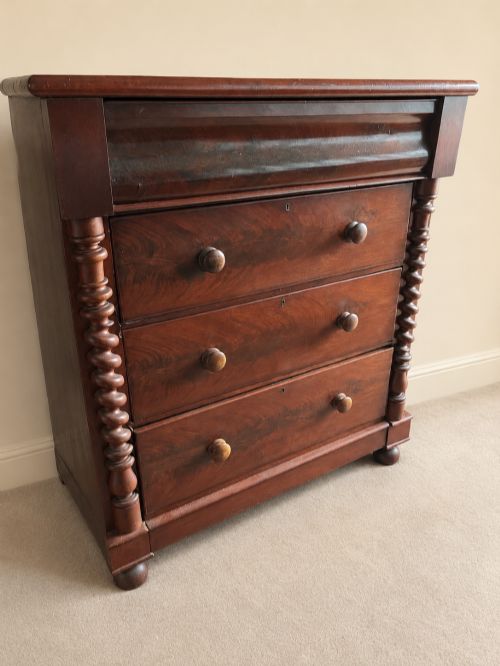
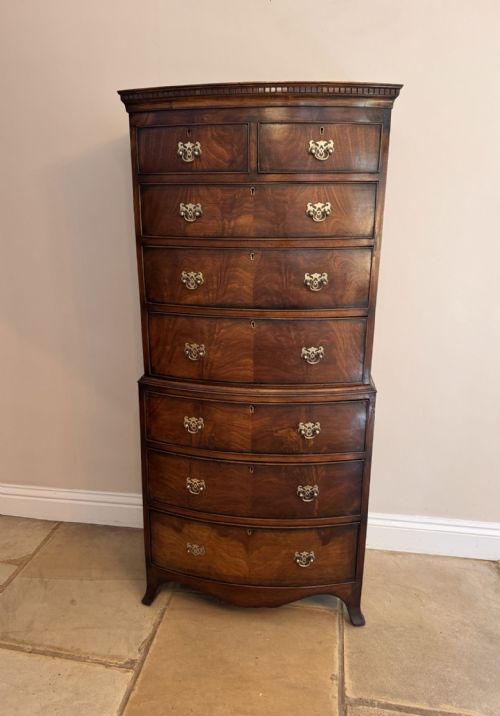
Flamed Wood Tallboy
A flamed wood tallboy brings striking grain and vertical storage to a room, combining practical drawer space with the rich warmth of figured veneers.
Flamed Wood Tallboy
A flamed wood tallboy is a tall chest of drawers or chest on chest that displays intensely figured grain patterns across its timber surfaces. Buyers searching for a flamed wood tallboy encounter case pieces spanning the eighteenth, nineteenth, and early twentieth centuries, constructed in regional British and continental workshops.
Tallboys and chest on chest variations provide elevated storage footprints compared to standard low chests, while related forms like secretaire bookcases and linen presses appear among the listings. Continental examples introduce Swedish Biedermeier interpretations alongside British cabinetmaking traditions.
Materials and Construction
Cabinetmakers utilised solid timbers such as mahogany, pine, and birch to construct the internal carcase and drawer frames. Fine wood veneers with pronounced figuring, specifically flame mahogany and flame birch, were then applied to the primary exterior drawer fronts and door panels to create dynamic visual movement.
Secondary structural elements incorporated pine and oak for drawer linings and backboards, joined using traditional dovetail techniques. Brass hardware, including drop handles and escutcheons, was fitted to secure drawers and doors across Georgian, Regency, and Victorian pieces.
Flamed Wood Tallboy Retail Price Guide 2026
Typical asking prices for flamed wood tallboy among the pieces listed under this phrase on Sellingantiques today, from the lower quarter to the upper quarter. They describe what is for sale here now, not the wider market.
Current listings feature mahogany, pine, birch, and flame mahogany veneer across Georgian, Victorian, Regency, and Biedermeier styles.
Factors That Determine Quality
Quality rests in the selection and matching of the veneer across the drawer fronts, where symmetrical grain patterns require high skill from the cabinetmaker. The crispness of the secondary mouldings and the precision of the dovetail joints reveal the standard of workshop execution.
The condition of the timber surfaces, the integrity of the internal drawer construction, and the presence of period brass handles distinguish finer examples from standard vernacular pieces.
Whytock & Reid
The Flamed Wood Tallboy Glossary
- Tallboy
- A tall chest of drawers, often constructed as a chest on chest where a smaller upper section sits upon a larger base. This form maximises vertical storage capacity while maintaining a compact floor footprint.
- Flame Mahogany
- A veneer cut from the branch junctions of the mahogany tree, producing a distinctive, flame-like pattern of rippling grain. Cabinetmakers prized this material for its dramatic visual impact on primary display surfaces.
- Bowfront
- A furniture front that curves outward in a convex arc across the width of the piece. This contour softens the rectangular lines of a chest and showcases figured wood veneers to advantage.
- Secretaire
- A desk form incorporating a fitted writing drawer with a drop-down flap that conceals small pigeonholes and internal compartments. It integrates a writing surface into the upper sections of tall case furniture.
- Biedermeier
- A Central European style dating from the nineteenth century that prioritises clean architectural lines and smooth wood veneers over heavy ornamentation. Swedish interpretations frequently utilise birch timbers with minimal brass mounts.
Flamed Wood Tallboy: Frequently Asked Questions
What is a tallboy?
A tallboy is a high storage chest, historically built as a single tall unit or as a chest on chest configuration.
It offers significant drawer space within a narrow footprint, making it practical for rooms with limited wall area.
How do I identify flame mahogany?
Flame mahogany is recognised by its characteristic ripple effect, which resembles flickering flames across the wood surface.
This appearance results from cutting veneers from specific sections of the timber log where the grain twists.
Where were these pieces made?
The pieces originate from British and continental European workshops, spanning Georgian, Victorian, and Swedish Biedermeier traditions.
Regional cabinetmakers built them using locally sourced structural woods paired with imported or native decorative veneers.
How do I care for figured wood furniture?
Maintain figured wood surfaces by keeping them away from direct sunlight and steady temperature fluctuations to protect the veneer.
Regular dusting with a dry cloth preserves the finish without requiring heavy polishes.