

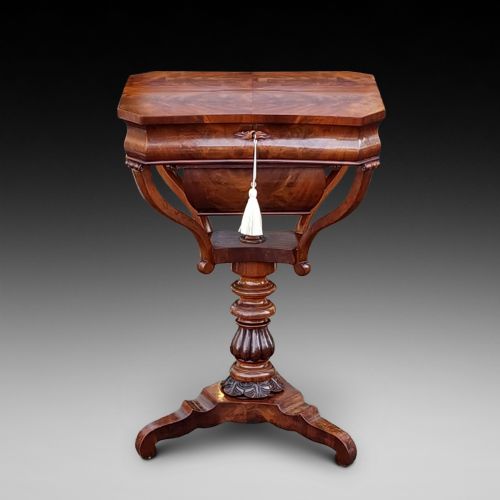
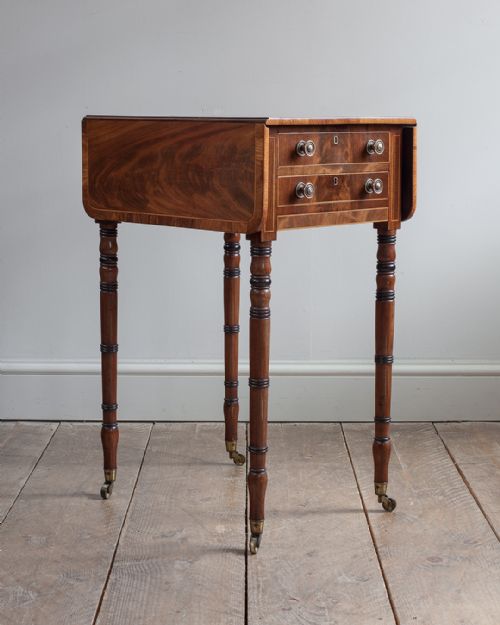
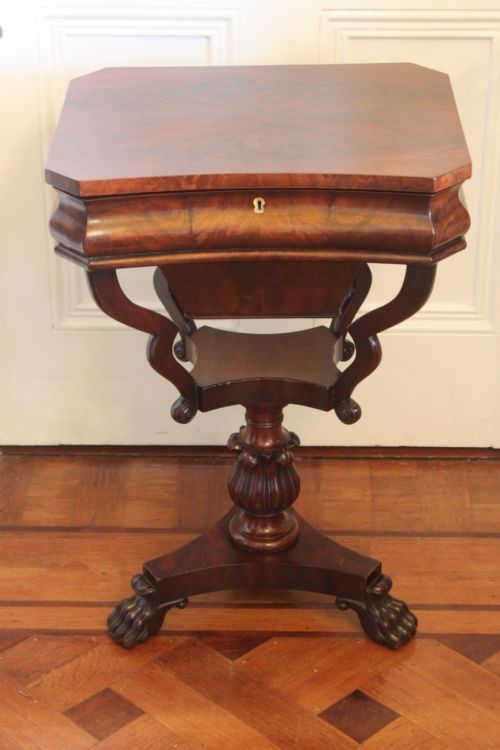
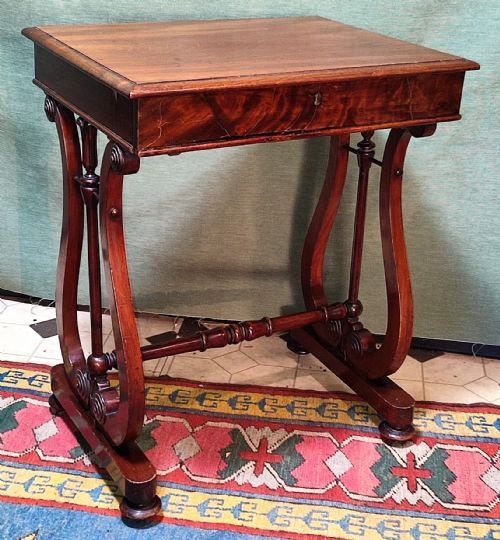


Flame Mahogany Sewing Table
A flame mahogany sewing table brings striking cabinet-work and practical storage into a room, making it a sought-after piece for refined interiors.
Flame Mahogany Sewing Table
A flame mahogany sewing table, also catalogued in the evidence as a work table or workbox, serves as a compact and versatile piece designed for domestic tasks and needlework. These items appear across the Regency, George IV, William IV, and Victorian periods, extending into the late nineteenth century.
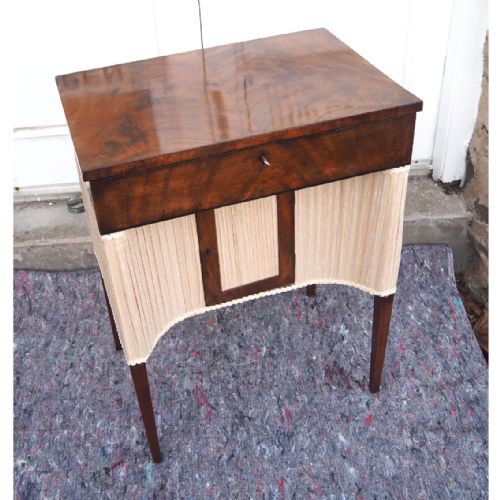
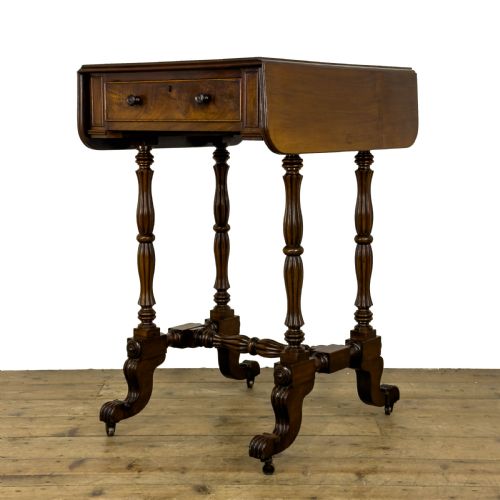
The form typically incorporates compartments or a fabric bag beneath the main surface to hold sewing implements, alongside drop leaves or a pedestal base. They function equally well as occasional or side tables in modern rooms while retaining their original nineteenth-century character.
Buyers will encounter variations described variously as dressing tables, vanity tables, or lamp tables, though all share the core domestic utility of the era. The evidence shows origins spanning the early nineteenth century through to eighteen ninety, predominantly rendered in rich timbers.
How they were made
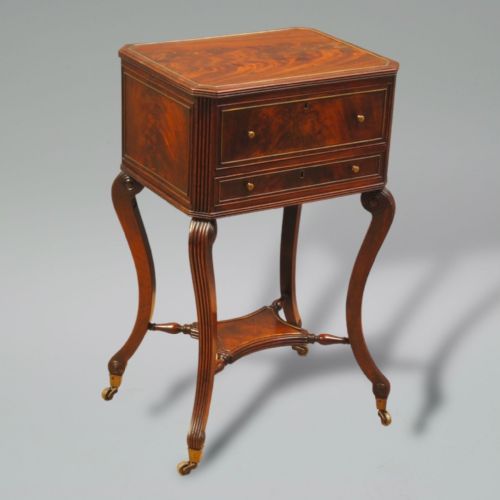
Cabinet-makers utilised solid mahogany and wood veneer over structural timber, applying carefully selected flame mahogany veneer to create dramatic, figured grain patterns on the surfaces. This technique highlights the natural optical depth of the wood.
Selected examples integrate brass mounted details or drop leaves supported by hinged joints, combining structural stability with delicate proportions. Fabric is frequently incorporated into the lower work bag sections to store textiles and tools.
Flame Mahogany Sewing Table Retail Price Guide 2026
Typical asking prices for flame mahogany sewing table among the pieces listed under this phrase on Sellingantiques today, from the lower quarter to the upper quarter. They describe what is for sale here now, not the wider market.
Several Victorian work tables retain their original fabric bags, ready to hold modern odds and ends just as they did for nineteenth-century needlework.
What varies in quality
The visual impact of the timber figure dictates much of the distinction between pieces, with deeply figured flame mahogany and curl grain veneers commanding attention. The choice of solid mahogany framing against veneered surfaces also indicates the standard of manufacture.
Refinement in the turning of pedestals, the precision of the joinery on drop leaves, and the integration of brass mounts separate standard cabinet-work from superior examples. The execution of interior compartments for sewing implements reveals the maker's care.
The Flame Mahogany Sewing Table Glossary
- Flame mahogany
- A veneer cut from timber where the branch meets the trunk, producing a rippling, flame-like grain pattern. This highly decorative surface defines the appearance of finer nineteenth-century tables.
- Work table
- A multi-functional piece of furniture designed for needlework and domestic crafts, usually containing internal compartments or an attached fabric bag. These terms are frequently used interchangeably with sewing tables in the evidence.
- Drop leaf
- A hinged flap on the side of a table that can be raised to extend the surface area or lowered when space is restricted. It adds versatility to smaller occasional tables.
- Curl grain
- A figuration in timber created by twisting growth patterns in the tree, producing feathery waves across the mahogany surface. It is closely related to flame and feathered mahogany varieties.
- Occasional table
- A small, movable table designed for general use in various rooms rather than a specific permanent function. They appear across Regency and Victorian periods in multiple wood types.
Flame Mahogany Sewing Table: Frequently Asked Questions
What is a flame mahogany sewing table?
A flame mahogany sewing table is a nineteenth-century compact piece of furniture featuring figured wood veneers and built-in storage for needlework. They combine decorative cabinet-work with practical utility.
These items often include drop leaves, pedestal bases, or fabric work bags, serving effectively as side or occasional tables today.
How do I date a sewing table?
Dating relies on stylistic markers from periods such as Regency, George IV, William IV, and Victorian eras. Cabinet-making techniques and turning styles provide further clues.
Evidence shows these tables span from the early nineteenth century through to the late eighteen nineties, reflecting shifting design preferences.
Can I use a work table daily?
These tables adapt well to daily use as lamp tables, side tables, or vanity units in modern homes. Their compact proportions suit smaller spaces.
Care should be taken with historic wood surfaces and fabric components to preserve their nineteenth-century materials.
What is the difference between work and sewing tables?
The terms are largely interchangeable in historical listings, both describing tables equipped with internal compartments or hanging bags for crafts. Both forms date primarily across the Regency and Victorian periods.
Variations in the evidence include dressing or vanity tables, which share similar pedestal or drop-leaf construction.