



Flame Mahogany Pediment
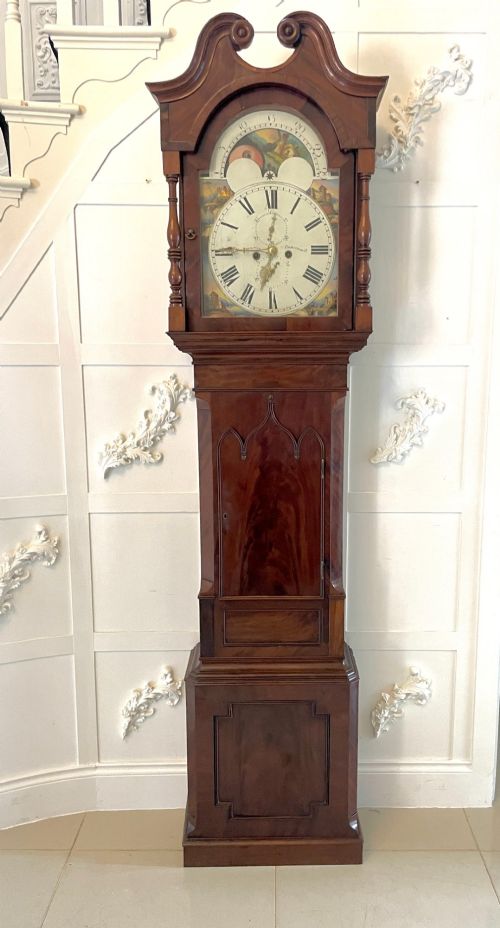
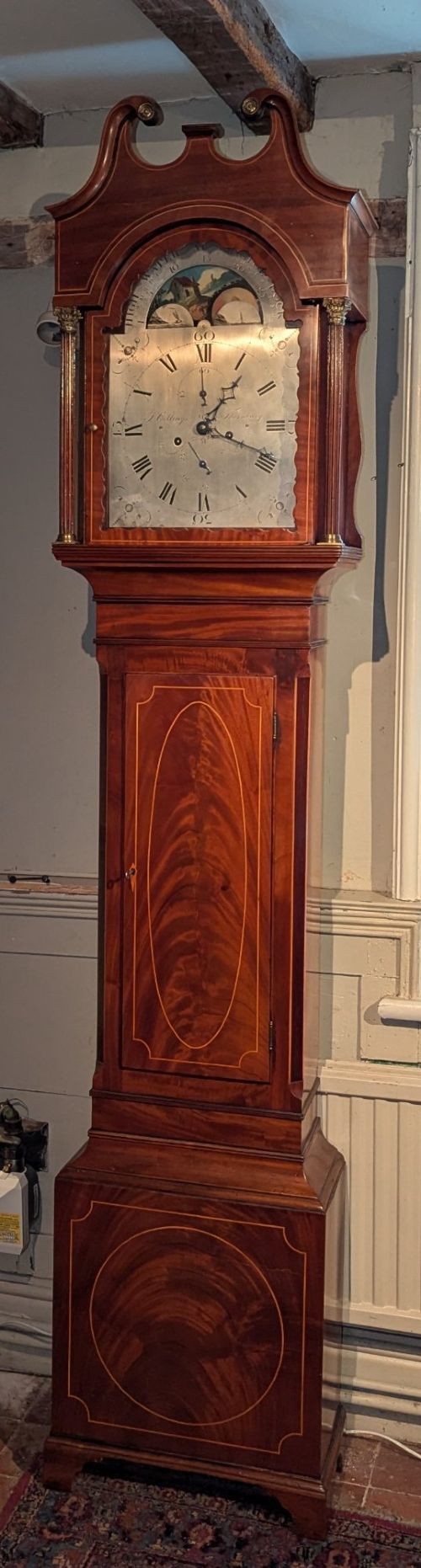
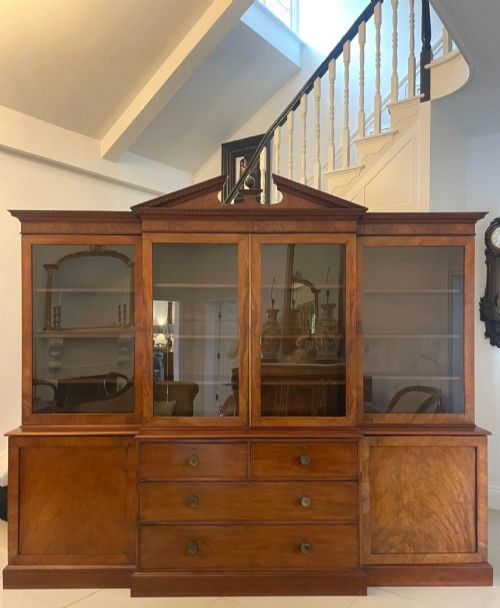
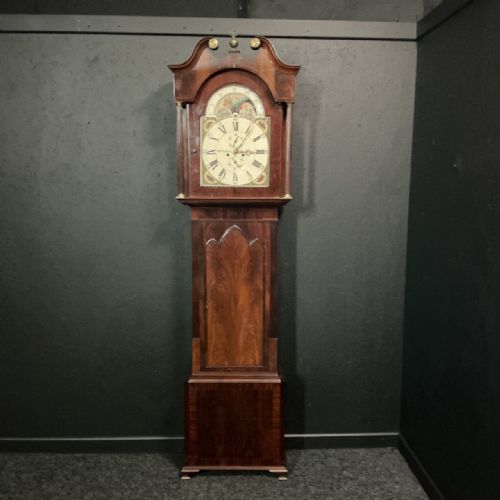
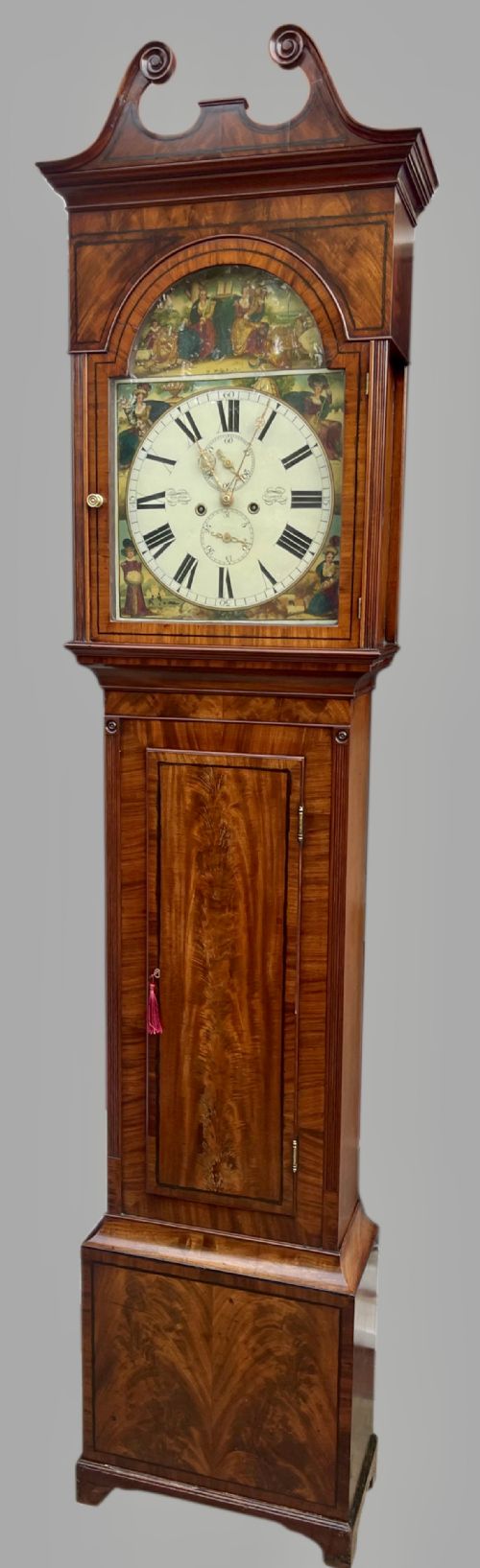
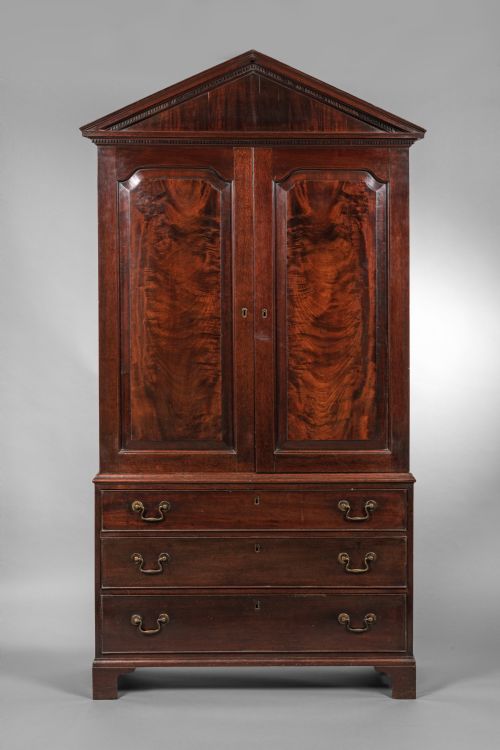
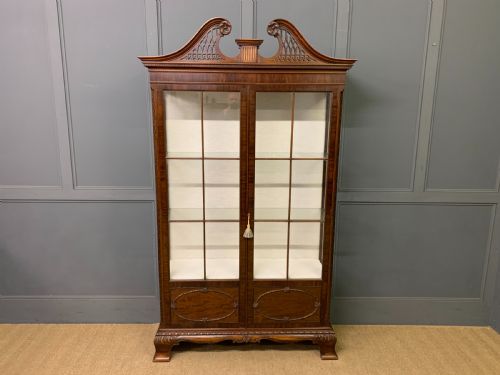
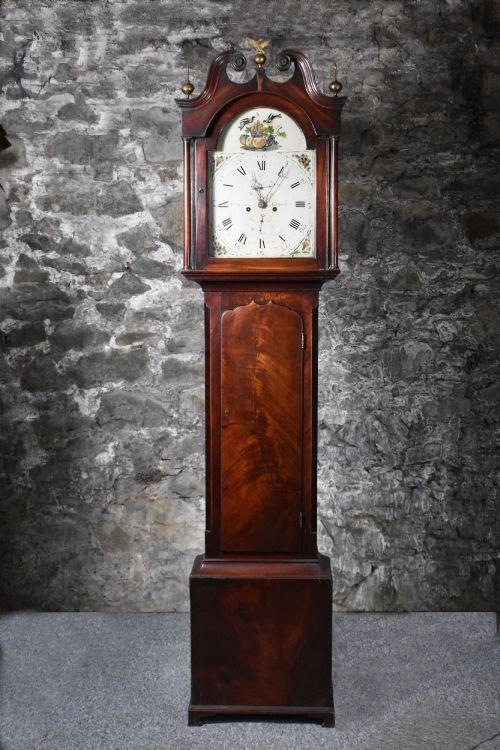
Flame mahogany pediment details crown tall library cases, corner cabinets, and grandfather clocks with rich, swirling timber figures.
Flame Mahogany Pediment
When searching for a flame mahogany pediment, a buyer encounters architectural crowns atop tall case furniture, notably Georgian and 19th-century bookcases, linen presses, corner cabinets, and longcase clocks. These elements sit at the very top of large storage and timekeeping pieces, framing the architectural presence of the cabinet below.
The version most commonly met on this page is the broken arch or swan neck pediment found on Georgian and Victorian clocks and bookcases. These examples utilise figured timber specifically selected for the pediment area to draw the eye upward and display the rich grain.
Origins span English, Scottish, and Welsh workshops, with regional clockmakers and cabinetmakers incorporating these decorative timber crowns into high-status domestic furnishings. The forms range from simple triangular cornices to elaborate scrolled hoods.
Materials and construction
Cabinetmakers constructed these upper sections using solid mahogany frames lined with carefully sliced flame mahogany veneers. The distinctive feather-like grain patterns required meticulous book-matching across the pediment surface to create symmetrical visual movement.
Secondary structural elements incorporate brass hardware, glass panels for bookcase doors, and iron components within clock movements. The timber veneers were bonded using animal glues onto stable pine or secondary mahogany substrates to prevent warping along the curved mouldings.
Listings span George II, George III, Regency, and Victorian periods, showcasing mahogany, brass, glass, and iron.
Gradations in quality
The quality of a flame mahogany pediment depends on the intensity and symmetry of the wood figure selected by the maker. Superior examples display dense, highly active chatoyant grain patterns that catch the light, while lesser pieces utilise plain timber with minimal movement.
Execution of the joinery at the apex and scroll terminals dictates the refinement of the piece. Crisp moulding profiles and seamless veneer application separate exceptional cabinet work from standard production.
Richard Sharkey Birmingham·Hampson and Son·James Harvey of Abergavenny·John Breakenrig·Ninian Davidson of Dunse·John Shelton·John Banks Oldham·Thos Russell Lancaster·Thomas Bradshaw·Dent of London·David Griffith Carnarvon·W M Smith Of Leith·James Marshall
The Flame Mahogany Pediment Glossary
- Pediment
- The architectural crowning element situated above the door or facade of a cabinet or clock hood. It provides a formal termination to the vertical composition.
- Flame mahogany
- A veneer cut from the branch junctions of the mahogany tree, displaying a distinctive feather-like or flame-like pattern. This figured timber was reserved for prominent exterior surfaces.
- Broken arch
- A pediment design where the upper mouldings do not meet at the centre, often leaving space for a central plinth, finial, or urn. It is also known as a swan neck pediment.
- Longcase clock
- A tall pendulum clock enclosed in a wooden case, frequently featuring an architectural hood with a prominent pediment. They are also widely referred to as grandfather clocks.
- Linen press
- A tall storage piece comprising upper cupboard doors above a chest of drawers, often finished with a decorative pediment. They were traditionally utilised for storing folded linens and garments.
Flame Mahogany Pediment: Frequently Asked Questions
How do I date a pediment clock?
Dating a longcase clock relies on the dial style, movement type, and the architectural proportions of the hood and pediment.
Georgian examples often feature brass dials and rolling moon phases, while later 19th-century versions frequently incorporate painted iron dials and eight-day movements.
Where were these pieces made?
These pieces originated in workshops across England, Scotland, and Wales, with regional makers signing the clock dials or cabinet interiors.
Maker signatures from towns such as Lancaster, Liverpool, and Edinburgh appear frequently on the horological examples.
How do I care for flame mahogany?
Flame mahogany requires stable indoor humidity away from direct sunlight to prevent the timber veneer from drying or fading.
Regular dusting with a dry, soft cloth maintains the polished finish without the need for heavy chemical waxes.