



Flame Mahogany Highboy
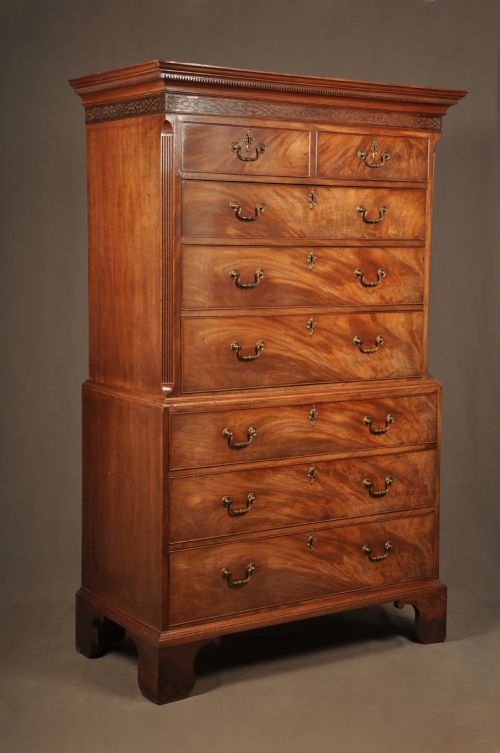
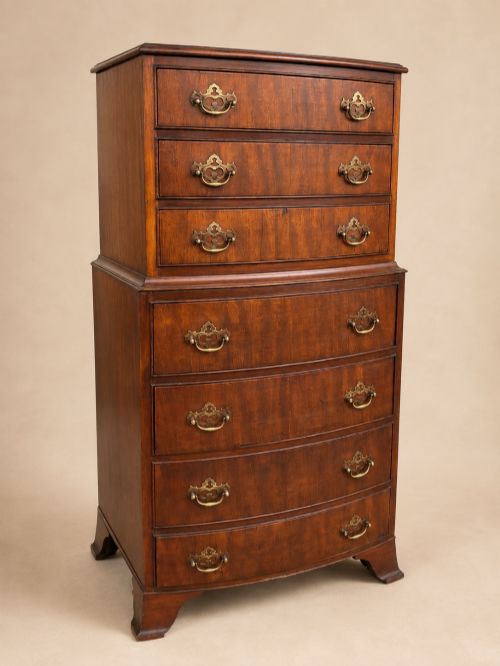
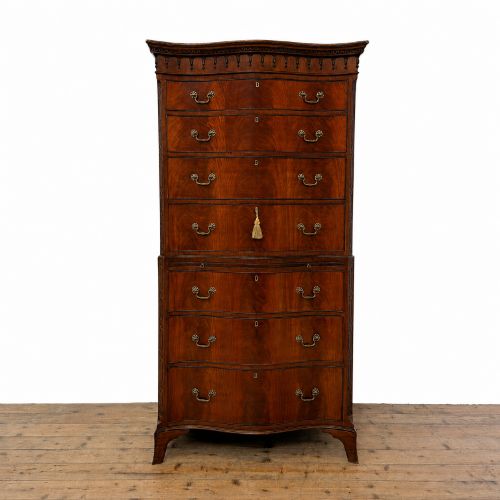
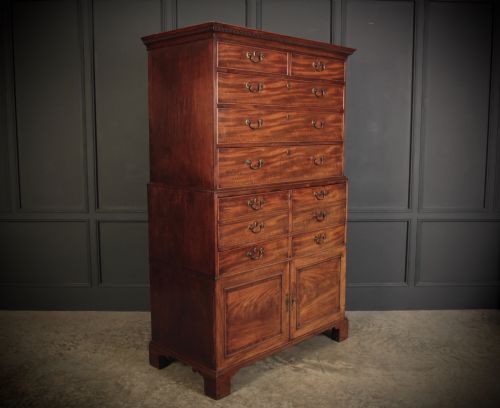
These flame mahogany highboy pieces are tall, stacked chests delivering rich grain patterns and formidable storage that command a room.
Flame Mahogany Highboy
When you search for a flame mahogany highboy, you are looking at substantial case furniture designed to maximise vertical storage while displaying timber of exceptional figure. These pieces typically take the form of a chest on chest or a tallboy, dividing the vertical expanse into two main sections to ease construction and movement.
On this page, the pieces you are most likely to meet span the Georgian era through to the early twentieth century, incorporating George III originals alongside later revivals. Formats range from traditional straight fronts to refined bowfronts and serpentine outlines, sometimes incorporating a secretaire drawer or standing on a low base.
How they were made
Cabinetmakers built these tall chests using solid secondary timbers like oak and pine for the internal carcases and drawer linings, applying choice veneers to the primary exterior surfaces. The distinctive figuring known as flame mahogany comes from timber harvested at the junction where branches meet the main trunk, sliced carefully to reveal feather-like patterns.
Drawer fronts and principal panels received these figured veneers, bordered occasionally by contrasting stringing or crossbanding. Structural integrity depended on sturdy dovetail joints for the drawers and carcases, complemented by brass handles and escutcheons secured to the drawer faces.
Flame Mahogany Highboy Retail Price Guide 2026
Typical asking prices for flame mahogany highboy among the pieces listed under this phrase on Sellingantiques today, from the lower quarter to the upper quarter. They describe what is for sale here now, not the wider market.
Channel Islands cabinetmakers occasionally added secret compartments behind small drawers to hide family ledgers and coin purses.
What varies in quality
The distinction between ordinary and exceptional examples rests primarily on the symmetry and depth of the timber figuring across the facade. Finer pieces display matched flame veneers that flow logically across multiple drawers, creating a cohesive visual statement rather than a patchwork of unrelated panels.
Proportion and secondary details also dictate standing, with superior items retaining original brass hardware, well-executed bracket or ogee feet, and crisp mouldings. The precision of the cabinetwork inside the drawers and the condition of the underlying secondary woods reveal the level of care invested by the original maker.
The Flame Mahogany Highboy Glossary
- Flame mahogany
- A veneer cut from the fork of a mahogany tree that produces a distinctive undulating, flame-like pattern. This figure is prized for its dramatic visual movement on primary drawer fronts.
- Tallboy
- A tall chest of drawers made in two sections, usually a smaller chest sitting upon a larger base chest. It provides substantial vertical storage without occupying a large floor footprint.
- Chest on chest
- An alternative term for a tallboy where an upper chest of drawers sits directly on top of a lower chest. The two sections lock together to form a single tall case piece.
- Secretaire
- A drawer fitted with a drop-front writing surface and small internal pigeonholes and drawers. It allows a tallboy to function simultaneously as a storage chest and a writing desk.
- Serpentine front
- A furniture front curved with a convex centre flanked by concave wings. This complex shape requires skilled woodworking to fit drawers and carcase frames precisely.
- Bowfront
- A convex, outwardly curving front elevation seen on various chests. This profile softens the rectangular geometry of large case pieces.
Flame Mahogany Highboy: Frequently Asked Questions
What is a flame mahogany highboy?
A flame mahogany highboy is a tall, stacked chest of drawers featuring highly figured wood veneer with feather-like patterns.
These pieces combine substantial vertical storage capacity with decorative presence, using two distinct sections placed one upon the other.
How do I tell an 18th-century piece from a later revival?
Eighteenth-century examples typically display hand-cut dovetails, specific secondary woods like oak, and subtle patination developed over centuries of use.
Later nineteenth-century and early twentieth-century interpretations often incorporate machine-cut elements, different internal linings, or revival styling cues like George I style details.
How were these tall chests used originally?
They served primarily as high-capacity wardrobes or linen chests in domestic bedrooms and dressing rooms. The upper sections held lighter garments while deeper lower drawers accommodated heavier textiles.
Some variants included a secretaire drawer to double as a convenient writing cabinet for correspondence.
How do I care for flame mahogany furniture?
Keep these pieces away from direct sunlight and steady sources of heat to protect the delicate veneer and polish from fading or drying out. Gentle dusting with a dry cloth and occasional application of appropriate furniture wax maintains the timber's condition.