
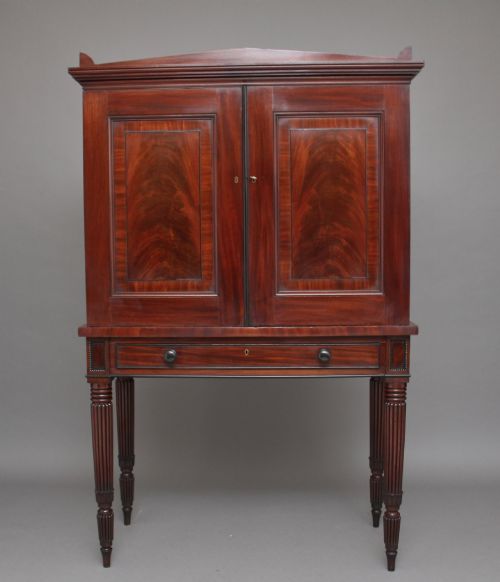


Flame Mahogany Collector Chest
These flame mahogany collector chests are practical small drawer units built to hold specimens, offering striking grain patterns and disciplined proportions for domestic display.
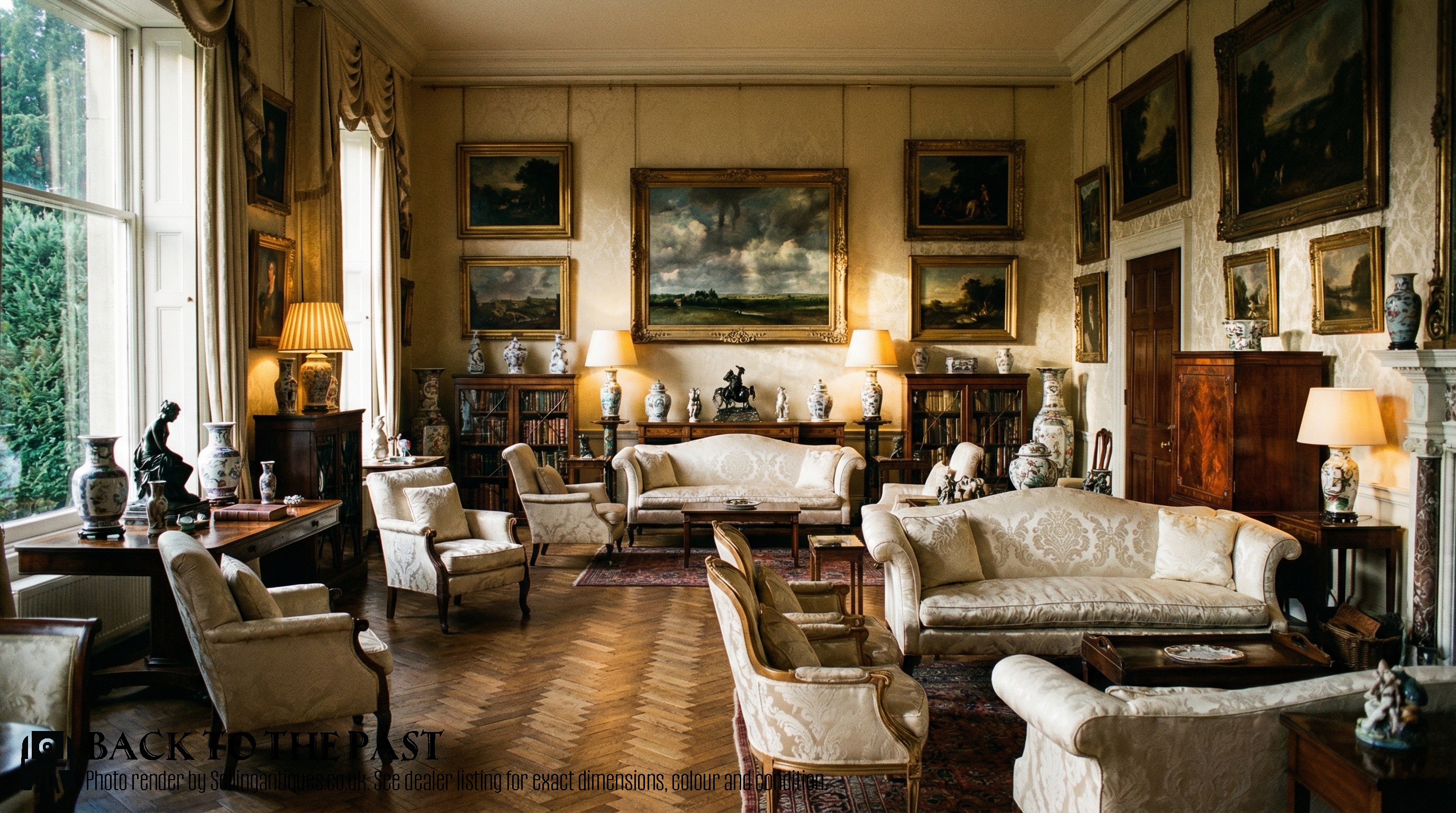
Flame Mahogany Collector Chest
When you search for a flame mahogany collector chest, you encounter small-scale case furniture designed to organise natural history specimens or precious items within banks of internal drawers. The examples found here span the Georgian, Victorian, and Edwardian periods, appearing as miniature chests, Wellington chests, and bedside pieces.
The version most commonly met on this page is the Victorian specimen or collectors cabinet, often fitted with numerous shallow drawers housed behind locking doors. These pieces reflect a nineteenth-century passion for classification, translating scientific utility into domestic cabinetry.
Alongside dedicated cabinets, the selection includes miniature chests of drawers and bedside variants constructed in the same figured timbers. Each piece maintains the tidy footprint and multi-drawer configuration characteristic of storage designed for discrete objects.
How they were made
Cabinet makers constructed these pieces using solid timbers overlaid with flame mahogany veneer on the drawer fronts to exploit the dramatic figuring of the wood. Satinwood inlay frequently provides crisp geometric contrast along borders and drawer edges.
Brass fittings such as recessed campaign handles, drop handles, and robust locking mechanisms secure the numerous internal compartments. The internal drawer runners and partitions demand precise carpentry to ensure smooth operation across dozens of miniature levels.
Some nineteenth-century cabinets retain faint pencil marks inside the tiny drawers where Victorian naturalists jotted down the exact localities of their beetle catches.
What varies in quality
The distinction between standard utility storage and finer cabinet-making lies in the selection of the mahogany veneer and the intricacy of the internal drawer construction. Uniformity in the flame figuring across multiple matching drawer fronts indicates careful matching by the artisan.
Proportion and structural integrity separate simpler bedside chests from important multi-drawer specimen cabinets designed for serious collections. Original brass hardware, functioning locks, and intact internal dust strips preserve the integrity of the piece.
The Flame Mahogany Collector Chest Glossary
- Flame mahogany veneer
- A thin slice of wood cut from the fork of the mahogany tree, displaying a distinctive rippled flame pattern used on primary surfaces.
- Wellington chest
- A tall, vertical chest of drawers secured by a hinged locking stile on the right-hand side that fastens with a key.
- Specimen cabinet
- A piece of furniture containing numerous shallow drawers specifically built to store natural history collections such as insects, eggs, or minerals.
- Satinwood inlay
- A contrasting pale exotic wood inserted into the primary mahogany surface to create decorative banding or lines.
Flame Mahogany Collector Chest: Frequently Asked Questions
What were flame mahogany collector chests used for?
These cabinets originally housed natural history specimens, coins, medals, or small geological samples within their numerous shallow drawers. Collectors valued the dark wood and organised interior for keeping delicate items secure and dust-free.
Today, they function well in a modern home for storing jewellery, small accessories, or stationery while adding a period focal point to a room.
How do I distinguish a Victorian collector chest from a Georgian one?
Georgian pieces generally exhibit simpler, cleaner architectural lines with restrained use of mahogany veneer and subtle stringing. They often date from the eighteenth century and reflect earlier cabinet-making proportions.
Victorian examples tend to incorporate more elaborate locking stiles, such as Wellington mechanisms, or larger banks of drawers intended for comprehensive specimen storage.
Where should I place a collector chest in my home?
Because of their compact footprints and finished backs or sides, these chests sit comfortably on top of larger sideboards or directly on the floor as bedside units. They require stable placement away from direct heat sources to protect the delicate mahogany veneer.
Position them where the natural light catches the figured grain of the wood without exposing the finish to harsh sunlight.
How do I care for flame mahogany veneer?
Maintain the surface by dusting gently with a dry, soft cloth and avoiding silicone-based polishes that can degrade the old finish. Keep the room at a steady humidity level to prevent the veneer from lifting or cracking.
Apply a light coat of quality beeswax periodically to nourish the wood and preserve the depth of the flame pattern.