

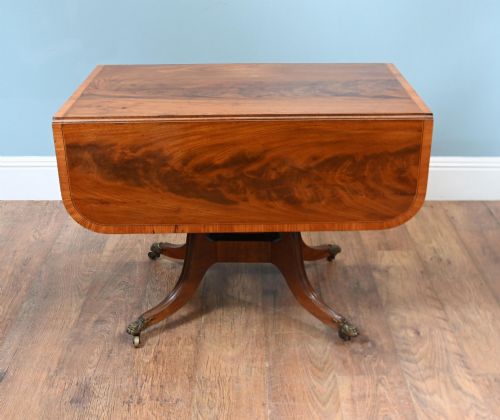
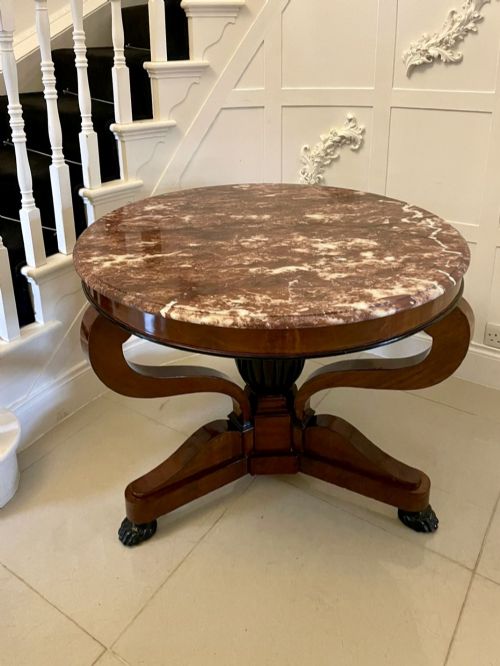
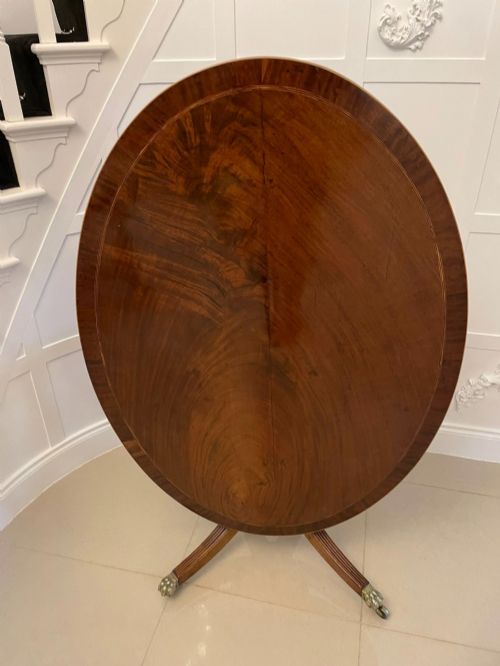
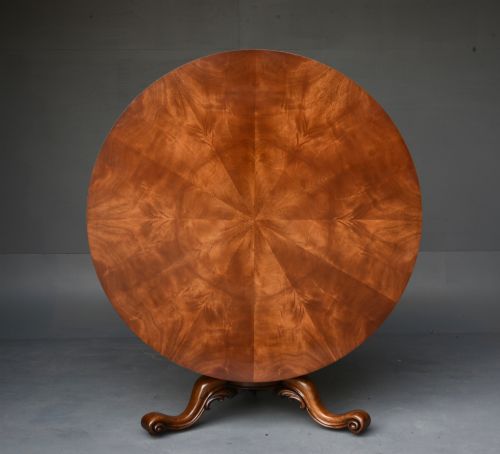
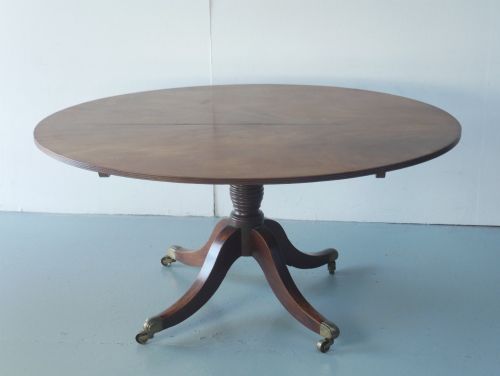
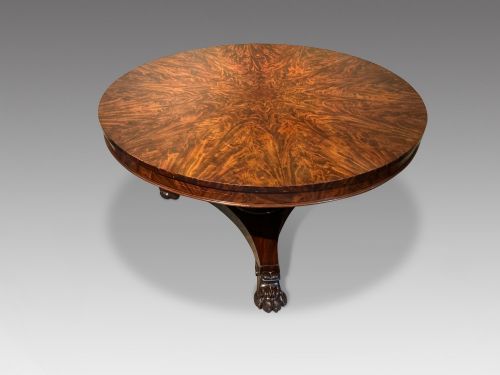
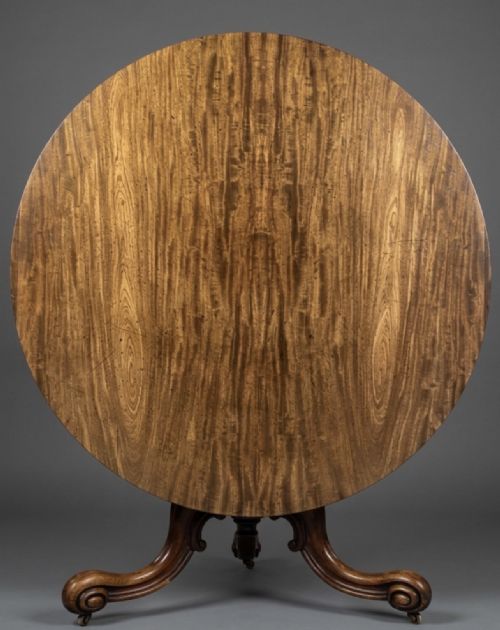
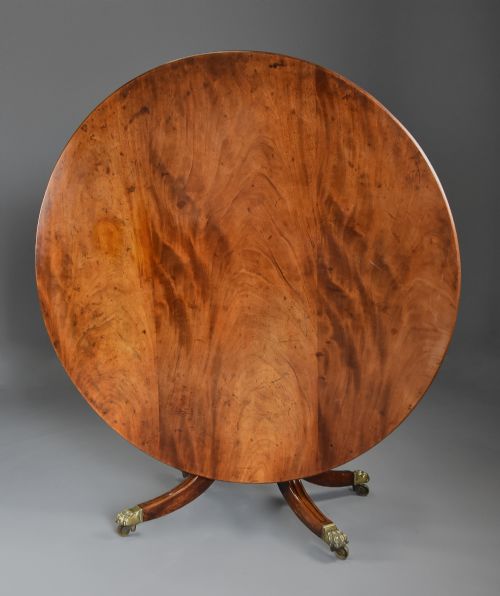


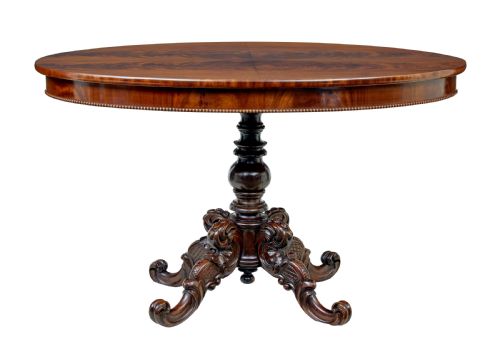
Flame Mahogany Center Table
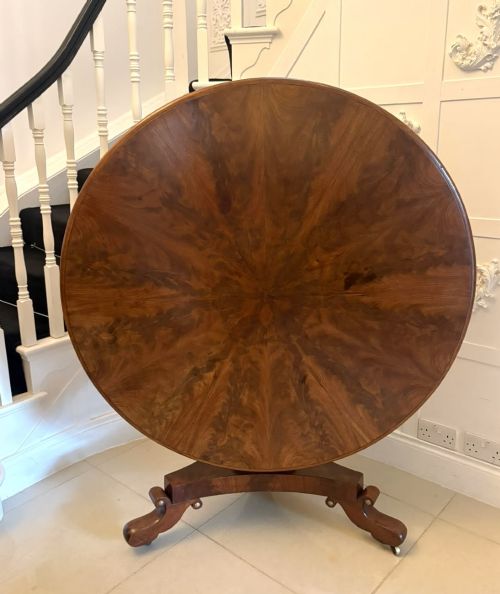
A flame mahogany centre table brings striking grain figures and rich warmth to a room, serving as a commanding focal point.
Flame Mahogany Center Table
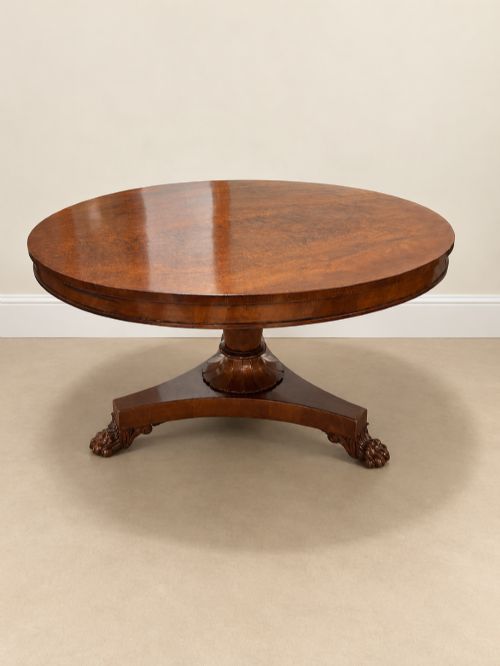
A flame mahogany centre table is a freestanding piece designed to sit in the middle of a room, often taking circular, oval, or rectangular forms. When you search for this phrase, you encounter examples stretching from the Georgian and Regency eras through the Victorian period and into the early twentieth century. These pieces appear as breakfast tables, drum tables, library tables, and gueridons, utilising timber selected for its dramatic figuring.
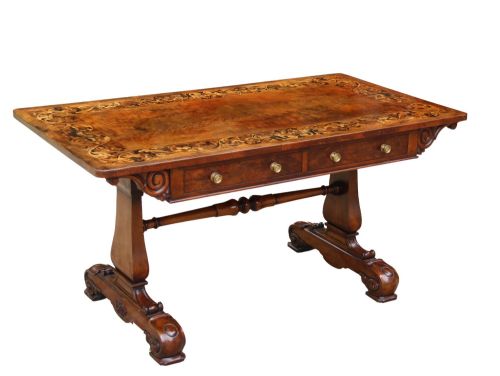
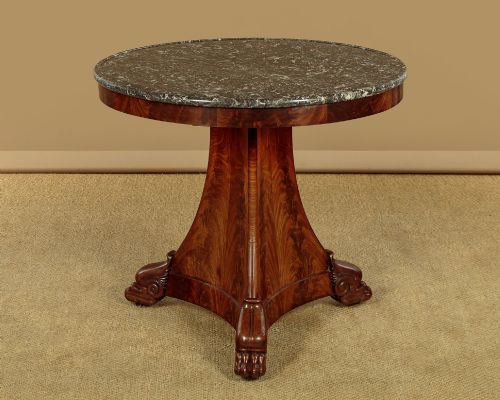
The most common versions found here date from the nineteenth century, encompassing Regency, William IV, and Victorian styles. Many of these tables feature pedestal bases with carved or turned columns, occasionally incorporating brass inlay, marble tops, or leather surfaces. They bridge practical utility and decorative presence, functioning as dining tables, lamp tables, or writing desks depending on their height and top configuration.
How they were made
Cabinet makers constructed these pieces using solid mahogany frames overlaid with flame mahogany veneer to achieve the signature rippling grain patterns across the tops. Timber preparation involved careful sawing of the wood to expose the fiery figuring characteristic of the species, which was then laid onto secondary woods such as oak or solid mahogany.
Makers integrated decorative elements such as brass inlay, marquetry, and hand-carved pedestal supports, alongside marble inserts for specific French and Victorian gueridons. Tilt-top mechanisms, writing slopes, and segmented circular top assemblies required precise joinery and hardware to ensure stability and movement.
Flame Mahogany Center Table Retail Price Guide 2026
Typical asking prices for flame mahogany center table among the pieces listed under this phrase on Sellingantiques today, from the lower quarter to the upper quarter. They describe what is for sale here now, not the wider market.
Listings span the nineteenth century, featuring periods from George III and Regency through to Victorian and early twentieth-century revival styles.
What varies in quality
The distinction between ordinary and exceptional pieces rests in the intensity and matching of the flame mahogany veneer across the surface. Tables with symmetrical, highly figured grain arrangements and rich, faded patinas demonstrate superior selection by the original cabinet maker.
Structural refinement also defines the grade of the piece, seen in the crispness of hand-carved pedestal details, the integration of brass or marquetry elements, and the solidity of the central pillar and foot assembly.
Walker-Lancaster·Gillows
The Flame Mahogany Center Table Glossary
- Flame mahogany
- A veneer cut from the fork of the mahogany tree where the branch meets the trunk, producing a rippling, flame-like grain pattern. This timber was favoured for high-status furniture tops during the Georgian and Regency periods.
- Gueridon
- A small French table supported by one or more columns, often featuring a circular marble top. These pieces originated in the seventeenth century and remained popular through the nineteenth century.
- Drum table
- A circular library or centre table with a deep top containing drawers around the circumference, frequently lined with leather on the upper surface. They stand on a central pillar supported by splayed legs.
- Tilt-top
- A table mechanism allowing the top to hinge vertically when not in use, enabling the piece to stand flat against a wall. This construction is common among nineteenth-century breakfast tables.
- Marquetry
- The art of applying pieces of veneer to a structure to form decorative patterns and pictures. Makers utilised contrasting timbers like satinwood to create elaborate ornamentation on table tops.
Flame Mahogany Center Table: Frequently Asked Questions
How were flame mahogany centre tables used historically?
These tables served multiple functions in grand rooms, acting as breakfast tables in the morning and central display surfaces for lamps or books later in the day. Their freestanding nature allowed them to occupy the middle of principal apartments.
Larger variations often doubled as dining or library tables, while smaller gueridons and occasional tables held decorative objects or writing materials.
How do I distinguish a Regency table from a Victorian one?
Regency pieces often display restrained classical lines, brass inlay, and crisp rosewood or mahogany veneers influenced by French Empire and George III designs. Proportions tend to be lighter and more architectural.
Victorian examples frequently introduce heavier proportions, bolder pedestal carvings, and occasional marble tops reflecting later nineteenth-century revival styles.
Can I use a flame mahogany centre table for daily dining?
Many historical breakfast and centre tables were built sturdily enough for regular use, provided proper care is taken with the polished wood surfaces. Using heat mats and coasters protects the delicate veneer and French polish.
Tilt-top variants allow the table to be moved easily, though the locking mechanism should be handled with care when adjusting the top position.