



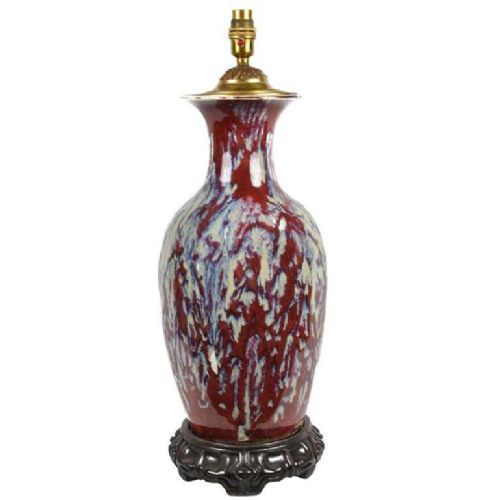
Flambe Red Vase
A flambe red vase brings deep, shifting crimson tones and rich glaze effects into a room.
Flambe Red Vase
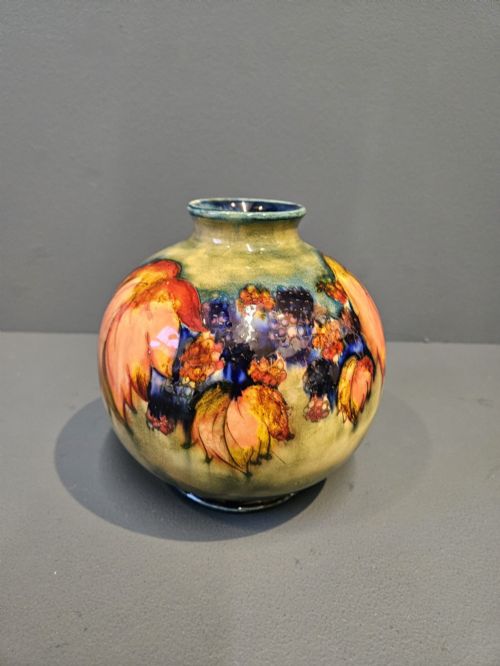
A flambe red vase draws the eye with its mottled, streaked glaze, spanning historical periods from the eighteenth century to the mid-twentieth century. When you search for a flambe red vase, you encounter pieces originating from Chinese kilns, Japanese workshops, and French studios.
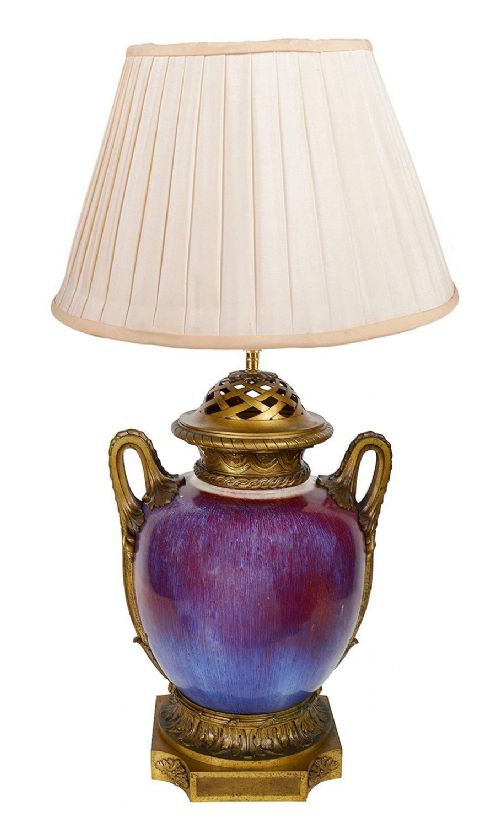
The selections on this page most commonly feature Japanese Sumida Gawa art pottery alongside Chinese monochrome ceramics and European studio pieces. These vessels appear in baluster forms, jars, and tall cylindrical shapes, occasionally adapted into table lamps with brass fittings.
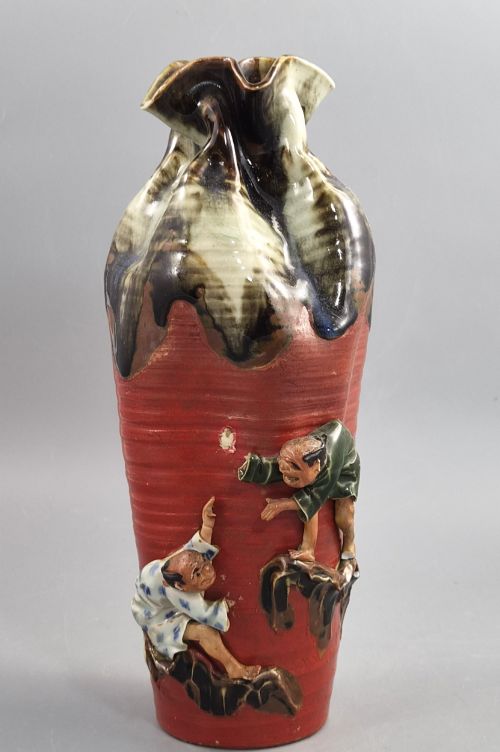
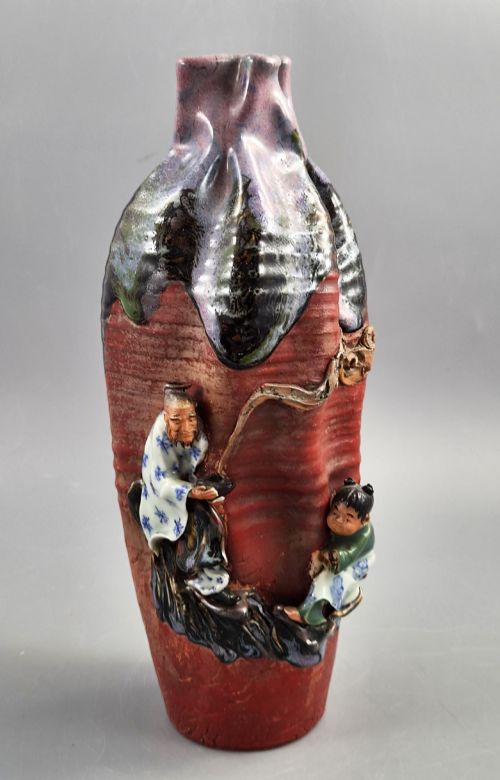
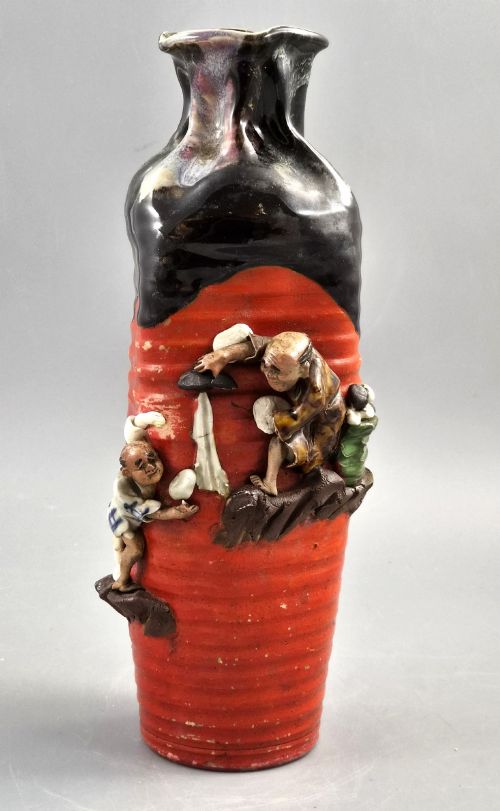
Makers often applied figural elements such as climbing figures, sages, and karako directly onto the textured body of the piece. Such vessels bridge the gap between traditional East Asian craftsmanship and early twentieth-century decorative arts.
Materials and construction
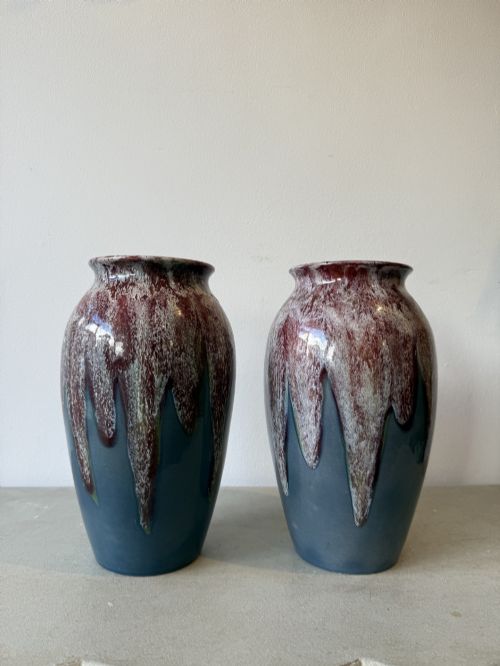
Potters shaped these vessels from earthenware, porcelain, and stoneware, building up robust bodies capable of holding heavy glazes. The characteristic red surface relies on copper-bearing glazes fired in reduction kilns to produce variable crimson and lavender tones.
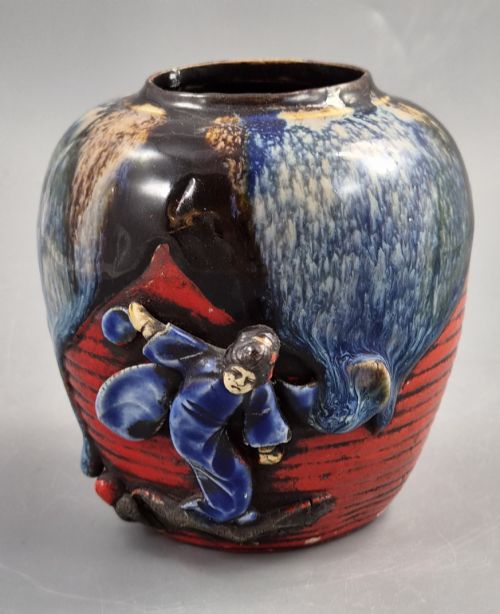
Japanese Sumida Gawa pieces utilise a distinct thick, drippy glaze applied over an unglazed or textured clay slip background. Artisans then modelled figures by hand, pressing them onto the damp walls of the jar or vase before firing.
Flambe Red Vase Retail Price Guide 2026
Typical asking prices for flambe red vase among the pieces listed under this phrase on Sellingantiques today, from the lower quarter to the upper quarter. They describe what is for sale here now, not the wider market.
Design styles represented include Meiji period Japanese pottery, Chinese Qing traditions, French studio ceramics, and Arts and Crafts pieces.
Assessing quality and execution
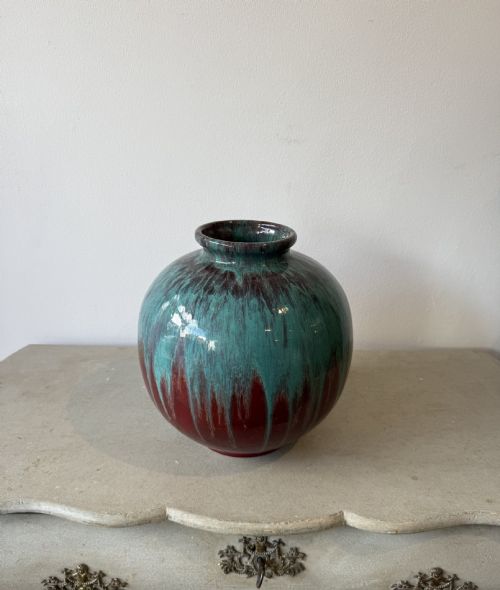
Quality rests in the control and depth of the glaze runoff, where accidental pooling transforms into a deliberate visual anchor. Superior examples display complex crystalline blooms and subtle shifts from ox-blood red to lavender without dull patches.
The execution of applied figures separates standard production from finer studio output. Well-modelled faces, crisp facial expressions, and secure attachment define the work of notable makers such as Inoue Ryosai.
Inoue Ryosai·Ban-ni
The Flambe Red Vase Glossary
- Flambe glaze
- A streaked or mottled ceramic glaze achieved through metallic oxides and variable kiln atmospheres. It creates pools of rich red, purple, and blue tones across the ceramic surface.
- Sang de boeuf
- A French term meaning ox-blood, describing a deep red copper glaze originating in Chinese imperial kilns. This rich monochrome finish requires precise temperature management during the firing process.
- Sumida Gawa
- A style of Japanese art pottery originating near Tokyo, noted for heavy glazes and applied clay figures. Artisans often left sections of the gritty body exposed beneath thick drip glazes.
- Karako
- A traditional decorative motif depicting Chinese children at play, frequently utilised in East Asian art. These figures appear moulded in low relief on the exterior of vases and jars.
- Baluster vase
- A vessel form characterised by a bulbous lower portion, a narrow neck, and a flared rim. This classical silhouette provides a stable base for complex reactive glazes.
Flambe Red Vase: Frequently Asked Questions
What is a flambe red vase?
A flambe red vase is a ceramic vessel coated in a copper-based glaze that fires into mottled, streaked shades of crimson and purple. The unpredictable nature of the kiln creates unique patterns on every piece.
These vases range from ancient Chinese monochrome output to twentieth-century Japanese art pottery and European studio works.
How do I style a flambe red vase?
Place a flambe red vase where natural light can catch the subtle shifts and pooling in the glaze. Their rich coloration pairs effectively with neutral backgrounds and minimalist interiors.
Some examples arrive fitted as table lamps, allowing you to incorporate the ceramic form directly into lighting schemes.
Are these vases signed by makers?
Certain pieces bear signatures or artist marks impressed into the clay or applied directly beneath the glaze. Japanese Sumida Gawa vessels occasionally feature signatures from notable studio potters.
Unsigned pieces remain common, particularly among older Chinese monochrome wares and general European studio pottery.
What materials make up these vases?
The underlying body consists of earthenware, stoneware, or porcelain, selected by the potter to support heavy reactive glazes. Applied figures on Sumida Gawa wares utilise additional layers of modelled clay.
Converted lamp versions incorporate metal elements such as brass alongside the original ceramic body and fabric shades.