


Five Stone Sapphire Ring
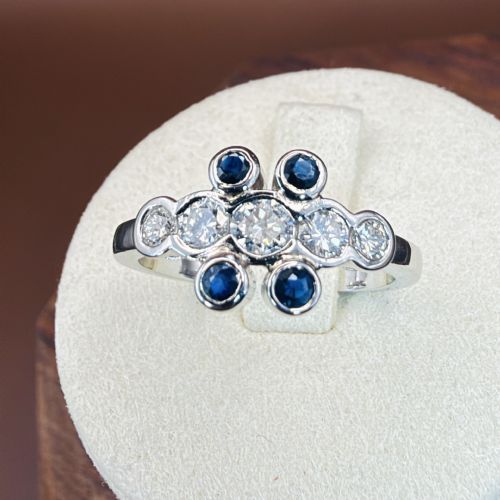
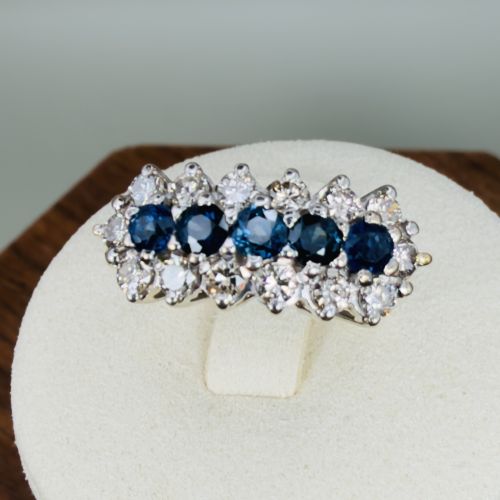
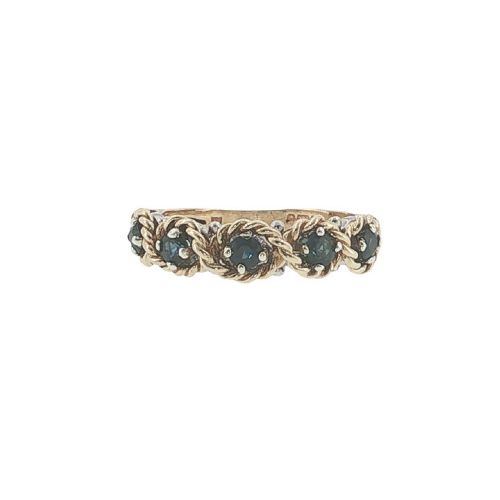
A five stone sapphire ring brings together deep blue gems and diamonds in a linear setting that suits the hand.
Five Stone Sapphire Ring
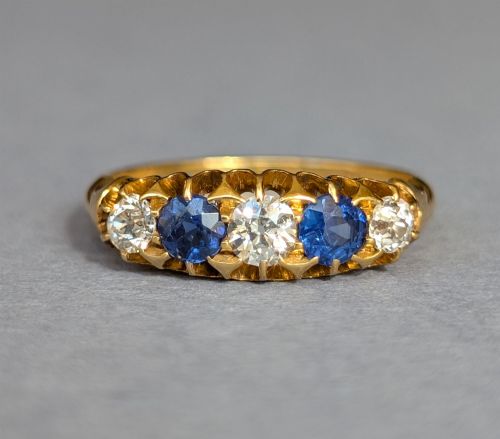
A five stone sapphire ring places a sequence of gems across the finger, frequently alternating sapphires with diamonds in a row. This layout appears across Victorian, Edwardian, Art Deco and mid-century periods, showing enduring appeal for daily wear.
The form relies on balanced proportions where a central sapphire takes prominence, flanked by smaller stones graduating toward the shoulders. Pieces on this page span the late nineteenth century through to the mid-twentieth century.
Victorian and Edwardian examples often set old cut diamonds alongside deep blue sapphires in yellow gold or white metal mounts. Later twentieth-century versions introduce refined settings while keeping the traditional linear format.
Materials and construction methods
Makers formed the structural bands predominantly from 18ct yellow gold, alongside occasional platinum or lower-carat gold variations. Gemstones were secured using claw settings, boat shapes or half hoop designs that maximised light entry.
Stones such as old European cut diamonds, old cut diamonds and rose cut diamonds were shaped by hand before the widespread adoption of modern brilliant cuts. Sapphires displayed natural variations in tone, from cornflower blue to deeper saturated hues.
Five Stone Sapphire Ring Retail Price Guide 2026
Typical asking prices for five stone sapphire ring among the pieces listed under this phrase on Sellingantiques today, from the lower quarter to the upper quarter. They describe what is for sale here now, not the wider market.
A feline touch occasionally joins the lineup when an unexpected cat's eye stone shares the finger with a sapphire.
Assessing quality and craftsmanship
Quality rests upon the matched selection of the stones and the integrity of the setting work. A superior piece demonstrates uniformity in stone size and colour graduation across the finger.
The hand-cut nature of older diamonds and natural sapphires creates individual character, where precision in bezel or claw work ensures long-term security for each gem.
The Five Stone Sapphire Ring Glossary
- Old cut diamond
- A diamond cut by hand before the mid-twentieth century, characterised by a smaller table, higher crown and open culet. These stones display a softer candlelit sparkle compared to modern brilliant cuts.
- Half hoop ring
- A ring design where gemstones span the upper arc of the band rather than encircling the entire finger. This style provides comfort on the underside while maintaining a continuous display of gems.
- Boat ring
- A setting shaped like an upturned boat, tapering towards the ends to cradle multiple stones securely. This profile was popular in Victorian and Edwardian jewellery.
- Hallmark
- An official stamp applied to precious metals indicating purity and origin city. British hallmarks often include assay office symbols and date letters.
- Rose cut diamond
- A vintage diamond cut with a flat base and a domed crown faceted in a triangular pattern. It offers a subtle, translucent glow.
Five Stone Sapphire Ring: Frequently Asked Questions
Can I wear my ring daily?
Sapphire ranks high on the mineral hardness scale, making it resilient for everyday wear when mounted securely in gold or platinum.
Regular checks by a jeweller ensure the claws maintain their grip on the stones over time.
How do I date my ring?
Hallmarks stamped inside the band provide official assay office symbols and date letters that reveal the year of manufacture.
Stylistic details like old cut diamonds and boat settings also point towards Victorian, Edwardian or Art Deco periods.
Are sapphires always blue?
While deep blue and cornflower blue dominate historical pieces, natural sapphires also occur in yellow or white varieties.
These alternative shades appear alongside diamonds in specific Victorian and mid-century rings.