

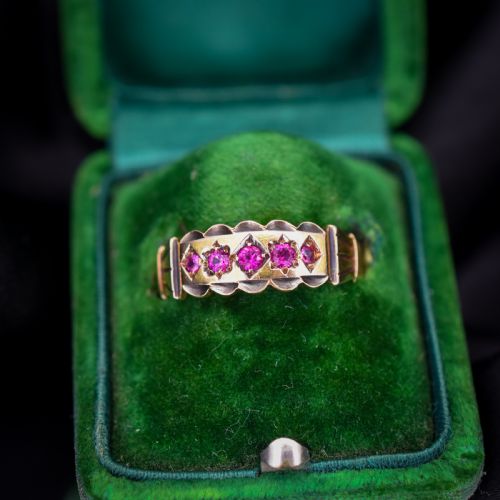
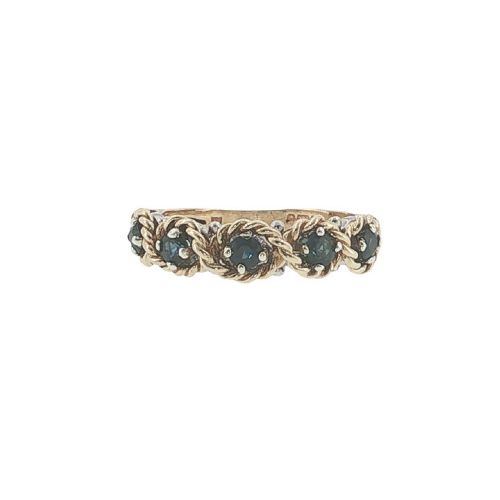

Five Stone Gemstone Ring
A five stone gemstone ring gathers graduating gems across the finger in a row, offering brilliant colour and enduring design.
Five Stone Gemstone Ring
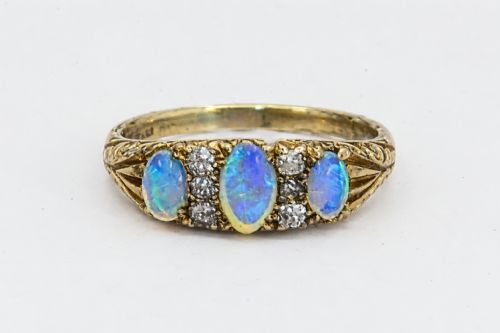
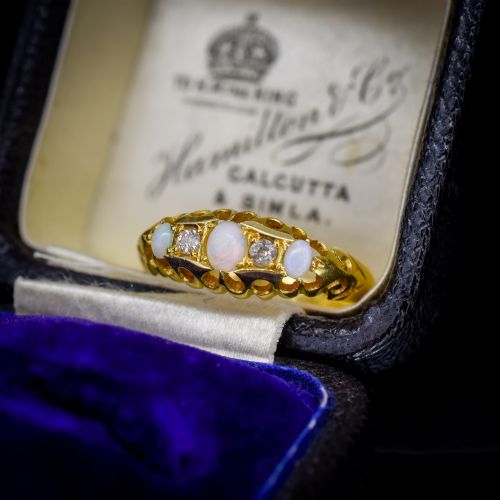
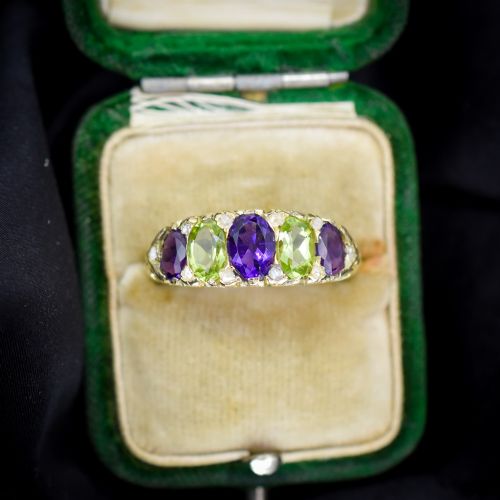
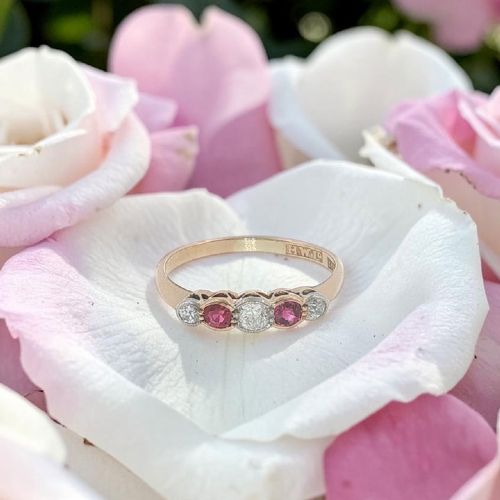
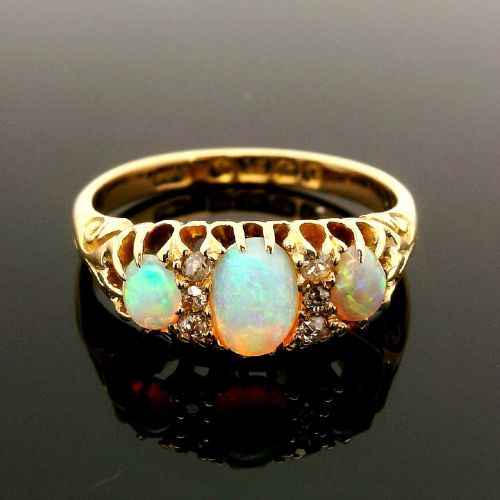
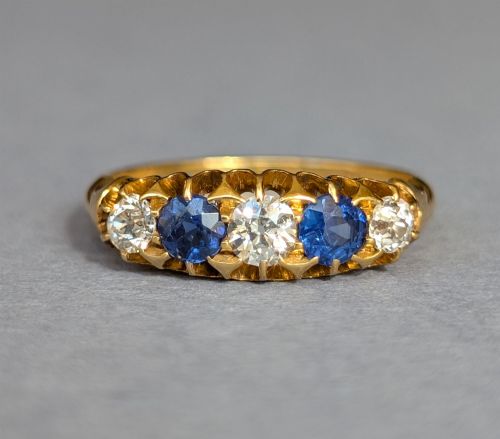
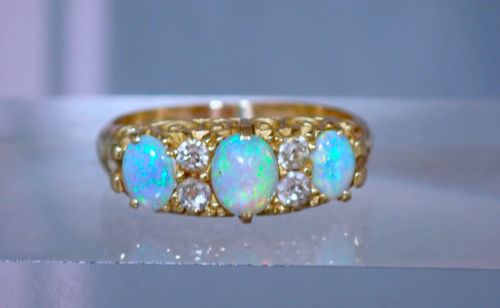
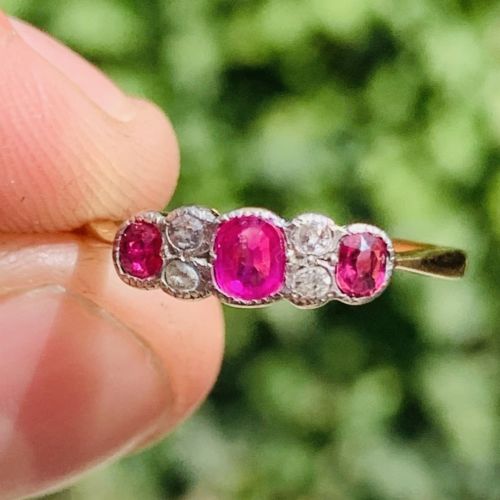
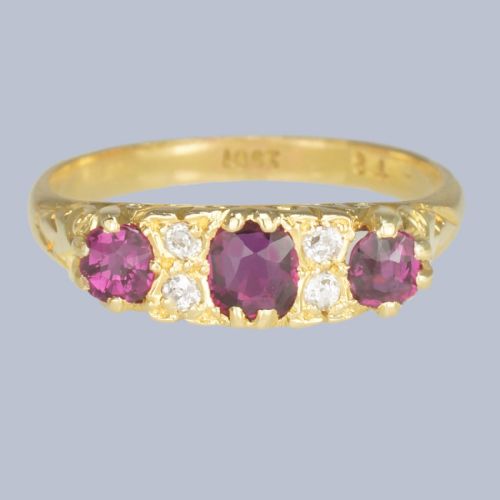
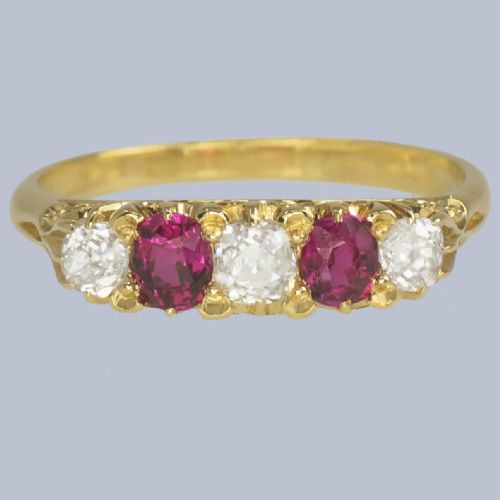
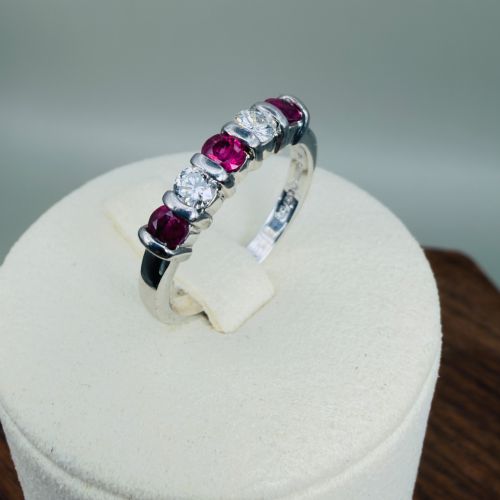
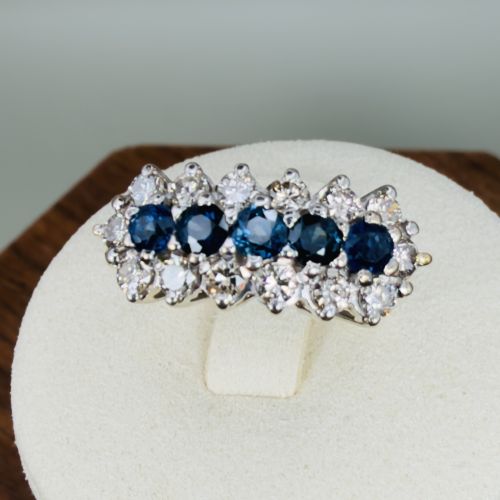
The layout often combines diamonds with coloured stones such as ruby, sapphire, opal, and turquoise, mounted in yellow gold, white gold, or platinum bands. Boat-shaped settings and traditional band profiles dominate the selections seen here.
How They Were Made
Goldsmiths utilised 18ct yellow gold, 15ct gold, and occasionally platinum or white gold to cast and hand-forge the supportive bands and settings. Gemstones were secured using traditional claw, bezel, or boat-shaped settings designed to maximise light entry.
Cutting techniques evolved across the periods, incorporating old-cut diamonds, rose-cut diamonds, and old mine cuts alongside carefully faceted rubies, sapphires, and opals.
Regional assay offices represented include London, Birmingham, and Chester.
What Varies in Quality
The calibre of a five stone gemstone ring depends on the matching, saturation, and cut of the chosen gems, alongside the precision of the metalwork. Older hand-cut stones possess unique facet patterns that interact differently with light compared to uniform modern cuts.
The integrity of the original settings and the clarity of hallmarking contribute significantly to the character and desirability of the piece.
The Five Stone Gemstone Ring Glossary
- Boat ring
- A ring featuring a navette or boat-shaped setting that tapers gracefully toward the shoulders. This style was particularly favoured during the Victorian and Edwardian eras.
- Old cut
- A traditional diamond cutting style characterised by a smaller table, higher crown, and open culet. These stones were shaped by hand before modern symmetrical standards were established.
- Navette
- A boat-shaped mounting resembling a small hull, often holding multiple graduating stones. The term shares its roots with the French word for little ship.
- Hallmark
- An official stamp applied by an assay office indicating the purity of the precious metal and the year of testing. British marks often include town marks and date letters.
- Trilogy ring
- A ring design featuring three primary stones, though the term occasionally intersects with multi-stone groupings in historical descriptions.
Five Stone Gemstone Ring: Frequently Asked Questions
How do I wear a five stone ring daily?
These rings suit everyday wear provided the settings remain secure and the stones match the demands of daily activity. Softer gems like opal require extra care to avoid impacts.
Pairing the ring with plain bands prevents rubbing against other jewellery. Regular checks by a professional jeweller ensure the claws hold each gem firmly.
What periods do these rings come from?
The selections span from the late nineteenth century through the Edwardian period and into mid-century twentieth-century designs. Victorian and Edwardian examples represent a substantial portion of the available pieces.
Later vintage interpretations from the mid-century introduce alternative gold purities and distinct manufacturing hallmarks. Each era brings specific aesthetic nuances to the classic five stone layout.
Are the gemstones natural?
Many antique pieces incorporate natural rubies, sapphires, opals, and diamonds sourced during their respective periods of production. Historical certificates are rarely attached, but physical examination reveals natural inclusions.
Graduating sizes and hand-cut facets are typical hallmarks of period authenticity. Gemstone selection reflects the prevailing tastes of Victorian and Edwardian workshops.
How do I identify the metal purity?
British hallmarking stamped inside the band denotes the exact metal standard, such as eighteen-carat or nine-carat gold. Assay office symbols reveal the town of testing, including Birmingham, Chester, and London.
Date letters provide a precise year of manufacture for many pieces. Unmarked bands rely on acid testing or professional appraisal to determine gold content.