


Five Branch Candlestick
A five branch candlestick brings symmetry and warm illumination to a dining table, combining practical candleholders with sculptural presence.
Five Branch Candlestick
A five branch candlestick typically takes the form of a branching candelabra designed to hold multiple tapers simultaneously. These pieces appear across various periods from the late nineteenth century into the mid twentieth century.
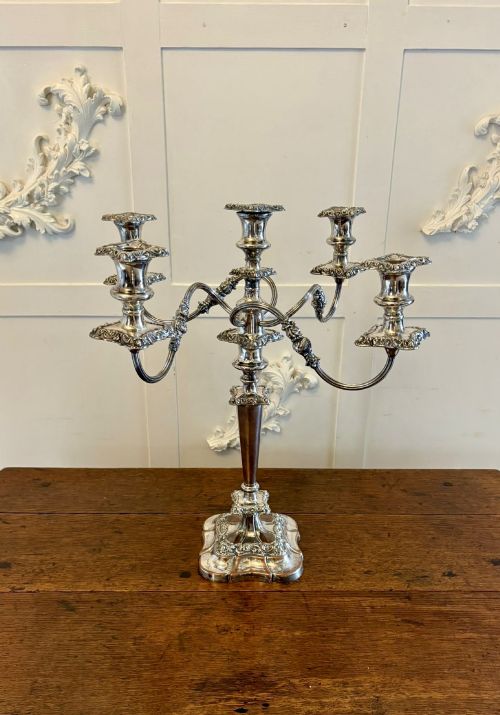
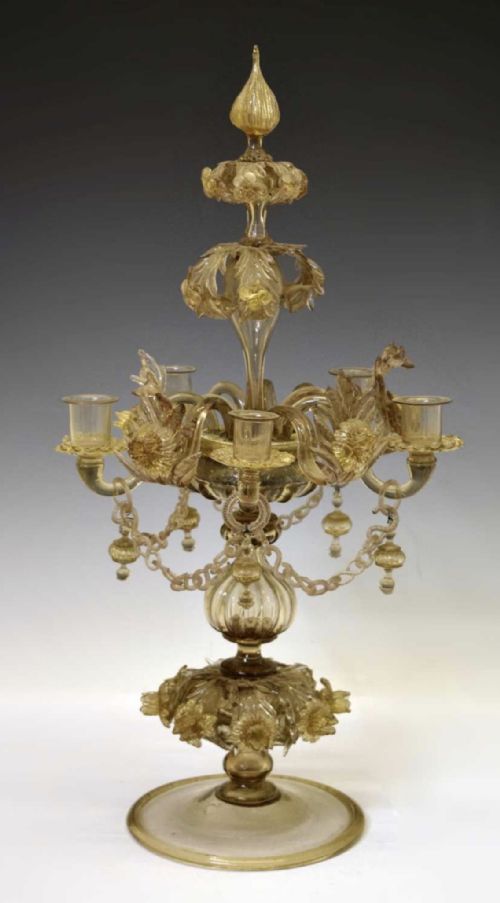
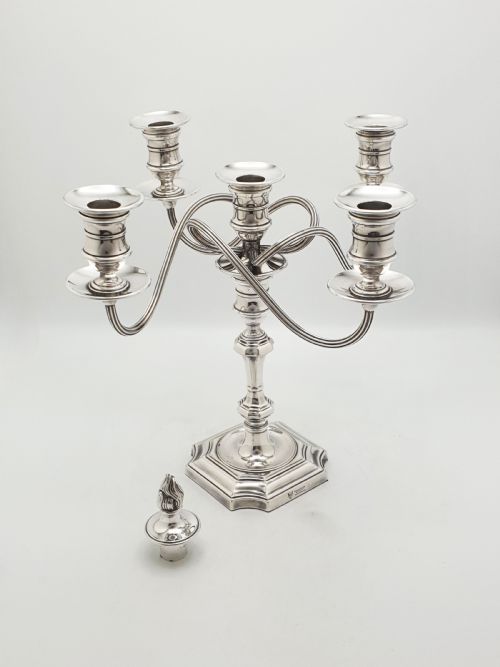
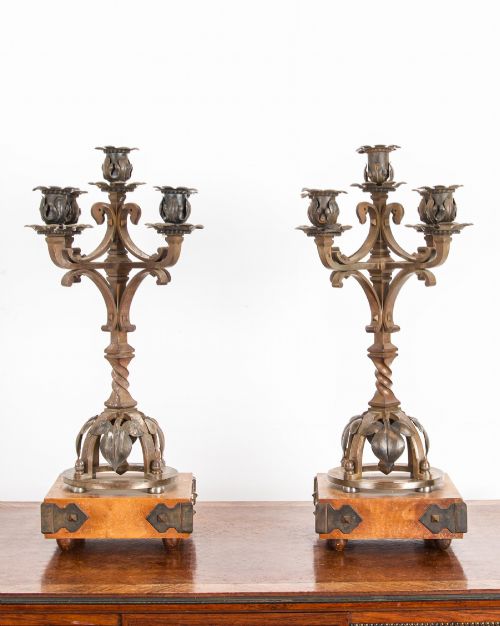
The selections on this page include forms executed in silver plate, brass, ormolu, wrought iron, and Murano glass. Buyers will frequently encounter silver plated dining table centrepieces alongside decorative examples in glass and brass.
Design influences range from French Empire and Victorian Neoclassical to Gothic Revival and Art Nouveau. Pairs frequently appear alongside substantial single dining table centrepieces.
Materials and construction
Metal examples employ silver plate over a base metal, solid brass, or gilt bronze, often incorporating detachable sconces for ease of cleaning. Artisans cast or forge these components before assembling the arms around a central stem.
Glass pieces utilise specialised blowing techniques, sometimes incorporating gold leaf inclusions within Murano glass. Combination pieces integrate materials such as green marble bases paired with brass metalwork or crystal drops attached to silver metal frames.
Listings feature materials including silver plate, brass, Murano glass, gold leaf inclusions, wrought iron, wood, and gilt bronze across various nineteenth and twentieth-century periods.
Assessing quality and execution
Quality rests in the crispness of the casting and the structural integrity of the branching arms. Finer examples display careful chasing on ormolu and substantial weight in silver plated dining table centrepieces.
Material selection dictates the character of the piece, from the clarity and colour variation in Murano glass to the durability of heavy gauge brass. Detachable parts fit securely, and decorative elements remain proportionate to the central stem.
The Five Branch Candlestick Glossary
- Sconce
- The cup or nozzle at the top of a candle branch that catches dripping wax and holds the taper upright. These components are frequently detachable in larger dining pieces.
- Ormolu
- Gilt bronze produced by applying a mercury and gold amalgam to cast bronze. This technique creates a rich golden finish seen on nineteenth-century decorative items.
- Murano glass
- Glass blown on the Venetian island of Murano, known for artistic techniques and coloured glass inclusions. Pieces often feature complex hand-formed botanical or scrolling motifs.
Five Branch Candlestick: Frequently Asked Questions
How are five branch candlesticks cleaned safely?
Metal surfaces require gentle wiping with a soft cloth suited to silver plate or brass. Abrasive polishes should be avoided to protect applied finishes and original patination.
Glass elements benefit from warm soapy water and careful drying. Detachable sconces make cleaning wax residue significantly easier.
What is the difference between a candelabra and a candlestick?
A candlestick supports a single taper on a vertical shaft. A candelabra branches out to hold multiple candles simultaneously from one base.
Five branch versions provide greater illumination and visual weight, making them traditional choices for dining table centrepieces.
Are these pieces stable when holding lit candles?
Most examples utilise weighted bases or substantial metal construction to support the outstretched arms safely. Brass, marble, and heavy silver plate offer reliable stability for everyday use.
Proper placement on a level surface ensures the balanced weight of the branches remains secure during burning.
How do I date a five branch candlestick?
Stylistic indicators such as Gothic Revival motifs or Art Nouveau curves provide initial chronological markers. Manufacturing materials like EPNS or specific casting methods help narrow the period further.
Comparative study of regional designs, from Venetian glass to French ormolu, assists in identifying the likely decade of production.