




Fitted Work Box Table
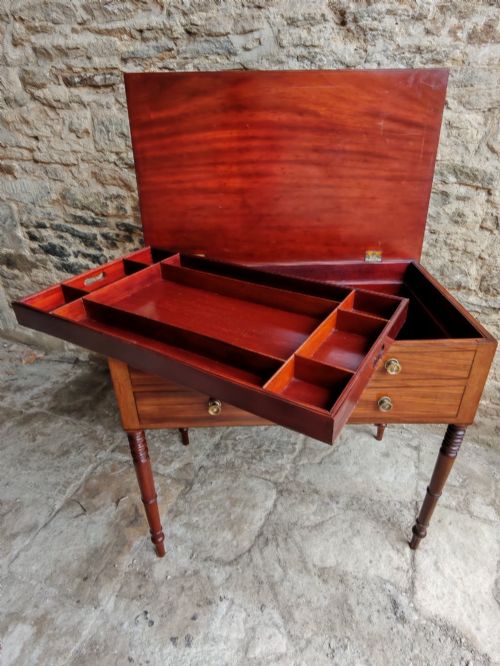
These pieces known as a fitted work box table combine a writing or sewing surface with interior compartments for needlework and small valuables.
Fitted Work Box Table
A fitted work box table is primarily a sewing or occasional table designed with internal compartments to organise threads, needles, and tools beneath a hinged lid. The examples seen on this page span the Victorian and Edwardian eras, stretching from the middle of the nineteenth century into the early twentieth century.
Most pieces encountered here take the form of work tables, sewing tables, or side tables, occasionally appearing as Chinese Export, Anglo-Indian, or dressing tables with integrated vanity boxes. Their secondary roles often include serving as lamp tables or small occasional tables in a Victorian parlour.
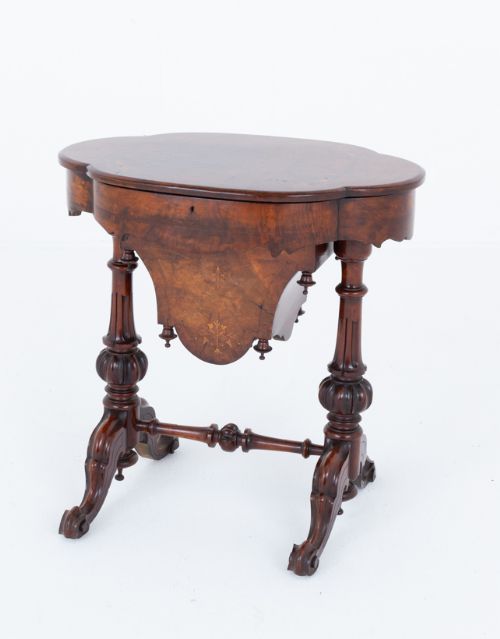
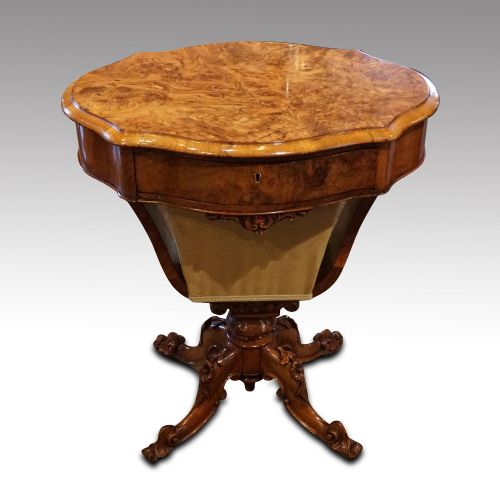
The construction typically involves a freestanding timber frame resting on carved and turned supports, cradle bases, or standard side table legs. Form follows function closely, as the upper section conceals the fitted box while the lower portion frequently incorporates a fabric or textile basket for loose materials.
Materials and construction
Cabinetmakers constructed these tables using dense hardwoods such as mahogany and walnut, frequently selecting burr walnut veneers for their striking grain patterns. Boxwood inlay adds linear contrast and decorative detail to the primary timber surfaces.
Interiors and functional elements incorporate contrasting secondary timbers alongside fitted compartments lined with fabric and textiles. Structural stability relies on turned wooden supports, carved pedestals, and cradle bases that accommodate the weight of the lidded box above.
Fitted Work Box Table Retail Price Guide 2026
Typical asking prices for fitted work box table among the pieces listed under this phrase on Sellingantiques today, from the lower quarter to the upper quarter. They describe what is for sale here now, not the wider market.
Materials appearing across the current selection include burr walnut, mahogany, satinwood, boxwood inlay, and various textiles.
Judgements of quality
Quality rests in the selection of timber veneers, particularly the richness of the burr walnut and the precision of the boxwood inlay. Finer examples display meticulous attention to grain alignment across the lid and sides.
The sophistication of the internal fitting dictates the tier of the piece, separating simple storage boxes from complex vanity arrangements with mirrored sections and designated slots for small implements. Structural joinery and the execution of carved and turned supports further distinguish standard workshop production from high-end cabinet work.
Mappin And Webb
The Fitted Work Box Table Glossary
- Burr walnut
- A figured wood veneer taken from the wart or burl of a walnut tree, prized for its swirling grain and rich patterns.
- Boxwood inlay
- Small contrasting pieces of pale boxwood set flush into the surface of a darker timber to create geometric or floral borders.
- Cradle base
- A supportive curved wooden framework that allows the upper box or table section to rock or pivot securely.
- Chinese Export
- Items manufactured in China during the nineteenth century specifically for Western markets, often featuring characteristic regional cabinetwork and decoration.
- Anglo-Indian
- Furniture produced in India by local artisans following British forms and proportions, frequently utilising native hardwoods and intricate decorative schemes.
Fitted Work Box Table: Frequently Asked Questions
What is a fitted work box table?
A fitted work box table is a compact piece of nineteenth-century furniture designed for sewing and needlework, combining a top surface with internal compartments.
Beneath the hinged lid, these tables house specialised trays and sections for keeping small tools, threads, and personal items organised.
How were these tables used originally?
Victorian and Edwardian households utilised these tables in parlours and drawing rooms as dedicated stations for sewing, embroidery, and correspondence.
Many examples doubled as side tables or lamp tables when the lids were closed and the internal work was put away.
How can I tell the period of a work table?
Dating relies on examining the timber species, decorative techniques, and structural silhouettes, such as mid-nineteenth-century mahogany or later burr walnut veneers.
Turned supports and inlay styles also shift from the simpler forms of the 1850s to the more elaborate Edwardian satinwood pieces.
Where does the sewing basket go?
The hanging basket or fabric pouch is typically suspended beneath the wooden box compartment to hold loose textiles and balls of yarn.
This soft drop-bag is gathered at the bottom and gives many nineteenth-century sewing tables their distinctive silhouette.