
Fitted Wooden Armoire
A fitted wooden armoire provides substantial storage through internal hanging space and drawers.
Fitted Wooden Armoire
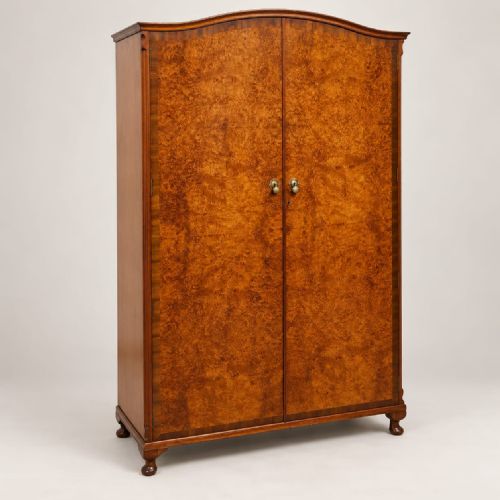
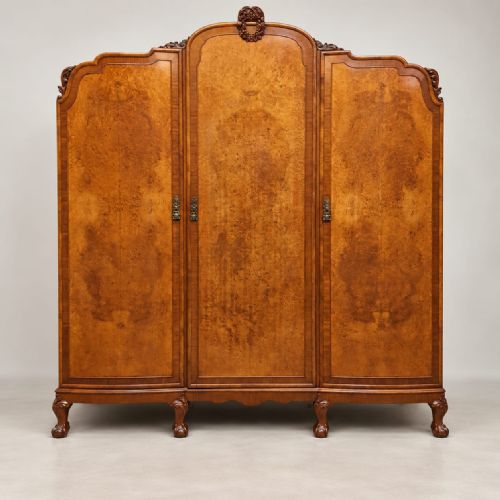
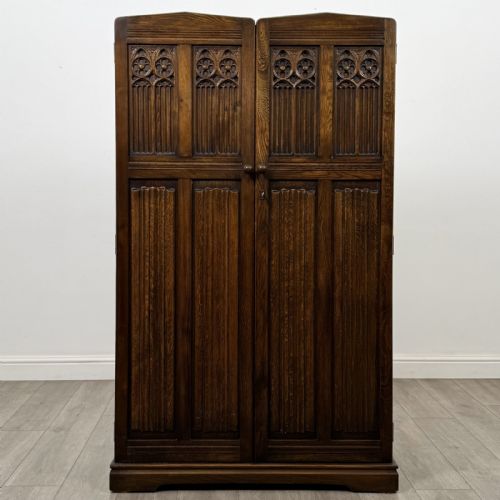
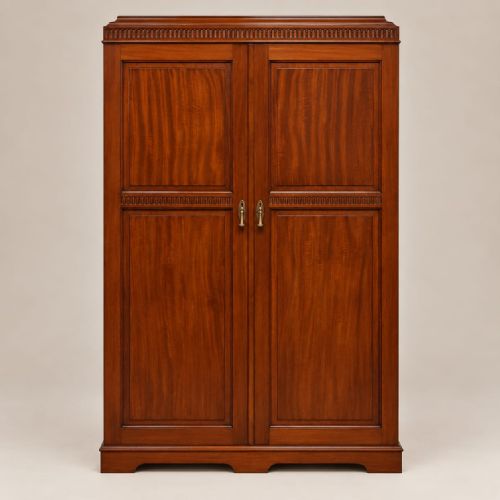
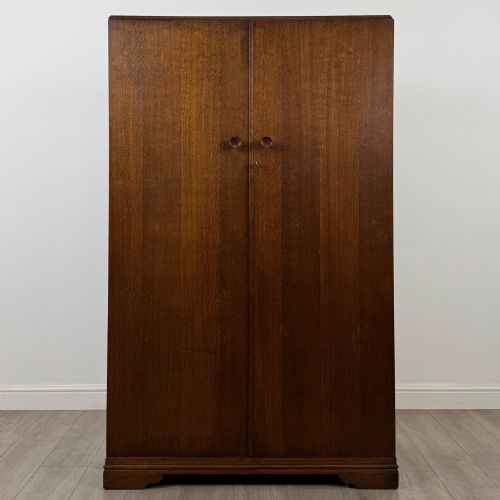
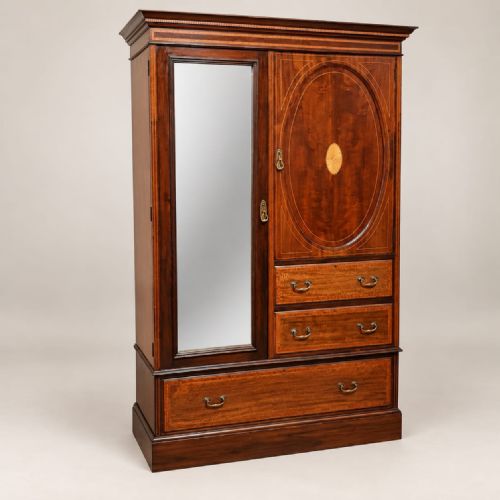
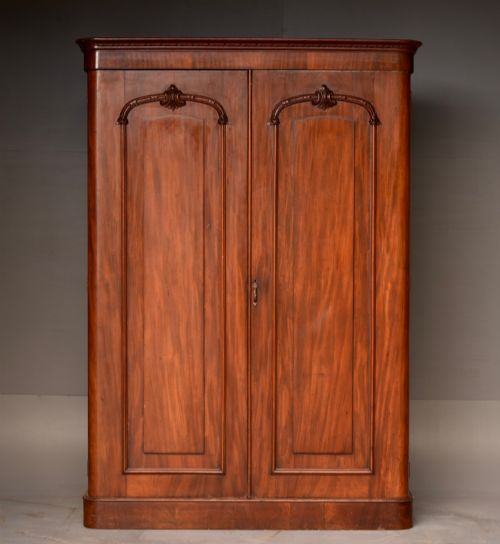
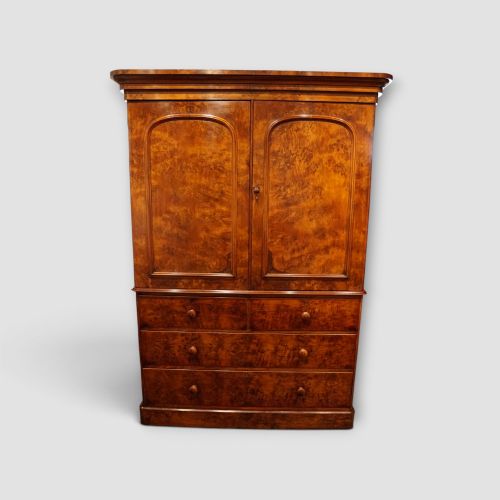
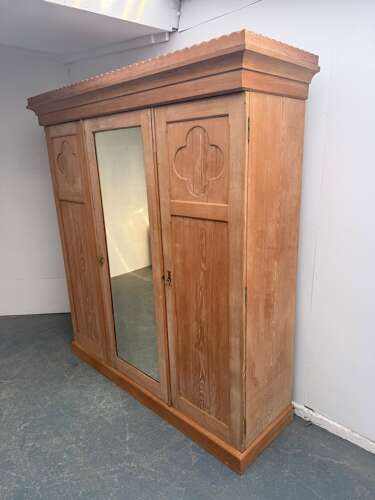
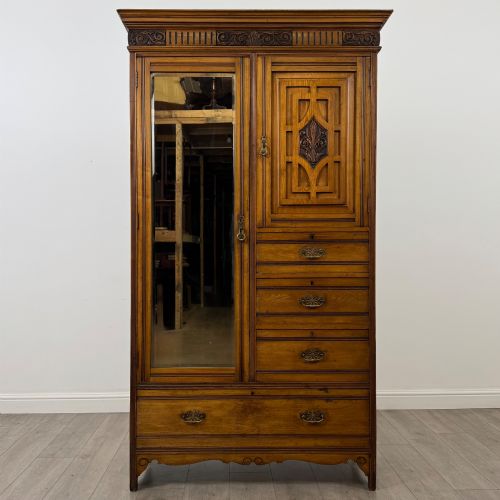
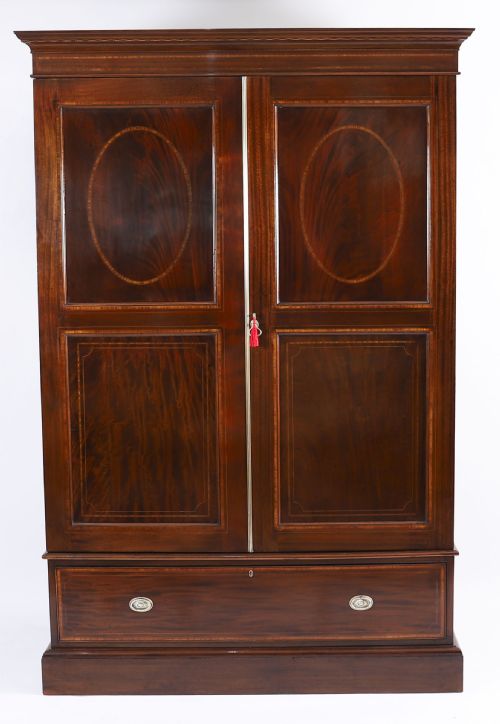
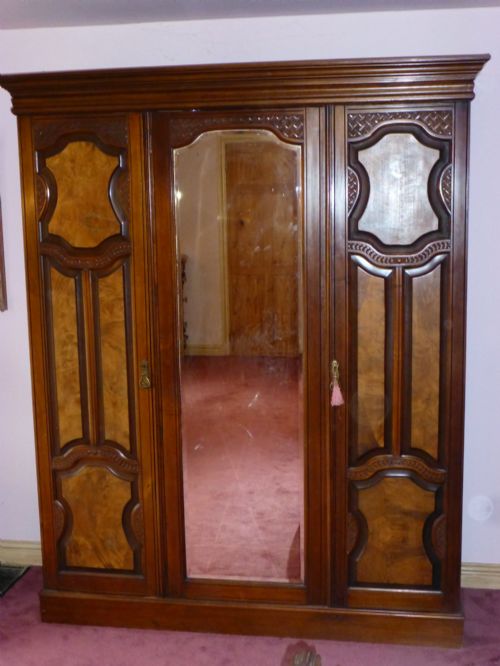
A fitted wooden armoire serves as a large storage cabinet designed to hold garments and linens within domestic interiors. When exploring a fitted wooden armoire, buyers encounter various large forms including wardrobes, compactums, linen presses, and housekeepers cupboards.
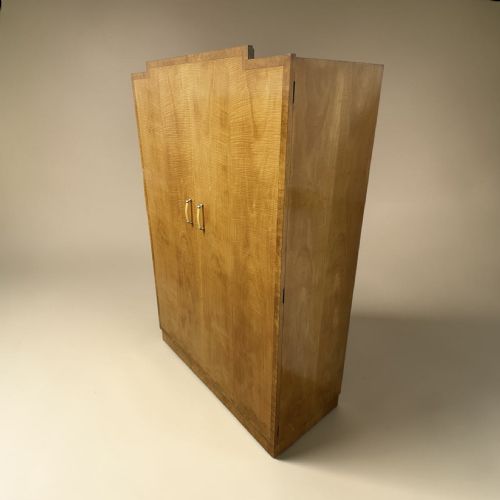
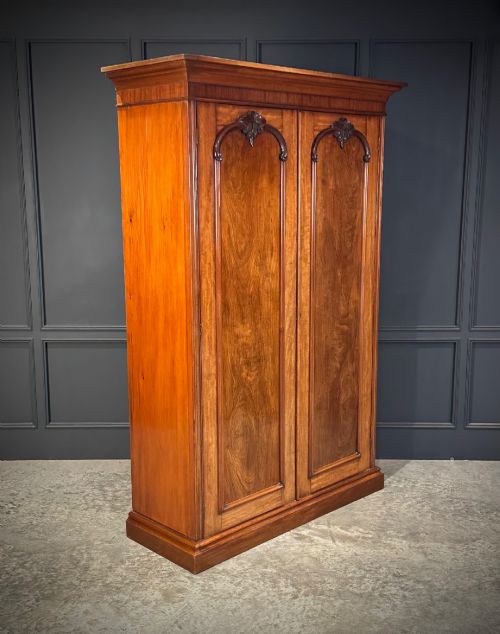
The pieces originating across the nineteenth and twentieth centuries span multiple design movements. Victorian and Edwardian examples dominate the selection, alongside Art Deco, Georgian style, and Arts & Crafts interpretations.
Makers and workshops constructed these large storage units to organise clothing efficiently. Internal compartments often incorporate hanging rails, sliding trays, and fitted drawer sections behind panelled or mirrored doors.
How they were made
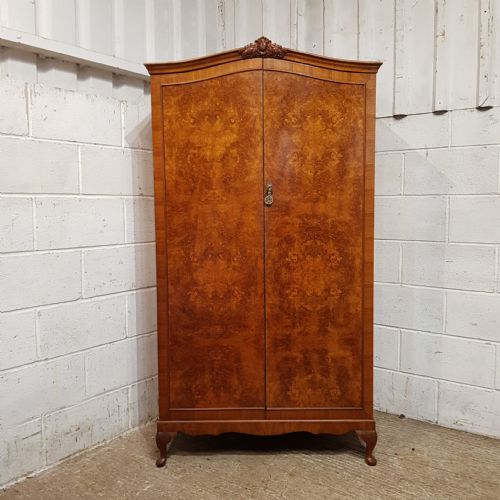
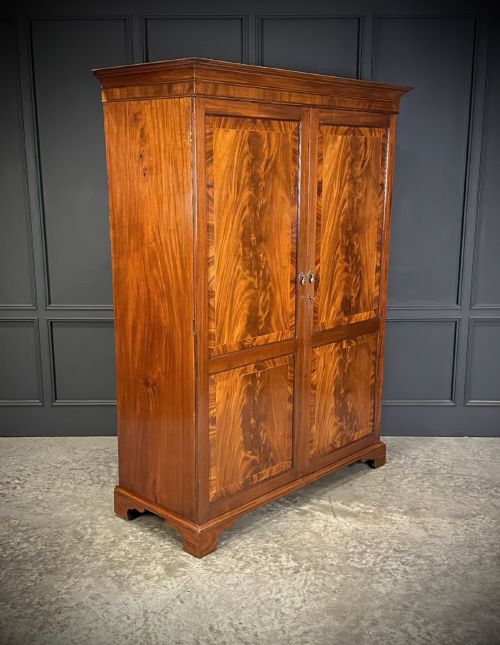
Cabinet makers utilised a foundation of solid timbers such as mahogany, walnut, oak, and pine. Artisans frequently applied decorative surface treatments including burr walnut, flame mahogany veneer, and satinwood to primary exterior panels.
Construction techniques involved traditional joinery combined with internal shelving and drawer partitions. Brass hardware provides functional closure mechanisms and structural reinforcement on doors and drawers.
Some nineteenth century gentlemen required dedicated compartments for top hats and walking canes tucked neatly inside their compactum wardrobes.
What varies in quality
The selection of timber veneers determines the visual depth of the exterior surfaces. Figures such as burr walnut and flame mahogany dictate the prestige of the piece.
The complexity of internal configuration separates standard storage from superior compactum designs. Comprehensive divisions with multiple drawers, linen slides, and integrated hanging space indicate elevated manufacturing standards.
Holland and Sons·Heals·Maple and Co·Robert Strahan·Edwards and Roberts
The Fitted Wooden Armoire Glossary
- Compactum
- A multi-functional wardrobe containing a combination of hanging space, sliding trays, and internal drawers. This configuration maximises storage capacity within a single unit.
- Linen Press
- A tall storage cupboard featuring upper shelving enclosed by doors and lower drawers. Originally designed for storing household linens flat.
- Breakfront
- A cabinet design where the central section projects forward from the flanking wings. This architectural arrangement creates depth and visual interest across the façade.
- Marquetry
- The art of applying pieces of veneer to a structure to form decorative patterns. Craftsmen utilised contrasting timbers to create geometric or floral motifs.
- Cornice
- The moulded projection that crowns the top of the wardrobe. It provides a finished architectural transition between the wall and the cabinet.
Fitted Wooden Armoire: Frequently Asked Questions
How do I fit a large armoire?
Measure your ceiling height and floor space carefully before delivery. Many large wardrobes dismantle into sections for easier transport and installation in upper rooms.
Ensure clearance space allows doors to open fully, particularly when dealing with triple or compactum variations.
What is a compactum wardrobe?
A compactum combines hanging space and drawer storage within one unified cabinet. These multi-purpose units often include internal shelves and sliding trays.
They represent a more complex manufacturing approach compared to standard double wardrobes.
How do I care for wood surfaces?
Maintain timber and veneer surfaces by keeping them away from direct sunlight and heat sources. Regular dusting with a soft cloth prevents particle buildup.
Apply appropriate wax or polish sparingly to nourish the grain without creating a heavy residue.
Can I date these by style?
Stylistic indicators help assign periods to each piece. Victorian examples often display heavy proportions and flame mahogany, while Edwardian pieces introduce lighter inlay work.
Art Deco items feature geometric symmetry and figured walnut without historical revival motifs.