


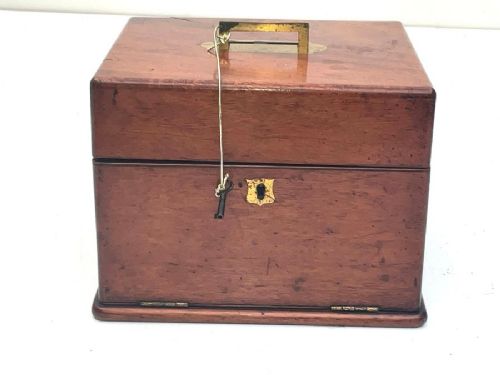


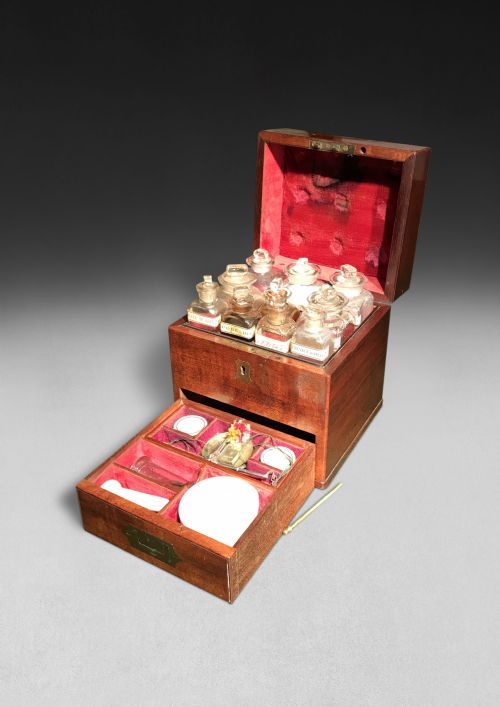


Fitted Pharmacy Chest
A fitted pharmacy chest is a utilitarian cabinet housing original glass bottles and drawers, prized by collectors for its compact design.
Fitted Pharmacy Chest
A fitted pharmacy chest is a specialised container designed to hold medical remedies, glass bottles, and related equipment securely in place. When searching for a fitted pharmacy chest, a buyer encounters portable travelling cases and tabletop cabinets primarily from the Georgian, Regency, and Victorian periods.
The inventory on this page shows mahogany construction across various examples dating from around 1780 through the nineteenth century. These items take the form of apothecary boxes, chemist cases, and medicine chests equipped with fitted compartments.
Most pieces include internal drawers and original glass bottles, whilst certain examples feature campaign styling or inlaid woodwork. Collectors regularly find these robust containers associated with English craftsmanship from the 1800s to 1890.
How they were made
Cabinet makers utilised solid mahogany to construct the robust outer carcasses of these chests, often adding brass campaign handles and inlay for durability and transport. The exteriors are frequently polished to showcase the grain of the wood whilst protecting against travel wear.
Internal layouts required precision joinery to create snug compartments for glass bottles, ceramic items, and sliding drawers. Paper labels, velvet linings, and leather details were incorporated into the interior fittings to cushion contents during movement.
Fitted Pharmacy Chest Retail Price Guide 2026
Typical asking prices for fitted pharmacy chest among the pieces listed under this phrase on Sellingantiques today, from the lower quarter to the upper quarter. They describe what is for sale here now, not the wider market.
Miniature versions allowed Regency travellers to carry their apothecary remedies in miniature scale.
What varies in quality
The distinction between standard examples and superior specimens rests upon the completeness of the original contents and internal fittings. Chests retaining their full complement of original glass bottles alongside intact drawers command greater interest.
Material selection and decorative execution further separate the tiers, particularly where fine mahogany, brass hardware, and intricate inlay converge. Superior pieces demonstrate meticulous interior architecture that accommodates medical implements securely.
The Fitted Pharmacy Chest Glossary
- Campaign case
- A portable box or chest designed for travel, typically fitted with recessed brass handles and reinforced corners to withstand frequent movement.
- Apothecary box
- A fitted container housing glass bottles and scales used historically for dispensing medicines and remedies.
- Mahogany
- A durable hardwood commonly utilised by cabinet makers in the Georgian and Victorian periods for furniture and boxes.
- Fitted interior
- An internal arrangement of partitions, slots, and small drawers designed to hold specific items securely in place.
Fitted Pharmacy Chest: Frequently Asked Questions
What was a fitted pharmacy chest used for?
These chests served as portable dispensaries for doctors, travellers, and households during the Georgian and Victorian eras. They held measured doses of medicine, essential oils, and compounding equipment in dedicated compartments.
The secure internal layout ensured that fragile glass bottles remained intact during transit, whether travelling on military campaigns or moving between country estates.
How do I date a fitted pharmacy chest?
Dating relies on timber choices, brass hardware styles, and general construction methods visible across different eras. Georgian and Regency examples often feature simpler, robust mahogany carcasses with flush brass handles.
Later Victorian pieces occasionally incorporate more elaborate inlay work and varied internal configurations. Examining the style of the glass bottles and any remaining paper labels provides additional chronological clues.
Are the glass bottles usually original?
Survival rates of original glass bottles vary considerably across surviving pieces from the eighteenth and nineteenth centuries. Many chests retain a substantial number of their blown glass containers, sometimes complete with stoppers.
Replacement bottles appear in certain instances where the original glassware was broken or misplaced over decades of use.
How should I display a pharmacy chest?
These chests suit placement on sturdy sideboards, desks, or specialised display tables where the fitted interior can be observed. Keeping the chest away from direct sunlight protects the timber finish and any internal paper labels.
Leaving the lid or front doors open allows the internal arrangement of bottles and drawers to remain visible as a decorative feature.