

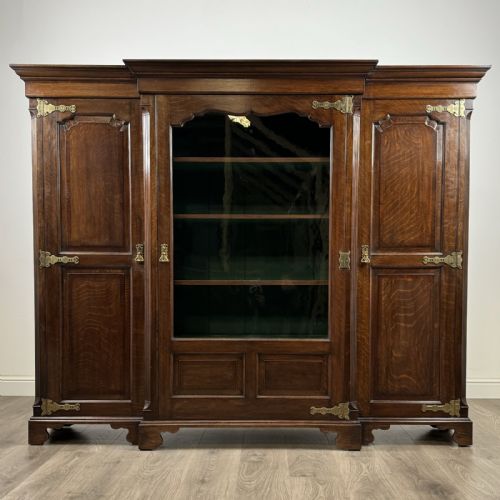
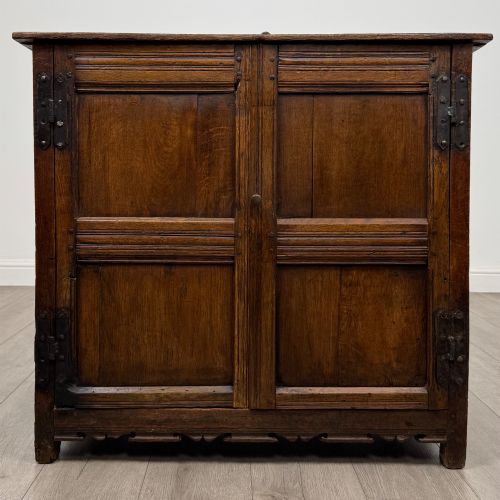


Fitted Oak Armoire
A fitted oak armoire offers substantial storage built from enduring timber, bringing architectural weight and natural grain to a bedroom.
Fitted Oak Armoire
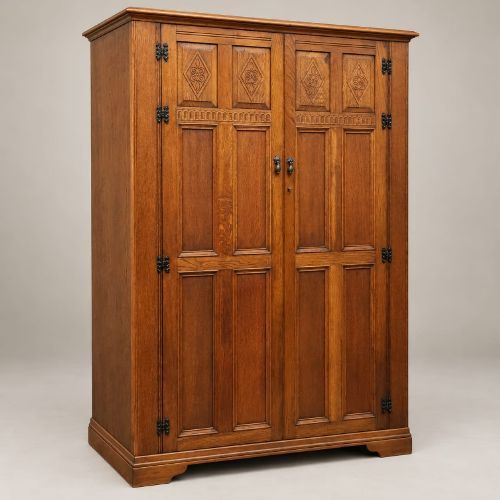
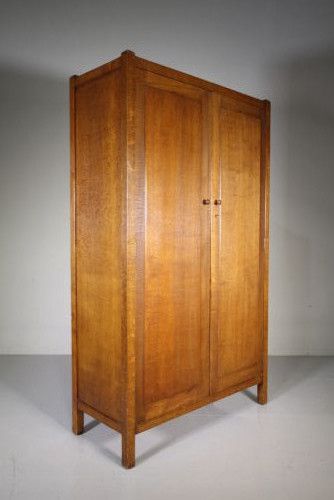
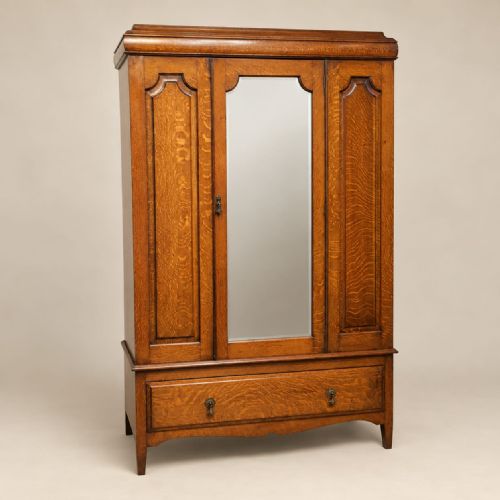
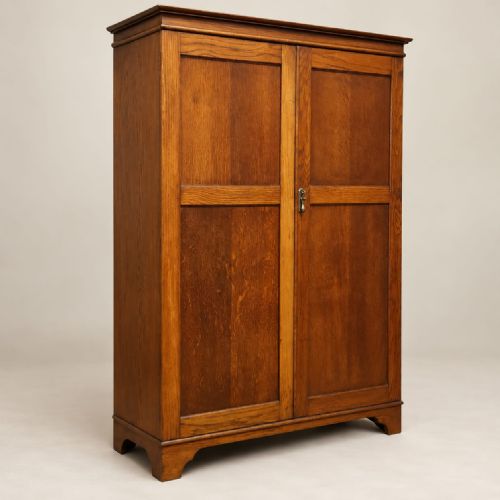
A fitted oak armoire represents a practical storage solution, taking the form of large wardrobes, double and triple wardrobes, gentleman's wardrobes, and housekeeper's cupboards. These pieces emerge from periods spanning the seventeenth century through to the Edwardian era, Victorian times, and the nineteen-twenties.
You are most likely to meet Edwardian and early twentieth-century examples on this page, alongside earlier seventeenth-century forms and nineteenth-century housekeepers' cupboards. Makers such as Maple and Co, Heals of London, and Gillows of Lancaster appear among the listings.
The construction serves domestic utility, offering fitted internal compartments behind panelled or glazed doors. Each piece combines functional capacity with the distinct aesthetic of its period, from Arts and Crafts simplicity to Jacobean Revival and Gothic Revival styles.
How they were made
Master cabinetmakers utilised solid oak alongside pollard oak for figured grain, incorporating brass, wrought iron, and metal hardware for hinges and locks. Marquetry inlay occasionally decorates the surface, demonstrating precise woodworking techniques.
Glass panels feature in doors where display meets storage, while mother of pearl details sometimes accent the handles and escutcheons. The assembly relies on traditional joinery methods suited to large wardrobes and housekeeper's cupboards.
Fitted Oak Armoire Retail Price Guide 2026
Typical asking prices for fitted oak armoire among the pieces listed under this phrase on Sellingantiques today, from the lower quarter to the upper quarter. They describe what is for sale here now, not the wider market.
Mother of pearl accents occasionally hide in plain sight on keyhole escutcheons, catching the light when you lock the door.
What varies in quality
The selection of timber dictates much of the distinction, particularly where figured pollard oak or carefully matched oak panels are employed. The depth of the carving and the finesse of marquetry inlay separate standard utility pieces from exceptional workshop productions.
Fittings and hardware, including brass hinges and working locks with original keys, contribute to the standing of a piece. The presence of maker signatures or labels from notable firms adds documented provenance to the construction.
Maple and Co·Heals of London·Gillows of Lancaster
The Fitted Oak Armoire Glossary
- Armoire
- A large wardrobe or cupboard used for hanging and storing clothes. Traditionally of French origin, the term applies broadly to grand freestanding storage furniture.
- Pollard Oak
- Timber taken from trees that have been pollarded, producing a tightly clustered, highly decorative grain pattern. Cabinetmakers use this veneer on prominent door panels.
- Marquetry
- The art of applying pieces of veneer to a structure to form decorative patterns and pictures. Craftsmen utilise differently coloured woods to create contrast.
- Housekeeper's Cupboard
- A large dual-purpose storage piece traditionally used in large country houses for linen and dry goods. These tall cupboards feature extensive shelving and internal partitioning.
- Jacobean Revival
- A style of nineteenth and twentieth-century design looking back to the early seventeenth century. It utilises heavy proportions, deep moulding, and geometric panelling.
Fitted Oak Armoire: Frequently Asked Questions
How do I fit an armoire into a modern bedroom?
Measure your ceiling height and floor space carefully before selecting a triple or double wardrobe, as these pieces possess considerable mass and height. Ensure clearance for doors to open fully, particularly if the interior contains pull-out trays or fitted sliding drawers.
Position the armoire against a solid wall away from direct heat sources to protect the oak timber from drying and splitting. Many pieces dismantle into sections for easier transport and assembly in upper rooms.
What is the difference between a wardrobe and an armoire?
A wardrobe specifically designates a tall cupboard designed primarily for hanging garments on rails or hooks. An armoire is a broader term encompassing large storage cupboards with internal shelving, drawers, and compartments.
In British cabinetmaking, the two terms often overlap when describing large oak furniture built for domestic storage. Listings on this page include both specialised wardrobes and multi-purpose housekeeper's cupboards.
How do I date an oak armoire?
Examine the construction methods, hardware, and decorative styles visible on the piece to determine its era. Pieces from the seventeenth century display heavy joinery and distinct panel carving, while Edwardian and nineteen-twenties examples show lighter framing or Arts and Crafts influence.
Maker labels, stamped signatures, and original brass or iron fittings provide precise chronological indicators. Stylistic revivals, such as Jacobean or Gothic forms, use earlier motifs adapted to nineteenth-century proportions.
How do I care for antique oak furniture?
Maintain a stable room temperature and humidity level to prevent the oak timber from warping or cracking over time. Dust the surface regularly with a soft, dry cloth and apply a quality beeswax periodically to nourish the wood grain.
Avoid placing the piece in direct sunlight, which can fade the finish and dry out the oak. Check brass hinges and locks occasionally, ensuring moving parts remain clean and lightly lubricated.