






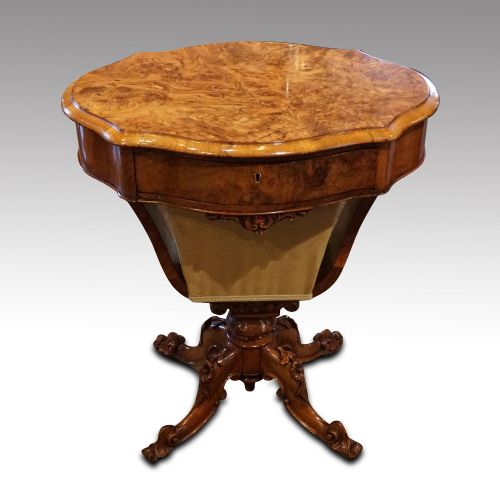

Fitted Needlework Box
A fitted needlework box organises threads, pins and small implements inside compartmentalised trays that lift to reveal deeper storage beneath.
Fitted Needlework Box
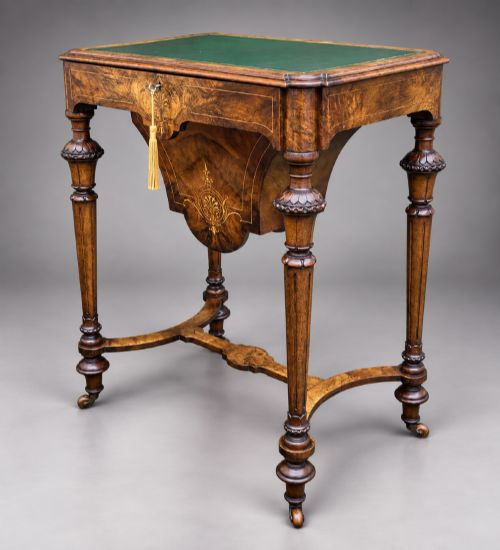
A fitted needlework box is a specialised container designed to hold sewing equipment, frequently appearing as tabletop boxes or freestanding work tables. The most common iterations on this page date from the Victorian and Edwardian eras, spanning from the mid-nineteenth century onwards.
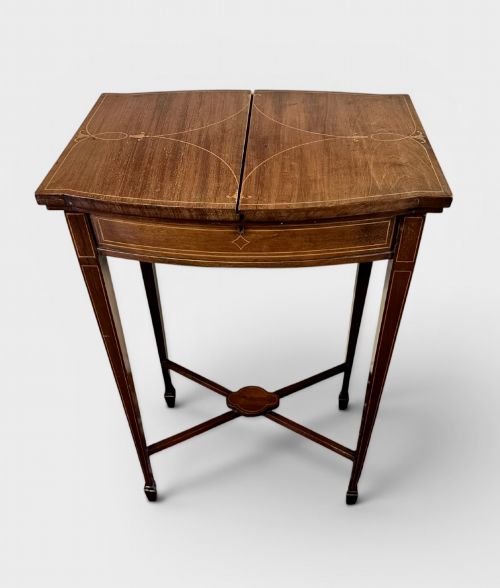
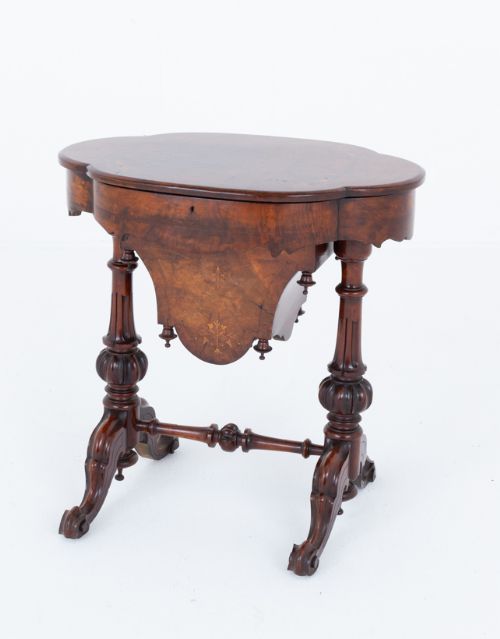
The primary forms include compact sewing boxes meant for tabletops alongside larger work tables featuring carved or turned supports. These pieces incorporate internal compartments and trays designed specifically for needles, cottons and small tools.
Materials and construction
Cabinetmakers utilised dense timbers such as burr walnut, mahogany and coromandel-wood as the foundation for these containers. Surfaces frequently feature decorative techniques including marquetry, Tunbridge Ware, or intricate inlay work in mother-of-pearl.
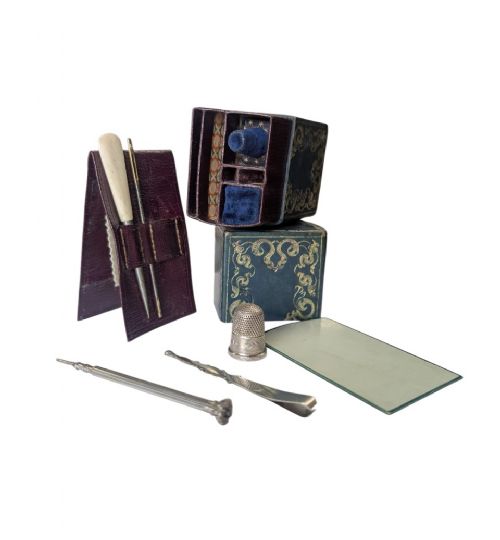
Interiors are typically lined with tactile textiles like velvet and fitted with small implements carved from bone or fashioned from silver. Woodwork often incorporates turned supports, cradle bases, or hinged lids that secure the internal compartments.
Listings feature pieces spanning the Victorian and Edwardian periods, constructed from burr walnut, mahogany, coromandel-wood and tortoiseshell.
Assessing quality in construction
Quality rests upon the selection of timber figures, such as the rich grain visible in burr walnut, and the precision of the marquetry or inlay. Boxes displaying intricate mother-of-pearl work or specialist decorative traditions like Tunbridge Ware occupy the upper tier of execution.
Internal organisation also dictates distinction, where complete fitted trays with original bone or silver implements demonstrate superior design. The complexity of the exterior form, ranging from plain mahogany boxes to elaborate freestanding work tables on carved supports, marks the grade of the piece.
Edwards
The Fitted Needlework Box Glossary
- Burr walnut
- A timber prized for its swirling, mottled grain pattern derived from the growths of walnut trees. Cabinetmakers utilised this veneer on the exterior surfaces of high-status boxes and tables.
- Tunbridge Ware
- A type of decorative woodwork characterised by tiny mosaic tiles formed from naturally coloured woods. These geometric or pictorial designs ornamented the lids of nineteenth-century boxes.
- Work table
- A freestanding piece of furniture incorporating a sewing box compartment or fabric bag beneath the top. These tables provided a stable surface for needlework alongside internal storage.
- Etui
- A small ornamental case designed to hold needles, scissors and tweezers. French examples frequently appeared during the Victorian period.
- Marquetry
- The art of applying pieces of veneer to a structure to form decorative patterns. This technique appeared on nineteenth-century work table lids.
Fitted Needlework Box: Frequently Asked Questions
What is a fitted needlework box?
A fitted needlework box is a portable container or freestanding table designed to store sewing implements and materials. Internal trays and compartments organise spools, pins and needles securely.
These pieces emerged strongly during the nineteenth century as both utilitarian items and decorative objects for the home.
How do I date a sewing box?
Dating relies on observing the timber species, exterior decorative techniques and construction methods. Mid-nineteenth-century examples frequently feature burr walnut or mother-of-pearl inlay.
Later Edwardian pieces often display lighter inlaid decoration and simpler structural lines compared to their heavily carved Victorian predecessors.
What are work tables used for?
Work tables combined a writing or display surface with dedicated storage for needlework and domestic crafts. The internal compartments kept threads and tools separate from the main surface.
Freestanding versions allowed practitioners to move their sewing projects easily between rooms.
What materials are common?
Cabinetmakers employed hardwoods such as walnut, mahogany and coromandel-wood for the main structure. Exterior surfaces were often enhanced with mother-of-pearl, brass or Tunbridge Ware.
Interiors typically featured velvet linings alongside small implements fashioned from bone or silver.