

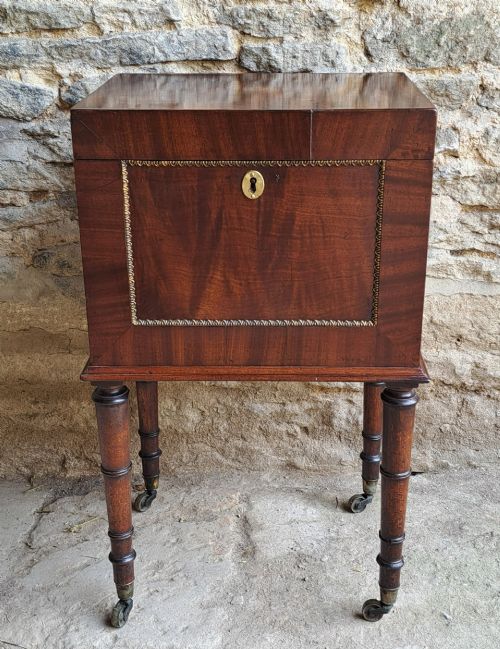
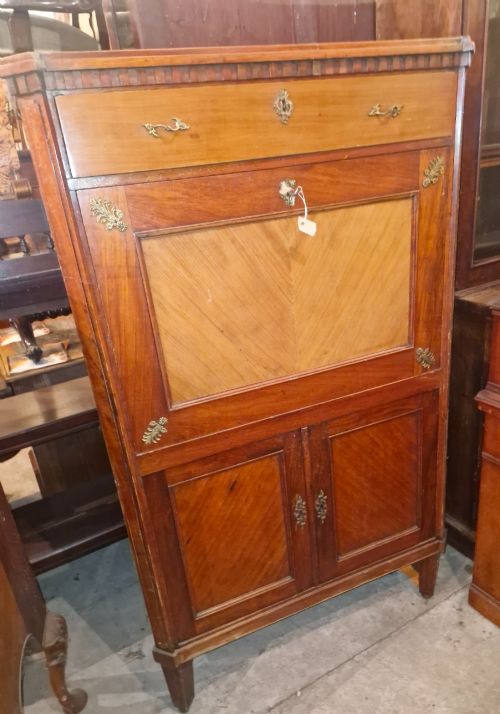


Fitted Liquor Chest
A fitted liquor chest brings the quiet theatre of the Victorian or Regency sideboard straight into the room.
Fitted Liquor Chest
A fitted liquor chest is a dedicated case designed to hold decanters and glassware securely, appearing on this page in forms such as cellarettes, decanter boxes, tantalus sets, and drinks cabinets. These pieces span from the late 18th century through the Edwardian period, capturing centuries of entertaining tradition in solid timber enclosures.
The most common examples encountered here are mahogany and coromandel decanter boxes alongside traditional cellarettes and wine coolers from the Regency and Victorian eras. Buyers often find variants featuring brass mounts, fitted velvet interiors, and integrated campaign sets tailored for travel or formal dining.
Originating as practical containers for valuable spirits, these chests range from Georgian wine coolers to late 19th-century tantalus sets and Edwardian safe cabinets. Each object reflects the social rituals of its decade, preserving original glass decanters and internal wooden partitions designed to prevent breakage.
How they were made
Makers constructed these chests primarily from dense hardwoods like mahogany, flame mahogany, walnut, and coromandel, often selecting figured grain for visible exterior surfaces. These timbers provided the structural integrity required to support heavy glass decanters and bottles during transport or daily use.
Metalwork played a crucial structural and decorative role, with brass used extensively for corner mounts, carrying handles, hinges, and locking mechanisms. Interiors frequently lined themselves in velvet to cushion delicate glassware within bespoke wooden compartments.
Fitted Liquor Chest Retail Price Guide 2026
Typical asking prices for fitted liquor chest among the pieces listed under this phrase on Sellingantiques today, from the lower quarter to the upper quarter. They describe what is for sale here now, not the wider market.
Some Victorian decanter boxes hide secret compartments beneath the velvet floor, built to keep a private reserve safe from the butler.
What varies in quality
Quality in a fitted liquor chest rests upon the selection of timber veneers, the crispness of the brass mountings, and the complexity of the interior joinery. Superior examples utilise solid flame mahogany or figured coromandel with meticulous internal dividers that secure every individual decanter.
The sophistication of the locking mechanism and the preservation of original cut glass decanters further distinguish finer pieces from simpler utilitarian boxes. A well-preserved velvet lining and intact hardware indicate higher original workshop standards.
The Fitted Liquor Chest Glossary
- Cellarette
- A chest or cabinet designed to hold bottles of wine and spirits near the dining table. They frequently appeared in Regency and Victorian dining rooms.
- Tantalus
- A locking drink stand that displays decanters securely while preventing access without a key. The wooden or metal bar locks the stoppers in place.
- Campaign set
- Portable furniture and equipment designed for officers on military campaigns or travel. These sets often include fitted glass decanters in sturdy wooden cases.
Fitted Liquor Chest: Frequently Asked Questions
What is a fitted liquor chest?
A fitted liquor chest is a specialised antique box or cabinet designed to hold glass decanters, stoppered bottles, and drinking glasses securely.
These pieces range from Regency cellarettes and Victorian decanter boxes to Edwardian drinks cabinets and tantalus sets.
How were cellarettes used?
Cellarettes were kept in the dining room to store wine and spirits close to the table during meals.
Servants would draw the drinks from the chest, which often included lead-lined interiors to hold ice or water for chilling bottles.
How do I date a decanter box?
Dating relies on timber choice, construction methods, and hardware styles such as brass campaign mounts or recessed handles.
Georgian and Regency pieces tend to show simpler classical lines, while Victorian and Edwardian examples often incorporate coromandel, elaborate brasswork, or integrated locks with working keys.
Are original decanters common?
Many surviving chests retain their matching sets of cut glass decanters, fitted snugly into custom wooden partitions.
Finding a complete set with matching stoppers adds significantly to the historical integrity of the piece.