


Fitted Art Deco Bar
A fitted art deco bar brings period glamour to entertaining, offering clever storage for bottles and glassware.
Fitted Art Deco Bar
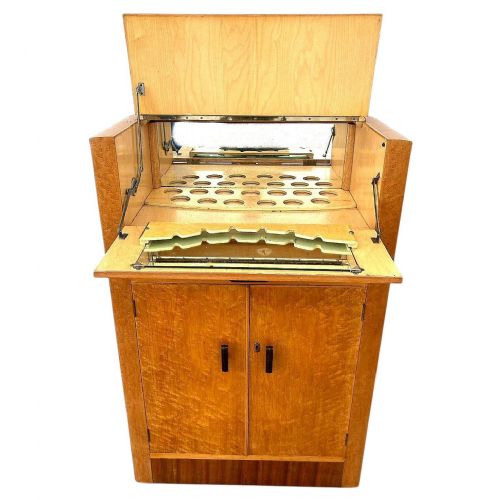
A fitted art deco bar most commonly takes the form of a cocktail cabinet, drinks cabinet, or drinks trolley dating from the 1920s and 1930s. These pieces provide dedicated storage for entertaining, designed with internal fittings for bottles and glasses.
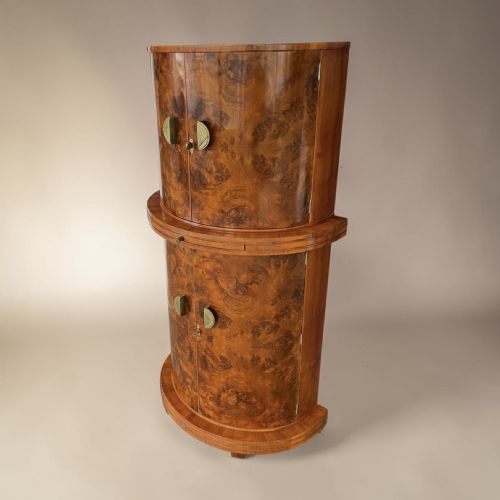
The selection on this page centres on walnut, burr walnut, and walnut veneer, alongside occasional examples incorporating glass, mirror, brass, chrome, and bakelite. Cabinets often appear in styles such as Art Deco and Queen Anne Revival.
Makers represented in these listings include Waring and Gillow, as well as Harry and Lou Epstein. Forms range from freestanding cocktail cabinets to corner configurations and low drinks trolleys.
Materials and construction methods
Construction relies heavily on walnut and burr walnut veneer applied to carcases, creating striking figured grain patterns across the front doors and surfaces. Cabinet interiors frequently utilise contrasting light woods and mirror panels to reflect light onto glassware.
Hardware and metal elements utilise chrome and brass for handles, hinges, and structural trims. Bakelite and glass details appear in internal fittings and accessories, characteristic of the manufacturing techniques of the period.
Listings feature pieces spanning the 1920 and 1930 periods, constructed primarily in walnut, burr walnut, and glass.
Distinguishing quality in period bars
Quality separates through the selection and matching of burr walnut veneers, where book-matched grain patterns create symmetrical visual harmony across cabinet doors. The complexity of internal fittings, such as pull-out slides, lighting integration, and specialised glass racks, also indicates finer workmanship.
Attribution to known makers like Harry and Lou Epstein or Waring and Gillow elevates a piece through documented craftsmanship and superior joinery. The preservation of original mirrored interiors, brass or chrome hardware, and specialised glass components maintains the integrity of the design.
Harry and Lou Epstein·Waring and Gillow
The Fitted Art Deco Bar Glossary
- Burr walnut
- A prized timber harvested from walnut tree growths, yielding intricate swirling grain patterns used extensively for decorative veneer work on high-end cabinet doors.
- Cocktail cabinet
- A specialised piece of furniture designed specifically for the preparation and serving of drinks, featuring internal bottle racks, glass holders, and mixing surfaces.
- Drinks trolley
- A mobile serving cart fitted with wheels or castors, allowing bottles and glassware to be moved easily between rooms during social gatherings.
- Bakelite
- An early form of synthetic plastic used frequently for handles, knobs, and decorative trim on pieces from the 1920s and 1930s.
- Veneer
- A thin layer of superior wood, such as walnut, applied over a secondary timber carcase to create a decorative exterior surface.
Fitted Art Deco Bar: Frequently Asked Questions
What is a fitted art deco bar?
A fitted art deco bar is a specialised cabinet or trolley from the 1920s or 1930s designed to store bottles, glassware, and mixing equipment.
These pieces typically feature drop-down fronts or specialised internal compartments tailored for entertaining.
How do I identify the period?
Pieces from this era are distinguished by characteristic veneers like burr walnut, alongside metal accents in chrome and brass.
Design motifs align with the Art Deco style or occasional Queen Anne Revival influences dating from the 1920 and 1930 decades.
Where were they used?
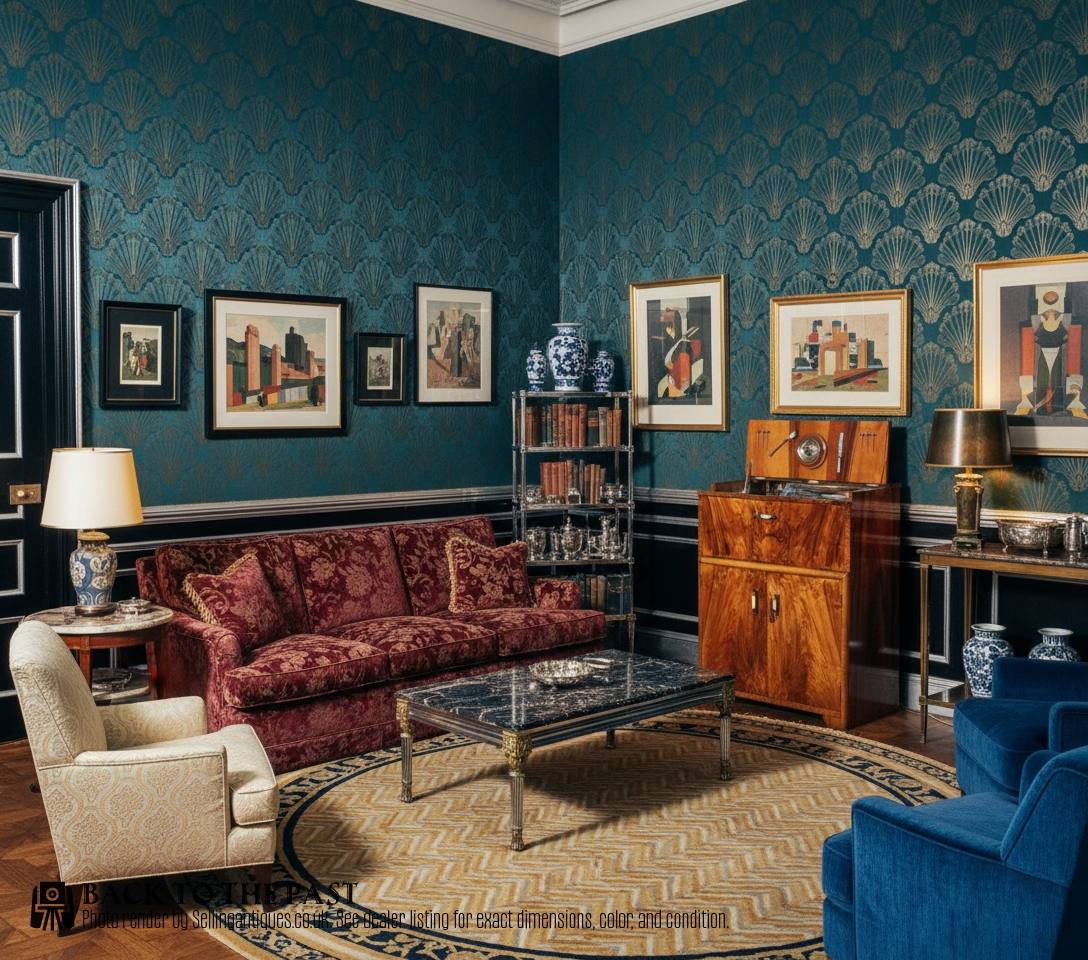
These cabinets and trolleys were designed for entertaining guests in the principal reception rooms of homes during the interwar period.
They served as both functional storage units and stylish focal points for hosting cocktail parties.
How do I care for walnut veneer?
Protect the wood surfaces from direct sunlight and excessive moisture to prevent fading or lifting of the delicate veneer.
Regular dusting with a soft, dry cloth helps maintain the polished finish of the burr walnut grain.