



Fireside Coal Helmet
A fireside coal helmet is a practical hearth accessory shaped to pour fuel cleanly, combining utility with decorative metalwork.
Fireside Coal Helmet
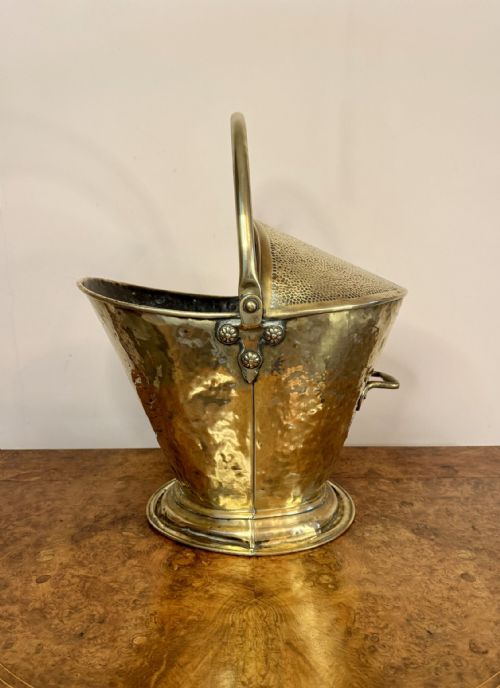
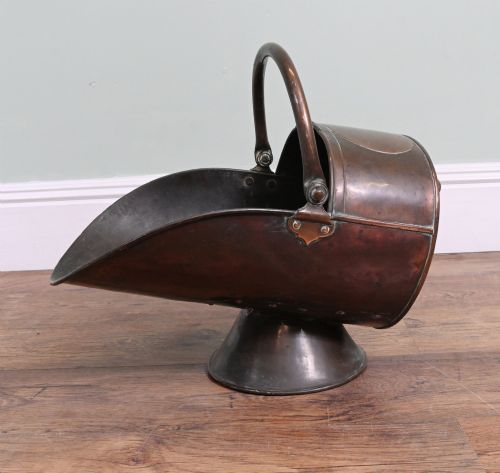
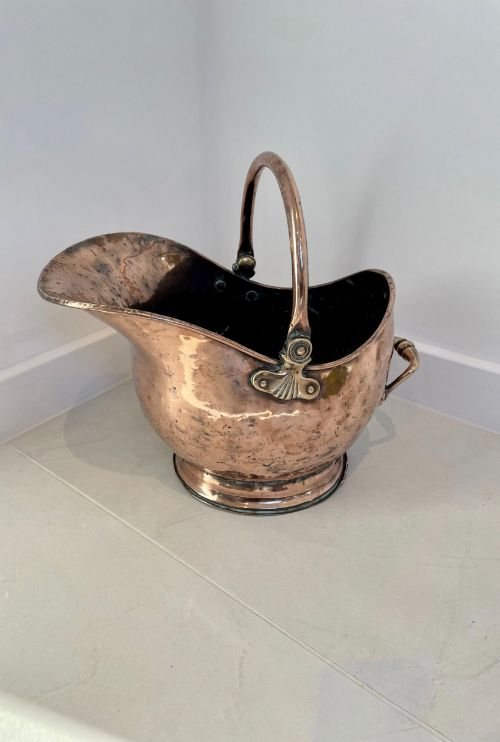
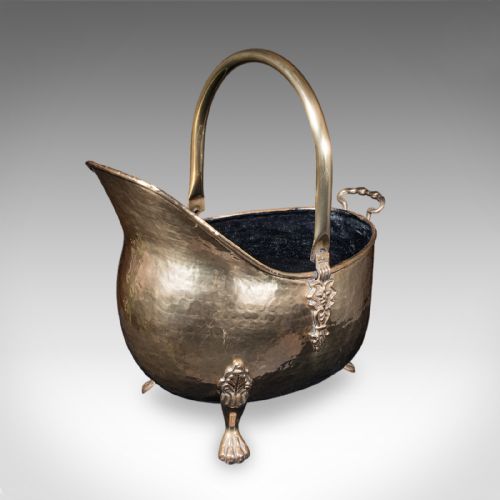
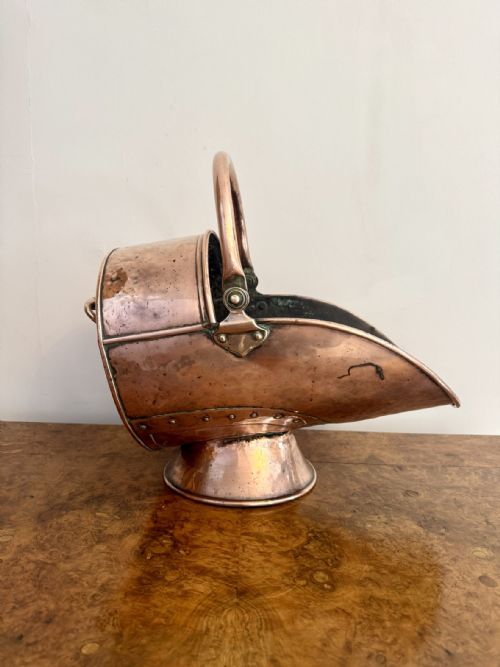
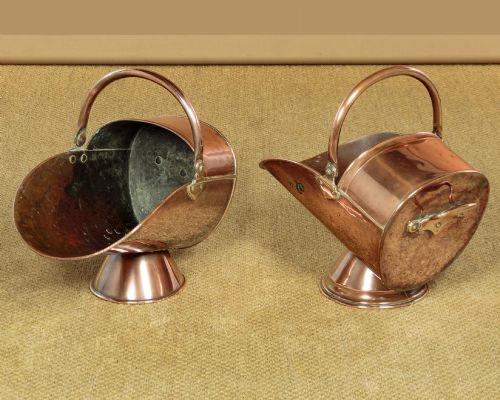
A fireside coal helmet is a distinct form of fuel storage designed for the hearth, taking its name from its flared, sloped profile that resembles a classical helmet. These metal receptacles were engineered to hold coal near the fireplace and allow for easy pouring into the grate using an integrated handle and narrow spout.
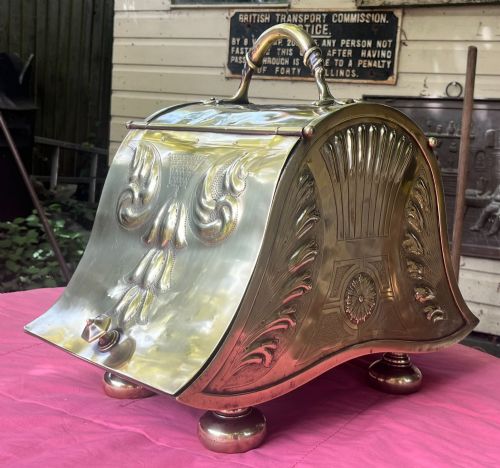
Most examples encountered on this page belong to the Victorian period, though earlier Georgian and Regency specimens alongside later Edwardian pieces also appear. They span various styles from Arts and Crafts to Art Nouveau, reflecting the aesthetic priorities of their respective decades.
The form typically rests on a small foot or circular base, balancing stability with maneuverability. Whether fashioned with a fixed swing handle or a rigid rear grip, each piece served as both a domestic workhorse and an ornamental item in the principal rooms of the house.
Materials and construction methods
Brass and copper dominate the construction of these items, frequently paired with iron handles or wooden grips and occasional accents of ebony. These sheet metals were hammered, spun, or joined with seams and rivets to form the distinctive helmet body.
Techniques range from smooth polished finishes to hammer-beaten surfaces and embossed decorative panels. Makers also incorporated cast brass components for feet and handles, ensuring durability where the vessel experienced the most handling and weight.
Fireside Coal Helmet Retail Price Guide 2026
Typical asking prices for fireside coal helmet among the pieces listed under this phrase on Sellingantiques today, from the lower quarter to the upper quarter. They describe what is for sale here now, not the wider market.
The documented periods span from Georgian and Regency eras through the Victorian and Edwardian decades.
Judging quality in metalwork
Quality rests primarily in the gauge of the metal used and the integrity of its construction. Thicker brass or copper sheets resist denting and maintain their structural rigidity under the heavy load of coal.
Refinement in surface decoration and hand-finishing distinguishes superior examples from standard production pieces. Clean joinery, well-cast fittings, and the presence of a matching original shovel indicate a higher standard of original manufacture.
BENHAM AND FROUD·Henry Loveridge
The Fireside Coal Helmet Glossary
- Helmet coal scuttle
- A coal container featuring a high back and a downward-sloping front rim resembling a helmet. This shape directs the coal outward during pouring.
- Arts and Crafts
- A design movement prioritising handcraftsmanship and simple forms over mass production. Pieces from this style often display visible hammer marks.
- Art Nouveau
- A decorative style characterised by flowing, organic lines and floral motifs. It frequently appears on the embossed panels of later coal helmets.
- Aesthetic Period
- A late-nineteenth-century movement focusing on art for art's sake and eclectic design influences. Items from this time often incorporate Japanese-inspired motifs.
- Polished brass
- A bright, reflective metal finish achieved through abrasive smoothing. It was widely used in formal nineteenth-century interiors to catch the firelight.
Fireside Coal Helmet: Frequently Asked Questions
How do I clean a brass coal helmet?
Maintenance depends on whether the metal retains its original lacquer or historical patina. Gentle dusting with a dry cloth is usually sufficient for everyday care.
Harsh chemical polishes should be avoided on antique surfaces unless previous cleaning has already removed the finish. A soft cloth and mild soapy water will safely lift accumulated soot and grime.
Are these helmets safe for daily use?
These vessels were built to hold solid fuel and remain sturdy enough for practical hearth service. The solid metal construction withstands the weight of coal and logs.
Care should be taken when resting heavy pieces on delicate flooring to prevent scratching. Inspecting the handle attachments ensures the joint remains secure before lifting.
How do I date a copper helmet?
Dating relies on observing construction marks, styling details, and the thickness of the metal. Georgian and Regency examples often display hand-beaten surfaces and simpler lines.
Victorian and Edwardian pieces frequently incorporate machine rolling, embossed decoration, or specific aesthetic movement motifs. Maker stamps on the base also provide definitive chronological reference.
Did these pieces always include a shovel?
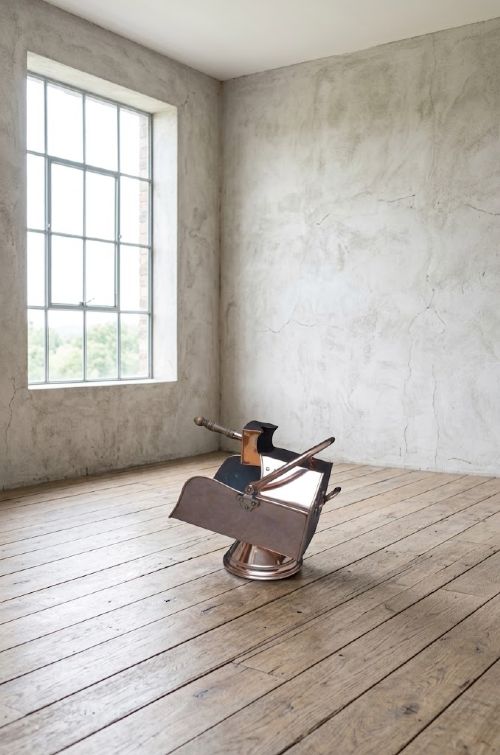
Many helmets were sold alongside a matching metal shovel designed to fit into a rear or side bracket. These accessories facilitated transferring fuel directly from the bucket to the grate.
Surviving sets with their original shovels are less common because the smaller implements were easily misplaced over decades of domestic use. The presence of a matching shovel enhances the completeness of the item.