





Fireplace Hearth Seat
A fireplace hearth seat provides a low, comfortable perch right by the grate, combining sturdy metal framework with padded top cushions.
Fireplace Hearth Seat
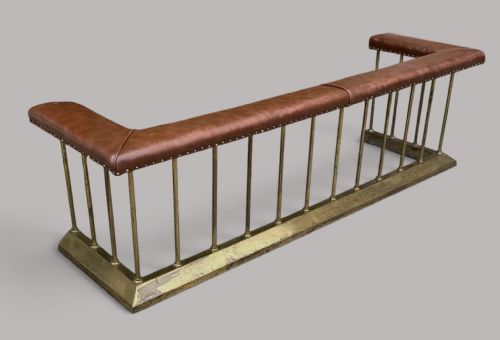
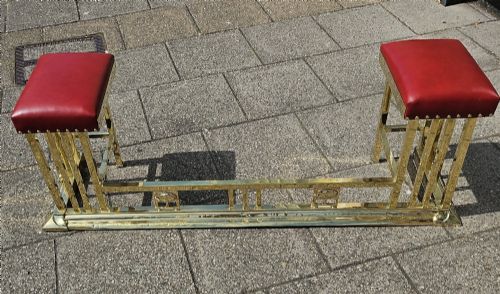
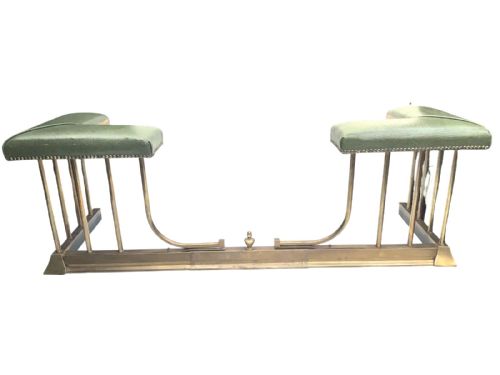
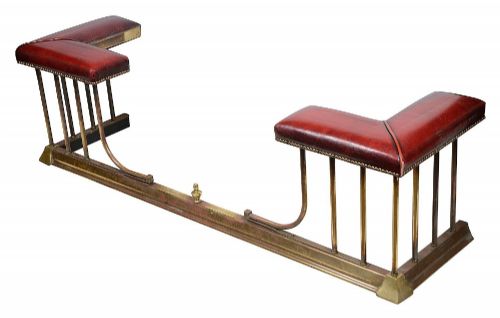
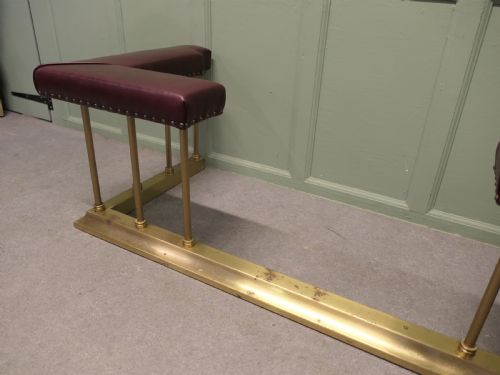
A fireplace hearth seat principally takes the form of a club fender, structured with corner supports and open balustrades designed to wrap around the projecting brickwork of an open hearth. These pieces serve as functional fireside seating, placing the user close to the warmth of the fire while protecting the room from stray embers.
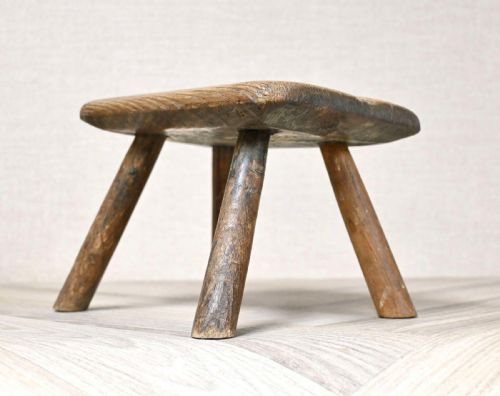
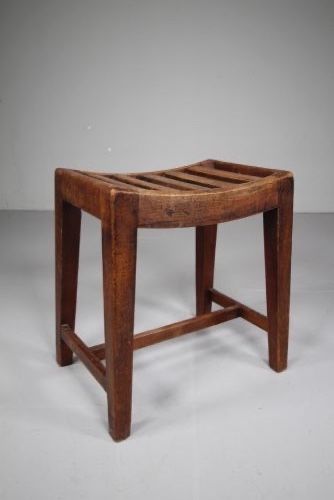
The selections available here lean heavily into Victorian and Edwardian club fenders, alongside earlier Georgian mahogany stools and compact footstools. Brass frameworks predominate, though steel, wrought iron, and oak appear frequently to support the padded leather or wooden seating tops.
Originating largely within nineteenth-century country houses and gentlemen's clubs, these sturdy furnishings balance utilitarian fireside construction with decorative metalwork. Buyers encounter various configurations, from simple slatted mahogany benches to adjustable brass frames upholstered in deep tan or green leather.
How they were made
Metalwork forms the backbone of these pieces, utilising cast steel, wrought iron, copper, and polished brass to construct the structural frames and spindles. Artisans joined these metallic elements with precision, incorporating adjustable mechanisms and corner uprights designed to withstand intense hearth heat.
Upholstery completes the upper section, employing durable leathers such as mature tan or Chesterfield green stretched over firm padding. Timber elements like oak and mahogany appear both as supportive seat tops and structural bases, shaped with slatted designs or carved detailing characteristic of Arts and Crafts and Georgian aesthetics.
Listings feature periods spanning from the 18th century through the Edwardian era, constructed primarily in brass, steel, oak, and leather.
What varies in quality
The calibre of a fireplace hearth seat rests upon the weight and finish of its metal frame, distinguishing solid brass castings and heavy forged iron from lighter, utilitarian alternatives. Superior examples display crisp detailing in the balustrade spindles and robust structural joints that maintain stability across wide spans.
Upholstery standards further separate the tiers, where thick, hand-finished leather secured with traditional studwork outperforms thinner modern replacements. The integration of adjustable sizing mechanisms and sound secondary timbers like oak or mahogany also marks the distinction between standard production and finer workshop craftsmanship.
The Fireplace Hearth Seat Glossary
- Club Fender
- A low, U-shaped fireside bench featuring a metal frame and upholstered seats that fits around the protruding hearth of an open fireplace. These structures allowed Victorians to sit directly beside the fire.
- Balustrade
- A row of small vertical pillars or spindles supporting the upper rail of a fender frame. These metal or wooden uprights often form decorative patterns characteristic of Victorian and Edwardian design.
- Chesterfield Seat
- A deep-buttoned upholstered cushion style frequently applied to the leather tops of club fenders. This traditional method secures the padding while creating a distinctive diamond pattern.
- Fireside Bench
- An extended seating form placed before a hearth, combining metal supports with a comfortable padded surface. Such pieces provide stable seating within the active zone of the fireplace.
Fireplace Hearth Seat: Frequently Asked Questions
How do I measure for a club fender?
Measure the width, depth, and height of your fireplace hearth protrusion carefully, ensuring the internal dimensions of the fender clear the brickwork with adequate clearance on all sides.
Account for the surround trim and ensure the height aligns comfortably with standard seating expectations relative to your hearth base.
Were these seats used in formal rooms?
Club fenders and hearth seats populated both grand country house libraries and comfortable morning rooms, serving as practical social seating close to the hearth.
Their substantial brass and leather construction added an air of established comfort to domestic spaces designed for gathering during colder months.
Can I adjust the width of these fenders?
Certain period examples incorporate adjustable corner mechanisms or sliding brass sections designed to fit varying hearth dimensions during initial placement.
Checking the specific listing details reveals whether a particular fender offers this physical adjustment capability or remains fixed in size.
How do I maintain the leather tops?
Condition the leather periodically using traditional balms or waxes to keep the hide supple and prevent cracking from proximity to fireside heat.
Avoid placing the seat too close to active flames without a proper spark guard in place to protect the leather surface from stray embers.