

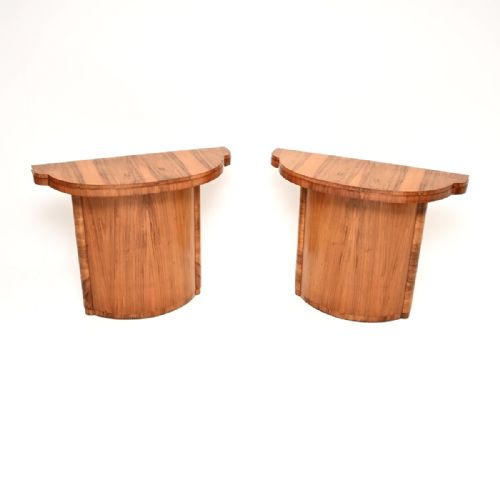
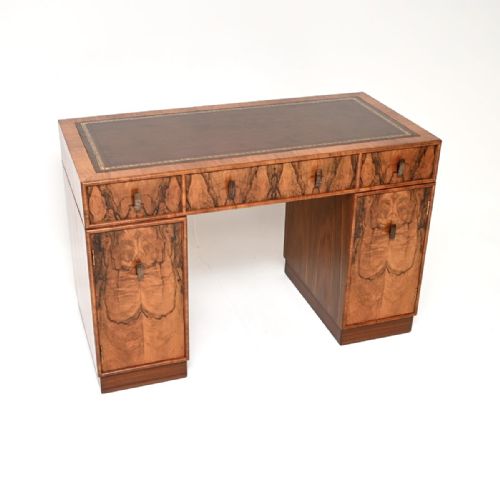
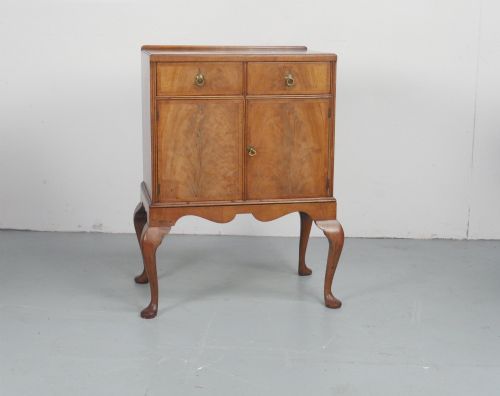
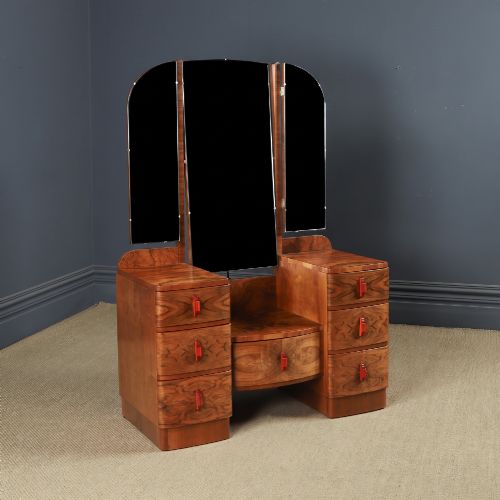



Figured Walnut Pedestals
Figured walnut pedestals offer rich grain patterns and substantial proportions, bringing architectural presence and practical surface space to traditional and modern interiors alike.
Figured Walnut Pedestals
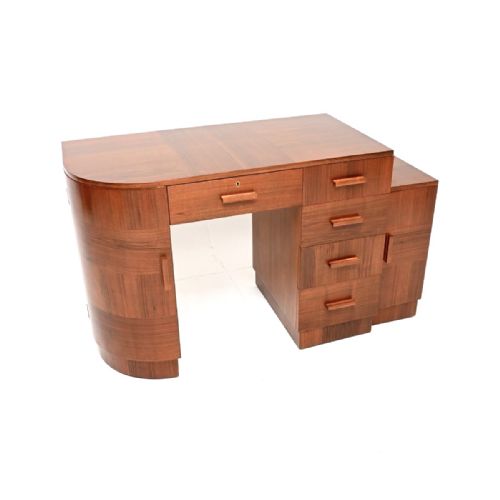
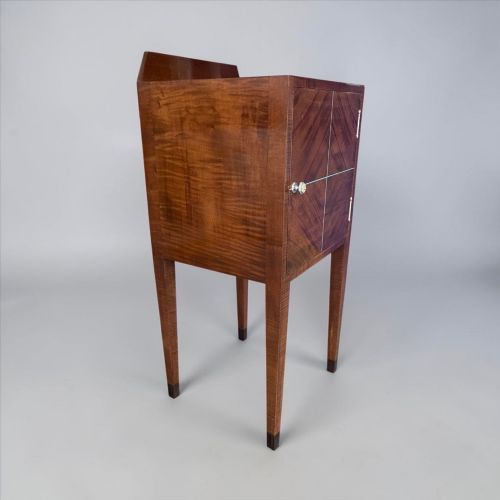
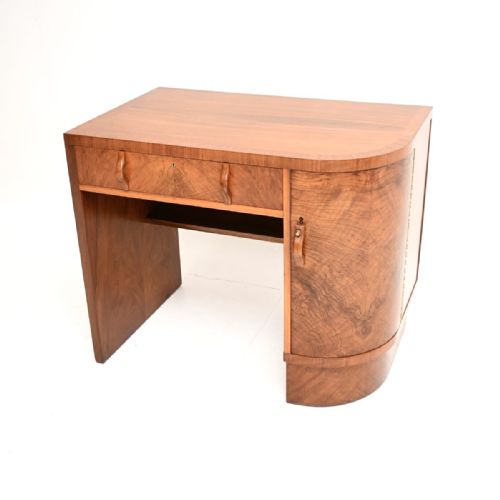
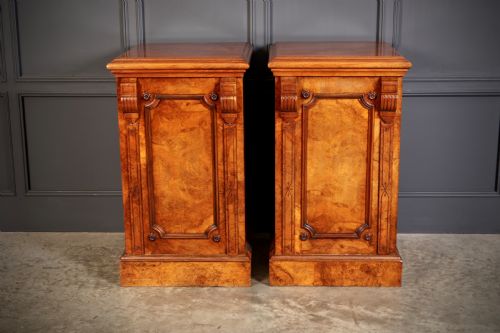
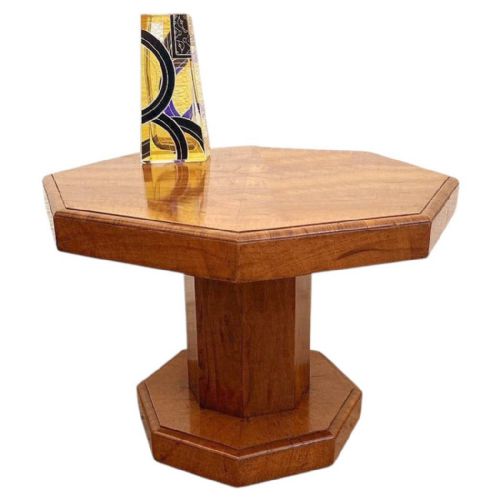
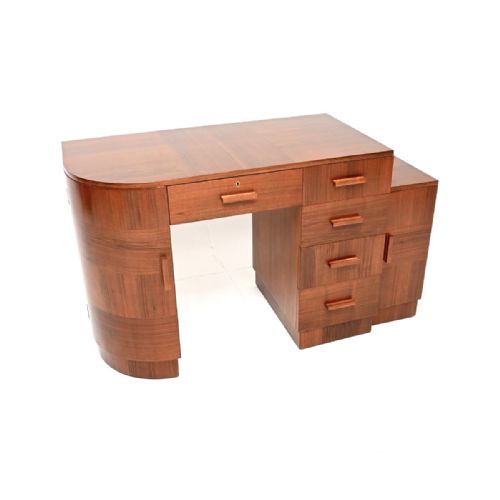
The selection ranges from Victorian freestanding designs and floral marquetry inlaid bedside cabinets to clean-lined Art Deco desks and architectural stands. Pieces attributed to eighteenth-century styles like George II sit alongside nineteen-twenties walnut cabinets, demonstrating how cabinet makers utilised richly patterned timber across multiple generations of design.
Materials and Construction
Craftsmen built these pieces using solid walnut and applied burr or figured walnut veneers over secondary woods such as oak, selecting timber for high visual impact. Surface enrichment often includes intricate marquetry inlay, floral details, and the integration of brass mounts or leather panels.
Structural integrity relies on traditional joinery techniques suited to supporting heavy tabletops and display items. French polishing or clear finishes were typically applied to accentuate the natural swirls, curls, and contrasting tones of the walnut grain.
Figured Walnut Pedestals Retail Price Guide 2026
Typical asking prices for figured walnut pedestals among the pieces listed under this phrase on Sellingantiques today, from the lower quarter to the upper quarter. They describe what is for sale here now, not the wider market.
Listings feature walnut, burr walnut, and figured walnut across Victorian, Edwardian, and Art Deco periods, alongside oak and brass.
Evaluating Quality
Quality rests primarily in the choice and symmetry of the veneer work, where book-matched figured walnut creates mirrored patterns across large surfaces. Finer examples display crisp marquetry inlay and minimal disturbance to the underlying timber grain.
Proportion and structural stability distinguish superior pieces from standard workshop output. Desks and cabinets featuring original brass hardware and well-preserved internal construction demonstrate greater craftsmanship than later revivals.
Maurice Adams
The Figured Walnut Pedestals Glossary
- Figured walnut
- Wood harvested from walnut trees that displays unusual, highly decorative grain patterns such as curls, swirls, or ripples. This timber is typically sliced into veneers for cabinet fronts and tabletops.
- Burr walnut
- Wood sourced from the abnormal growth or burl on a walnut tree, producing a dense cluster of swirling eyes and intricate grain details. It forms a highly prized decorative surface.
- Marquetry
- The art of applying small pieces of veneer to a structure to form decorative patterns or pictures. Craftsmen use contrasting woods to create floral or geometric designs.
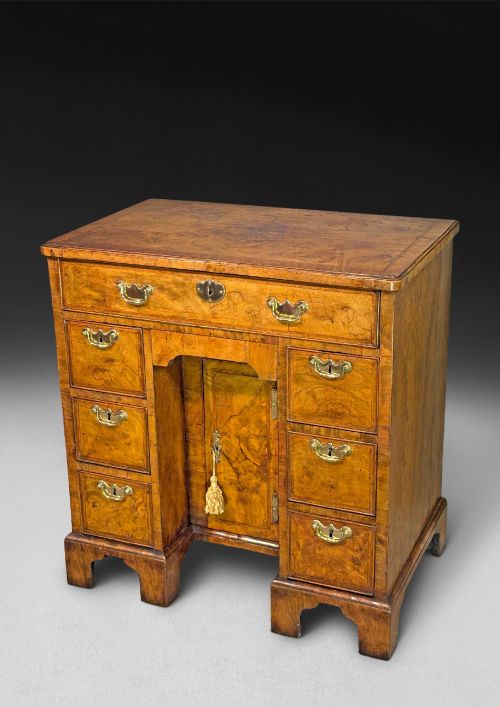
- Kneehole desk
- A compact desk featuring a central recessed space for the user's legs, flanked by pedestals containing banks of small drawers. This form became popular during the eighteenth century.
- Gueridon
- A small, round occasional table or stand supported by a central pillar or pedestal. The form originated in seventeenth-century France and persisted through the nineteenth century.
Figured Walnut Pedestals: Frequently Asked Questions
What is figured walnut?
Figured walnut refers to timber taken from sections of the walnut tree that exhibit decorative, irregular grain patterns. These distinctive markings result from natural growth variations or burls.
Cabinet makers slice this wood into thin veneers to display symmetrical patterns across large surfaces like desk tops and cabinet doors.
How do I date a pedestal table?
Dating requires examining the construction methods, secondary timbers, and stylistic markers such as cabriole legs or geometric Art Deco lines. Eighteenth-century pieces differ significantly from Victorian or nineteen-thirty examples in their proportions and finish.
Secondary woods hidden inside drawers or beneath tabletops often provide clearer clues to the manufacturing period than external styling alone.
Where should I place a pedestal in a room?
Pedestals and centre tables function well as freestanding statement pieces in hallways, drawing rooms, or studies. Freestanding desks and centre tables require placement where their finished backs and grain patterns remain visible.
Smaller bedside cabinets and lamp tables fit comfortably beside seating or sleeping furniture while providing functional surface space.
How do I care for antique walnut furniture?
Antique walnut requires protection from direct sunlight and extreme humidity fluctuations to prevent the veneer from drying out or lifting. Maintaining stable indoor environments preserves the finish and structural integrity of the wood.
Routine dusting with a soft, dry cloth is sufficient, avoiding harsh chemical polishes that can degrade the historic surface finish.