



Figured Walnut Chest on Stand
A figured walnut chest on stand brings exceptional timber and elevated design to a room, offering both generous storage and striking vertical presence.
Figured Walnut Chest on Stand
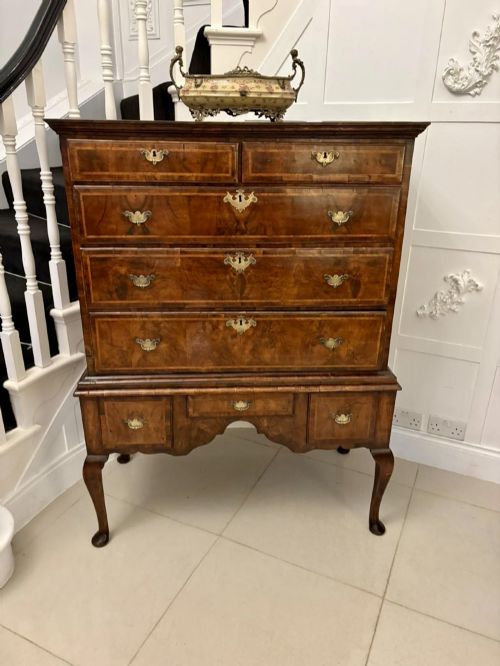
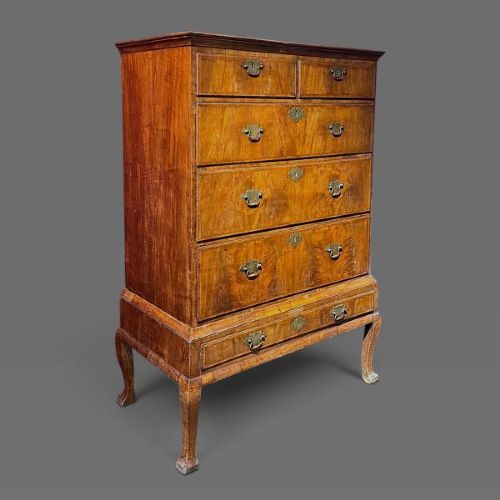
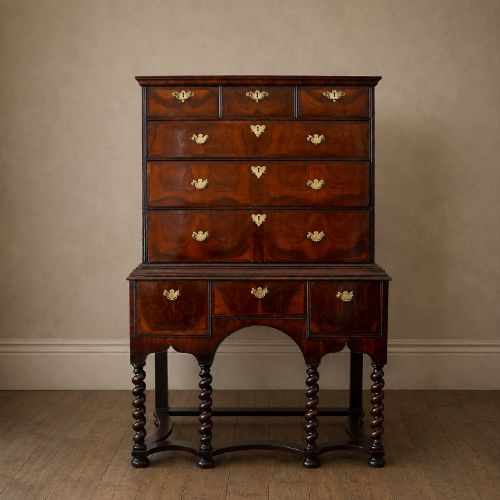
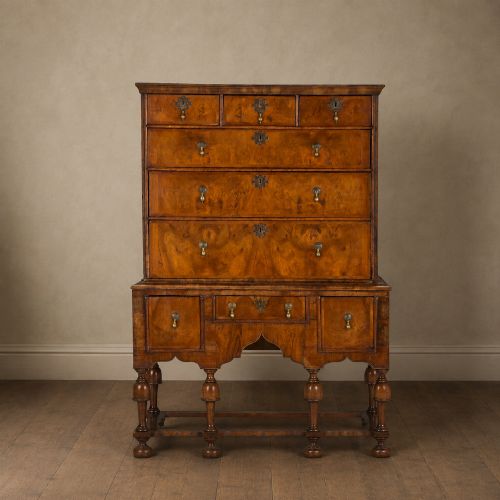
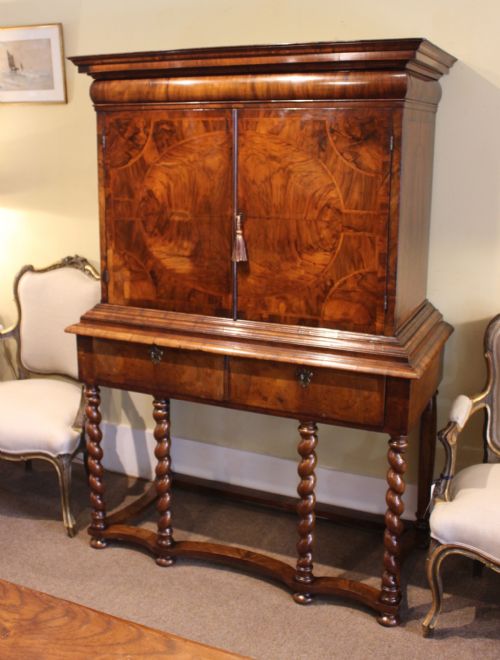
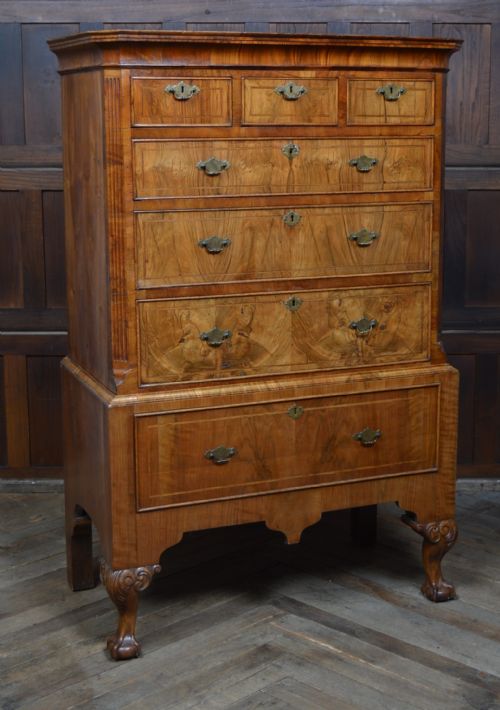
A figured walnut chest on stand combines an upper section of drawers with a supporting lower framework, emerging across the seventeenth and eighteenth centuries during the William and Mary, Queen Anne, and Georgian eras. These pieces deliver intense grain patterns through book-matched walnut veneers laid across the drawer fronts and primary surfaces.
The configurations vary between chest on stand, cabinet on stand, and chest on chest formats, reflecting the distinct joinery traditions of periods from 1700 through 1750 and later nineteenth-century revivals. Examples seen here range from early eighteenth-century Queen Anne and George I iterations to later Victorian George II style interpretations.
The lower stand typically employs slender legs, sometimes joined by stretchers, which elevate the heavy drawer section above the floor and lighten the overall silhouette of the furniture.
How they were made
The primary construction relies on walnut timber and walnut veneers applied over secondary woods such as oak, creating stable carcases that resist warping while displaying highly figured exterior surfaces.
Brass hardware, including drop handles and escutcheons, punctuate the drawer fronts, while traditional dovetail joints secure the drawer construction and pine or oak secondary framing supports the interior divisions.
Figured Walnut Chest on Stand Retail Price Guide 2026
Typical asking prices for figured walnut chest on stand among the pieces listed under this phrase on Sellingantiques today, from the lower quarter to the upper quarter. They describe what is for sale here now, not the wider market.
Listings span the seventeenth century, the Georgian era, and Victorian revivals, utilising walnut, oak, and brass.
What varies in quality
The visual impact depends directly on the choice of walnut veneer, where symmetrical figuring and rich grain movement elevate the piece far beyond plain timber surfaces.
Proportion and structural integrity dictate the standing of a piece, particularly where original stands meet later adaptations, or where crisp drawer edge moulding remains intact over centuries of use.
The Figured Walnut Chest on Stand Glossary
- Figured walnut
- Timber exhibiting highly decorative grain patterns, achieved by cutting through burls, crotches, or stump wood to create swirling, symmetrical designs. This veneer forms the primary decorative surface of the piece.
- Chest on stand
- A two-part form comprising a multi-drawer upper cabinet set upon an elevated base with legs. It separates storage utility from floor-level bulk.
- Cabinet on stand
- An enclosed upper compartment with doors, sitting upon an open leg framework rather than a bank of drawers. It serves a similar elevated function to the chest variant.
- Veneer
- Thin slices of decorative walnut applied to a secondary structural timber carcase such as oak. This technique allows master cabinetmakers to display symmetrical grain patterns across large surfaces.
- Escutcheon
- A protective brass plate surrounding a keyhole on a drawer front. It prevents the surrounding timber from wearing down through repeated use of the key.
Figured Walnut Chest on Stand: Frequently Asked Questions
How do I date an antique walnut chest on stand?
Dating involves examining the construction methods, hardware styles, and underlying secondary woods such as oak. Pieces from the Queen Anne and George I periods typically display specific leg turnings, stretcher configurations, and dovetailing techniques characteristic of early eighteenth-century joinery.
Stylistic markers shift from William and Mary proportions through to Georgian designs and later Victorian revivals, helping to place the piece within its correct historical era.
Where were these chests placed in historic homes?
These elevated chests served primarily in private bedchambers and dressing rooms to store linens, garments, and personal valuables. Their raised stance kept contents away from damp floors and drafts.
Over time, their decorative figured timber surfaces made them equally suitable for prominent reception rooms and hallways where guests would admire the cabinetmaker's skill.
How do I live with antique walnut furniture?
Living with antique walnut requires maintaining stable indoor humidity and temperature levels to protect the delicate veneers and secondary oak framing. Avoiding direct sunlight prevents the walnut timber from fading over time.
Regular dusting with a dry, soft cloth preserves the historic polish, allowing the natural grain patterns to remain the focal point of the interior space.