

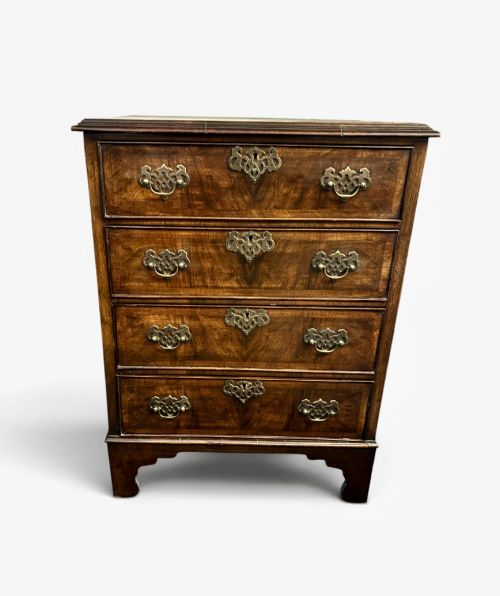
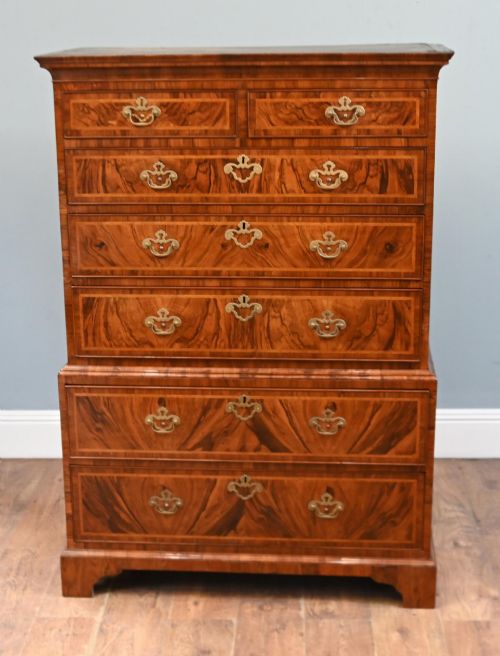
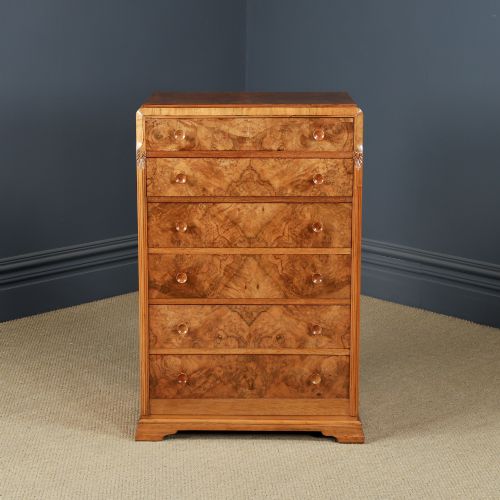
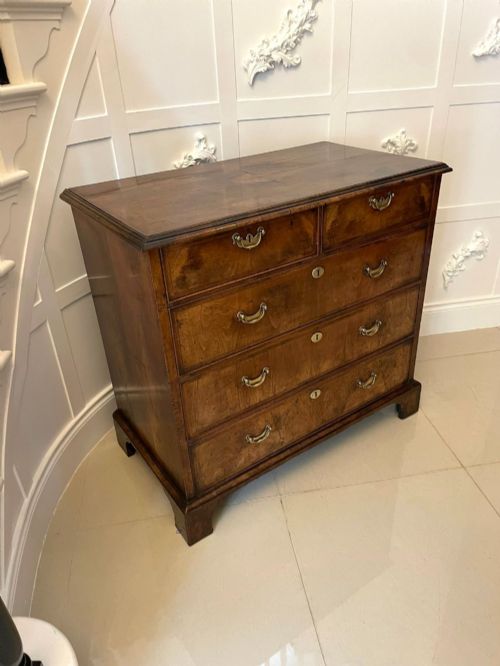
Figured Walnut Chest Drawers
Figured walnut chest drawers bring rich grain patterns and warm tones into a room, offering practical storage alongside centuries of cabinet-making skill.
Figured Walnut Chest Drawers
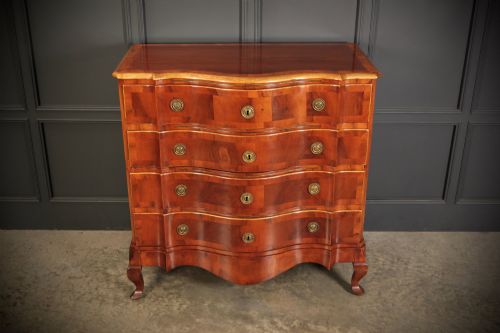
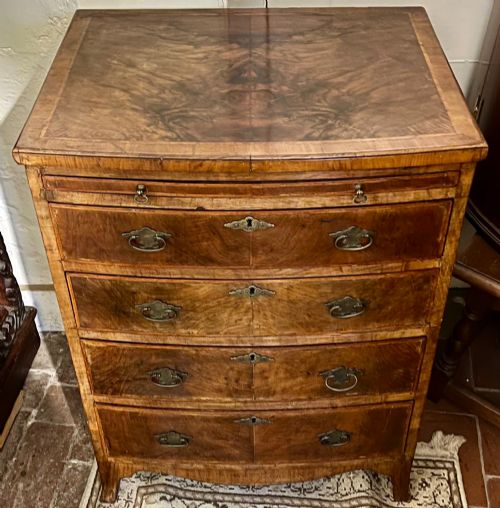
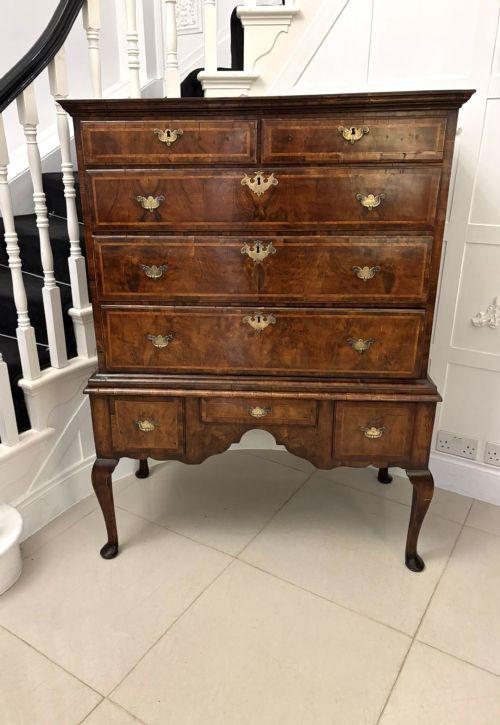
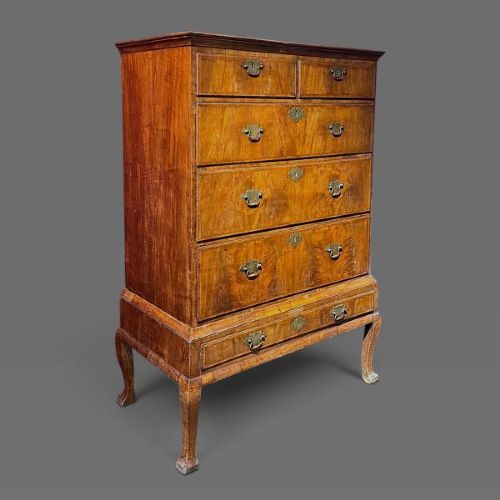
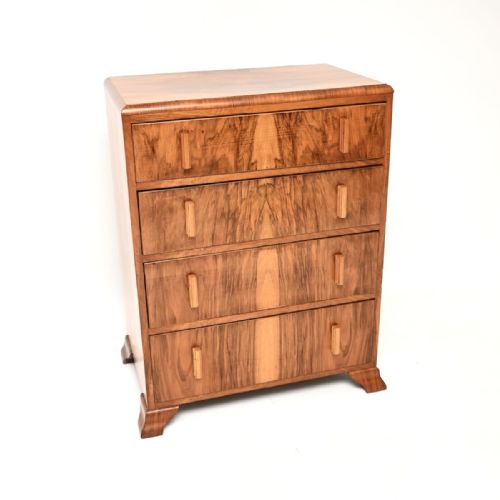
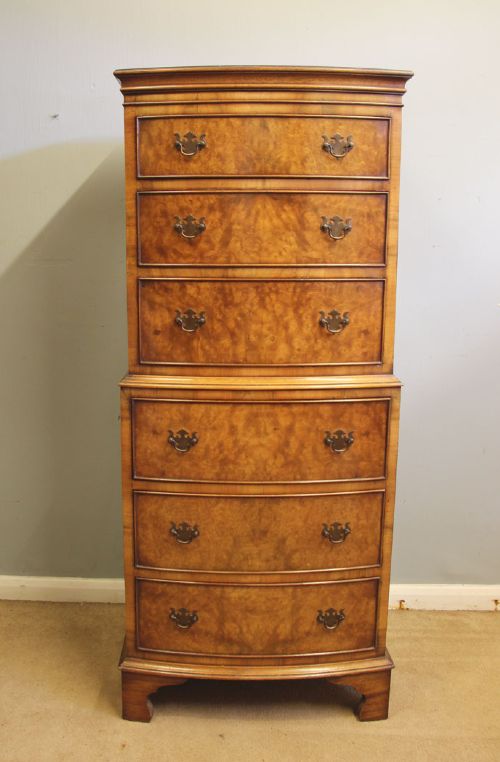
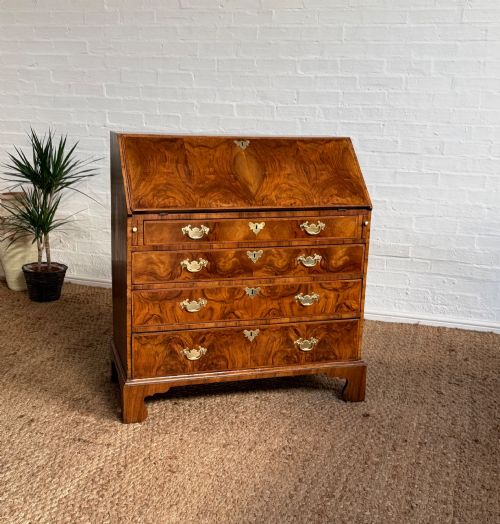
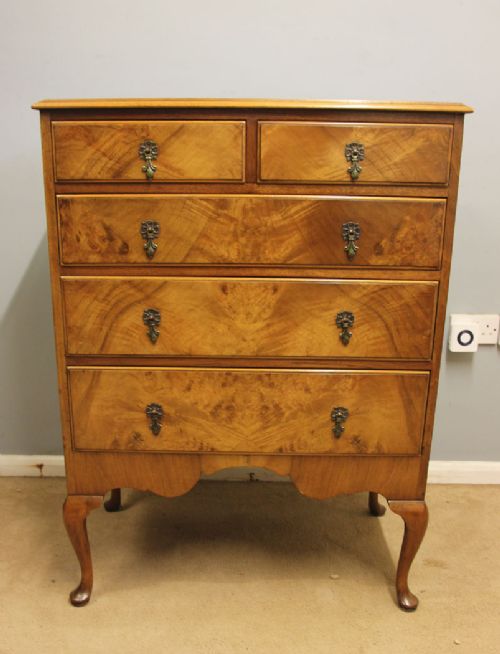
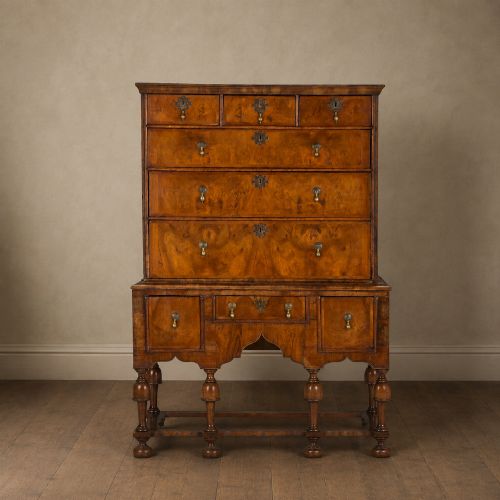
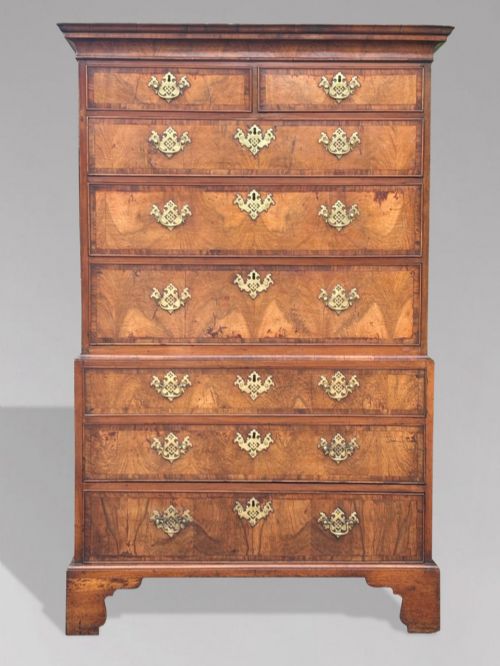
When searching for a figured walnut chest drawers, buyers encounter pieces spanning from the seventeenth century through to the Art Deco period. The selections range from compact tallboys and chests on stands to large bureaus and chest on chest designs.
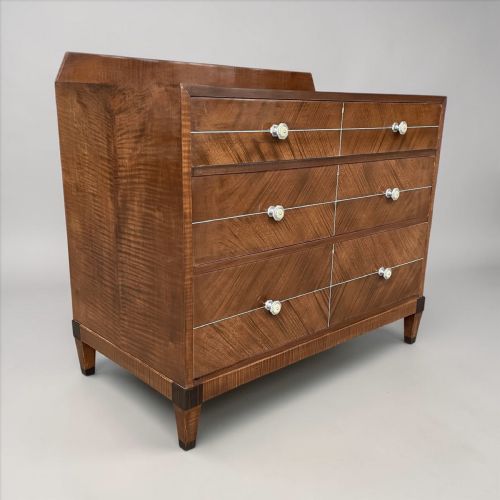
Early examples often originate from the Queen Anne and Georgian periods, showcasing classical proportions and refined wood selection. Later twentieth-century interpretations, including Art Deco designs, bring streamlined shapes and striking veneer work to the form.
How They Were Made
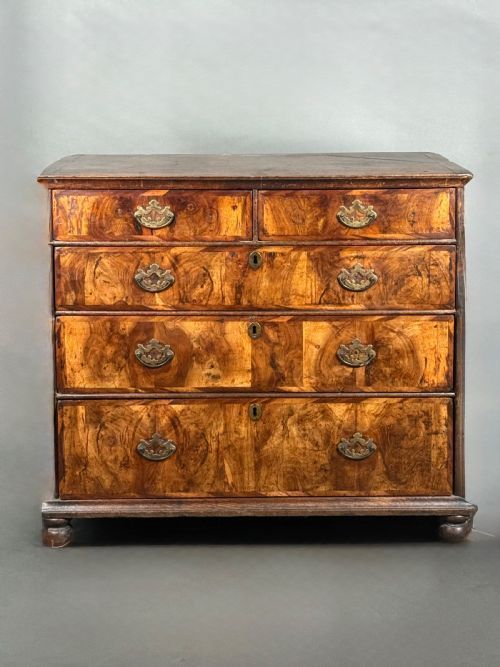
Cabinet makers constructed these pieces using solid foundational timbers like oak, applying thin layers of figured walnut, burr walnut, and walnut veneer to the visible surfaces. This technique allowed craftsmen to display symmetrical grain patterns across drawer fronts and top boards.
Details such as brass hardware, leather writing surfaces, and cross-banding complemented the timber. Joinery methods evolved from early dovetails on drawer construction to later industrial production techniques in the twentieth century.
Figured Walnut Chest Drawers Retail Price Guide 2026
Typical asking prices for figured walnut chest drawers among the pieces listed under this phrase on Sellingantiques today, from the lower quarter to the upper quarter. They describe what is for sale here now, not the wider market.
The inventory spans the seventeenth century up through the Art Deco era of the 1930s and 1940s.
What Varies in Quality
The visual impact of the wood grain dictates much of the distinction between standard and exceptional pieces. Highly figured timbers with intense burr patterns command greater attention than plainer walnut surfaces.
Proportion, original hardware retention, and the complexity of the form - such as chests on stands versus simple box forms - set individual items apart across different eras.
Betty Joel·Heal's·Druce & Co
The Figured Walnut Chest Drawers Glossary
- Figured walnut
- Timber sourced from walnut trees showing exceptional grain patterns, swirls, and light-reflecting qualities. Craftsmen prized this wood for decorative veneer work on prominent furniture surfaces.
- Chest on chest
- A tall storage form comprising one chest stacked directly on top of another, often associated with eighteenth-century design. This configuration maximised vertical storage space while maintaining a commanding presence.
- Chest on stand
- A drawer section elevated on a separate framework with legs, common in early periods. This style lightens the visual weight of the furniture.
- Tallboy
- A tall chest of drawers, sometimes incorporating a wardrobe section or multiple smaller drawers at the top. The form appeared across Georgian and later twentieth-century periods.
- Bureau
- A desk featuring a sloping fall-front that opens to reveal internal pigeonholes and small drawers above standard storage drawers. These combined writing utility with enclosed compartment storage.
- Cross-banding
- A border technique where narrow strips of veneer are applied around the perimeter of a drawer front or top. The grain runs perpendicular to the main panel for contrast.
Figured Walnut Chest Drawers: Frequently Asked Questions
How do I date a walnut chest?
Dating relies on examining construction methods, timber types, and overall form. Early pieces from the seventeenth and eighteenth centuries often display hand-cut dovetails and distinct hardware styles.
Later pieces from the twentieth century introduce modern manufacturing marks and different veneer thicknesses. Comparing proportions and stylistic details against known periods helps narrow down the origin year.
Where should I place these in a home?
These chests suit bedrooms, living rooms, and hallways as functional storage units. Their rich wood tones complement both traditional and modern interiors.
Keeping them away from direct sunlight and excessive heat fluctuations protects the delicate veneer surfaces over time.
What is the difference between a tallboy and a chest on chest?
A chest on chest strictly consists of two distinct cabinet sections stacked vertically, typically featuring multiple drawers from top to bottom. They date prominently to the Georgian era.
A tallboy can refer to a similar tall chest but sometimes includes cupboards or hanging space in the upper portion, particularly in later twentieth-century iterations.
How do I care for walnut veneer?
Maintaining veneer requires dusting with a soft, dry cloth and avoiding harsh chemical polishes. Applying occasional specialist wax helps nourish the timber.
Maintaining stable room humidity prevents the wood from drying out and lifting away from the underlying carcase.