







Figured Satsuma Vases
Figured satsuma vases are richly decorated earthenware and porcelain vessels carrying traditional Japanese figures that bring intense colour and intricate gilding to any room.
Figured Satsuma Vases
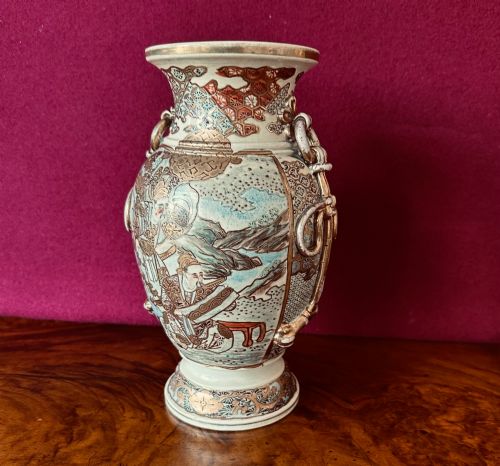
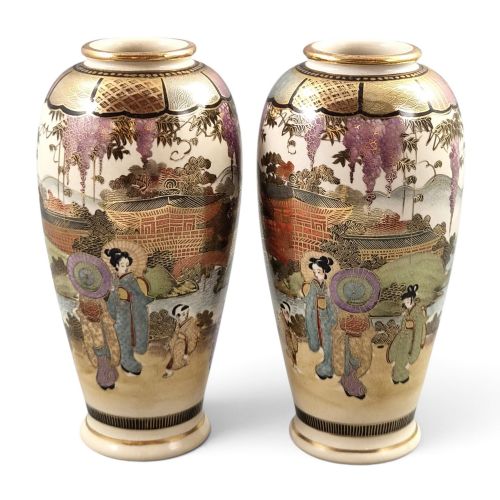
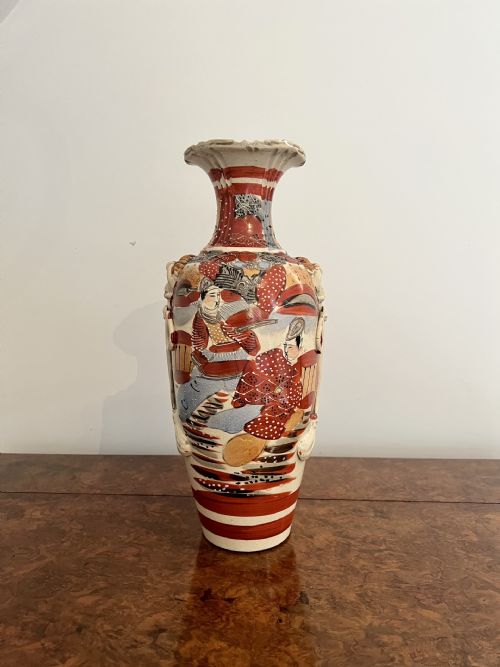
Figured satsuma vases are ceramic vessels originating from Japan, frequently appearing from the Meiji period, late nineteenth century, and early twentieth century. Buyers seeking figured satsuma vases encounter forms such as baluster vases, hexagonal vases, and lidded urns often painted with court figures, women, children, Rakan, and dragons. The selections on this page span diverse formats including matched pairs and individual statement pieces, alongside adaptations like table lamps.
The tradition encompasses pieces created for export alongside works associated with regional centres like Kyoto. The periods represented reach from the Victorian era into the Meiji and Taisho transitions. Such vessels demonstrate the intersection of traditional Japanese aesthetics and Victorian decorative taste.
How they were made
Makers shaped these earthenware and porcelain bodies before applying intricate layers of enamel and gold leaf. The decorative surface frequently incorporates moriage technique, building up raised slip details that give robes and architectural elements a tactile quality.
Glaze application and enamel painting demand precise brushwork to delineate faces, garments, and complex backgrounds. Artisans combine cobalt grounds with finely rendered polychrome pigments and extensive gilding across the ceramic body.
Figured Satsuma Vases Retail Price Guide 2026
Typical asking prices for figured satsuma vases among the pieces listed under this phrase on Sellingantiques today, from the lower quarter to the upper quarter. They describe what is for sale here now, not the wider market.
Dragons occasionally peer around court figures on hexagonal vessels, keeping a watchful eye on nineteenth-century tea parties.
What varies in quality
The standard of a figured satsuma vase rests upon the fineness of the enamelwork and the precision of the hand-painted figures. Superior examples display meticulous control in the application of gold leaf and the crispness of raised moriage details.
Proportion and compositional balance distinguish finer pieces from standard production wares. The expressiveness of court figures, the complexity of background motifs, and the richness of the cobalt ground dictate the upper tiers of the range.
Shozan
The Figured Satsuma Vases Glossary
- Moriage
- A decorative technique where slip is applied in raised dots or lines before glazing and firing to create a textured, three-dimensional surface. This method accentuates the robes of figures and framing borders.
- Meiji Period
- The era of Japanese history spanning from 1868 to 1912, characterised by rapid modernisation and a surge in decorative arts produced for international export. Pieces from this time show exceptional pictorial detail.
- Baluster
- A vase form featuring a rounded body that tapers toward the base and swells gracefully before rising to a narrower neck. This classic shape provides a balanced canvas for figurative scenes.
- Cobalt Ground
- An intense blue background glaze applied beneath or around the primary painted decoration to create high contrast. It sets off the polychrome enamels and gold leaf.
- Rakan
- Representations of Buddhist saints or arhats frequently depicted in traditional Japanese art with distinct facial expressions and robes. They appear alongside dragons and court figures on hexagonal and baluster vessels.
Figured Satsuma Vases: Frequently Asked Questions
What are figured satsuma vases?
Figured satsuma vases are Japanese ceramic vessels decorated with hand-painted scenes of court figures, deities, and daily life. They utilise earthenware or porcelain bodies enriched with enamel and gold leaf.
Produced heavily during the Meiji period and late nineteenth century, these vessels served international export markets and Victorian interiors alike.
How do I identify a Meiji period piece?
Meiji period pieces typically display dense pictorial decoration, refined brushwork, and extensive use of gold leaf alongside polychrome enamels. They reflect the artistic standards of late nineteenth and early twentieth century Japanese craftsmanship.
Examine the baseline materials, such as earthenware or porcelain, and the complexity of the figural scenes depicting court figures, Rakan, or dragons.
Where should I display a satsuma vase?
Place these vessels in locations where adequate lighting highlights the intricate enamelwork and gold leaf details. Mantelpieces, sideboards, and dedicated display cabinets offer secure settings for baluster and hexagonal forms.
Keep them away from direct sunlight and high traffic areas to protect the delicate hand-painted surfaces and raised moriage decoration.
Are satsuma vases always made of earthenware?
While traditional satsuma ware is an earthenware ceramic with a characteristic crackle glaze, some pieces utilise porcelain bodies. Makers in regions like Kyoto produced both ceramic variations during the nineteenth and twentieth centuries.
Check the fabric of the vase body and the character of the glaze to distinguish between earthenware and porcelain construction.