



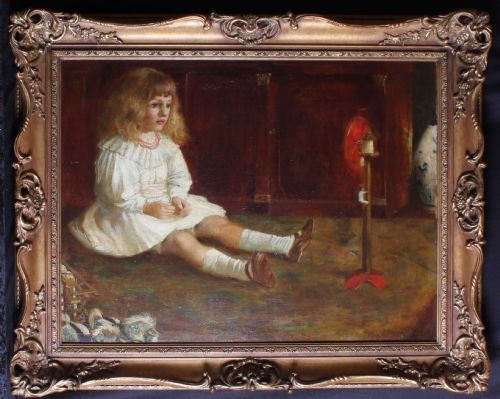
Figurative Narrative Oil Painting
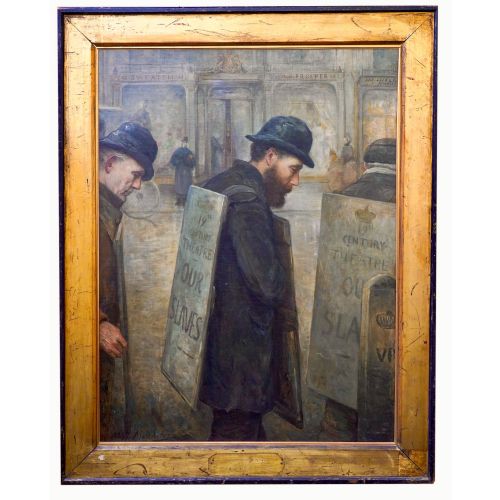
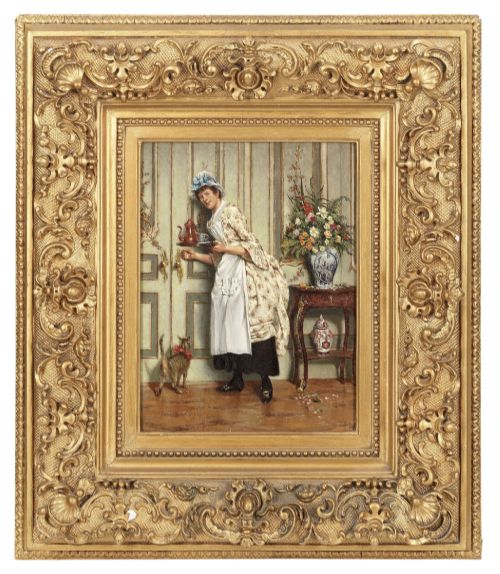
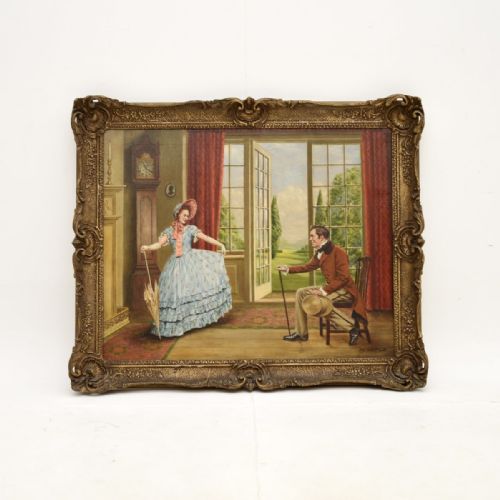
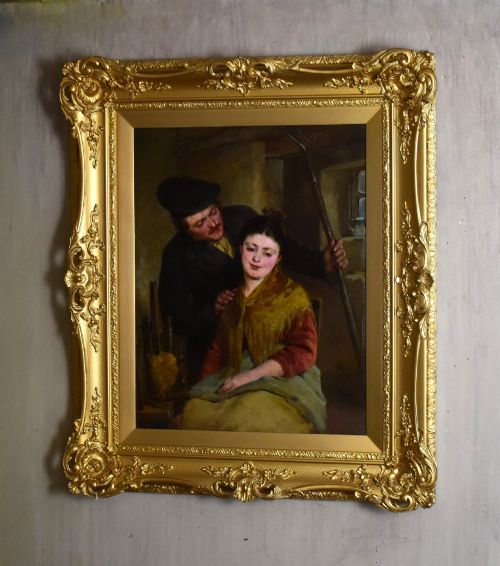
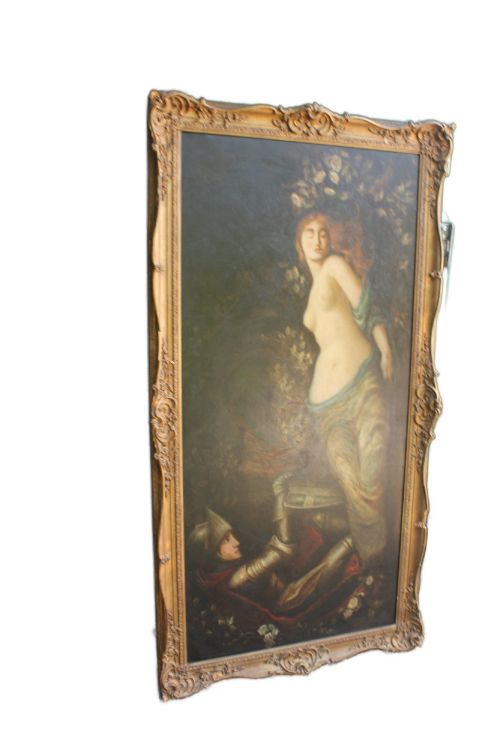
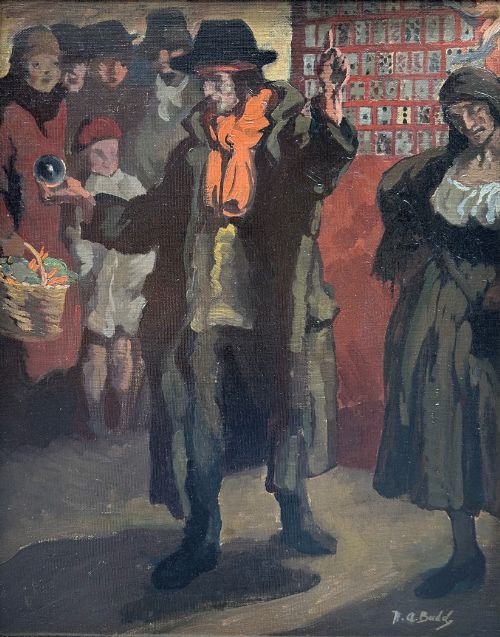
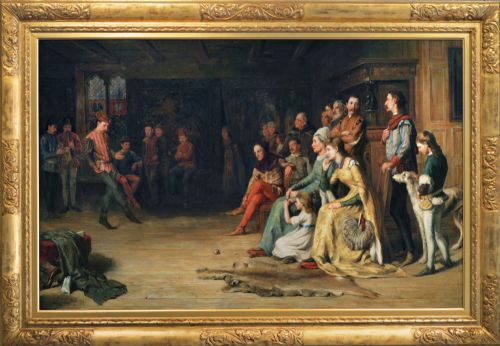
These figurative narrative oil painting examples record domestic scenes, literature, and social history across the nineteenth and twentieth centuries.
Figurative Narrative Oil Painting
A figurative narrative oil painting tells a story through human subjects, capturing specific moments from literature, daily domestic life, or historical events. When you examine this selection, you encounter works spanning the nineteenth and twentieth centuries, dominated by Victorian genre scenes, interior domestic settings, and social history pieces.
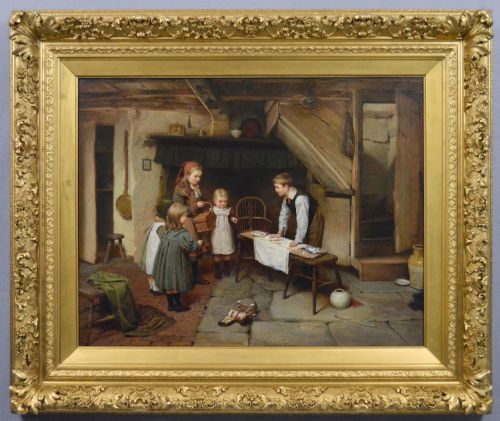
The subjects range from children playing in cottages and courtyard courtships to literary adaptations like Shakespeare and Pre-Raphaelite poetry. Painters utilise canvas, wood panels, and copper supports to build detailed compositions that communicate human interaction, labour, and leisure.
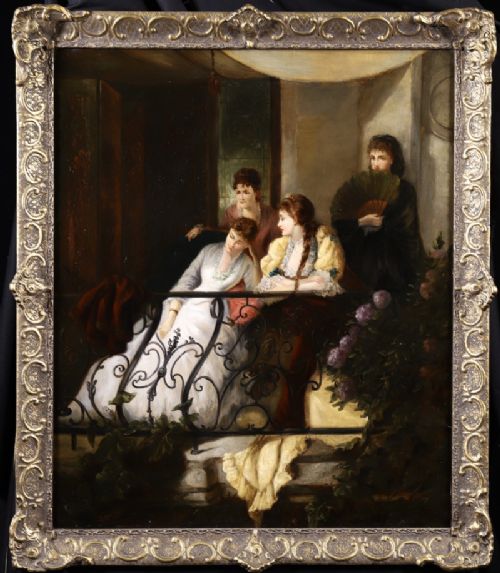
Domestic interiors and country house settings appear frequently among these listings, often showing figures gathered for tea, reading, or entertainment. These canvases preserve the social values, costume, and domestic architecture of their respective periods through careful oil work.
Materials and construction
Artists built these works using oil paint applied to stretched canvas, wooden panels, or occasionally copper plates. The preparation involved sizing the support and applying a ground layer before building up the pigment in transparent glazes and opaque applications.
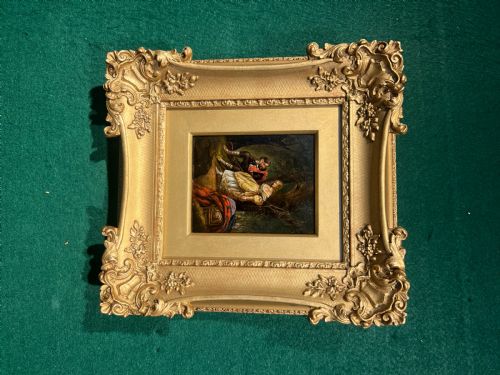
Frames play a significant role in presentation, frequently constructed from wood with gesso mouldings and gilt finishes. These frames protect the edges of the canvas and provide the heavy borders typical of nineteenth-century exhibition standards.
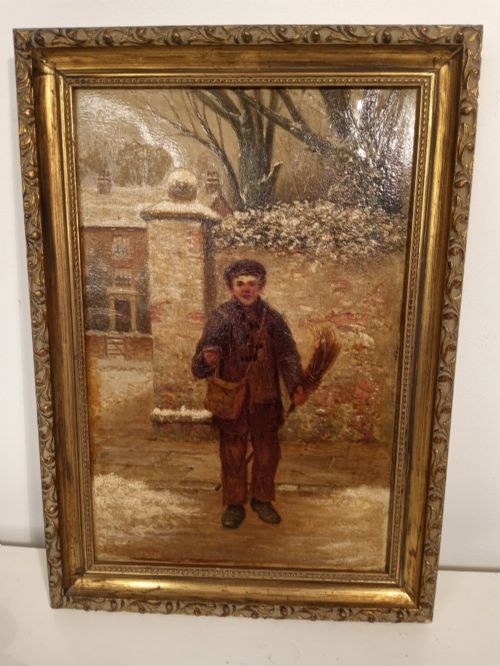
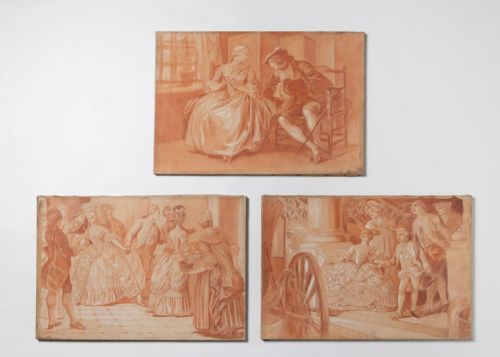
Chimney sweeps and geese share gallery space with courtiers playing chess.
Separating quality in the range
Quality in a figurative narrative oil painting rests upon the draughtsmanship of the figures and the handling of light within the interior or landscape. Superior works demonstrate precise anatomical proportion, convincing facial expression, and a coherent narrative that engages the viewer without relying on excessive sentimentality.
The condition of the paint surface and the stability of the support dictate the integrity of the piece. Works that retain their original canvas tension, uncompromised varnish layers, and period frames represent the higher tier of surviving examples.
Sir Joseph Noel Paton·Felix Stone Moscheles·Stephen Samuel Lewin·Alfred Lyndon Grace·Howard Helmick·Francis Plummer·Herbert Ashwin Budd·James Hamilton·Harry Brooker·Byam Shaw·William Arthur Breakspeare·Charles Haigh Wood·Haynes King·James Kyd·Friedrich von Kaulbach·Jean-baptiste Joseph Pater·Edwin Thomas Roberts·Robert Alexander Hillingford·George Smith·Alfred Holst Tourrier·Hendricus Joseph Dillens·Frank Hyde·Ralph Hedley·Andrew Young·Hans Temple
The Figurative Narrative Oil Painting Glossary
- Genre painting
- Genre painting depicts scenes from ordinary life, typically involving people engaged in domestic chores, social gatherings, or leisure activities. These works provide visual records of everyday customs and interior decoration.
- Pre-Raphaelite
- Pre-Raphaelite refers to the style and philosophy associated with a nineteenth-century movement that rejected academic conventions in favour of detailed observation of nature, bright colours, and literary or religious subjects.
- Oil on panel
- Oil on panel describes a painting executed on a wooden board rather than woven fabric. This rigid support prevents the cracking sometimes seen on aged canvas.
- Giltwood
- Giltwood is wood coated with gold leaf or gold paint, commonly utilised for ornate picture frames during the Victorian and Edwardian periods.
Figurative Narrative Oil Painting: Frequently Asked Questions
What is a genre painting?
A genre painting shows scenes from everyday life, such as family gatherings, cottage interiors, or market preparation. Artists used these subjects to tell relatable human stories.
These works avoid grand historical or mythological themes in favour of ordinary people in recognisable domestic or social settings.
How do I identify a Victorian oil painting?
Victorian oil paintings often feature detailed realism, moral narratives, or sentimental domestic scenes set in parlours and country houses. The clothing and interior decor reflect nineteenth-century styles.
Signatures, framing materials, and canvas stamps from London or provincial suppliers frequently confirm the nineteenth-century origin.
Are these paintings on canvas or wood?
The listings include works painted on stretched canvas as well as wood panels and copper plates. Canvas was the standard support for larger exhibition pieces.
Smaller domestic scenes were frequently executed on wooden boards, which provided a rigid surface that resisted punctures and tears.
How should I care for an antique oil painting?
Keep oil paintings away from direct sunlight, high humidity, and rapid temperature fluctuations to prevent the canvas or panel from warping. Avoid touching the paint surface.
Dust the gilt frame gently with a soft, dry brush, and leave cleaning of the actual paint layer to professional conservators.