

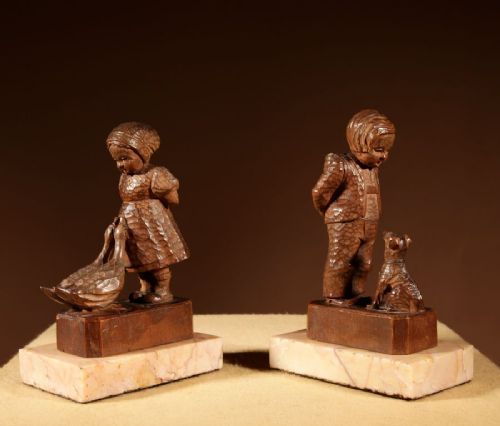
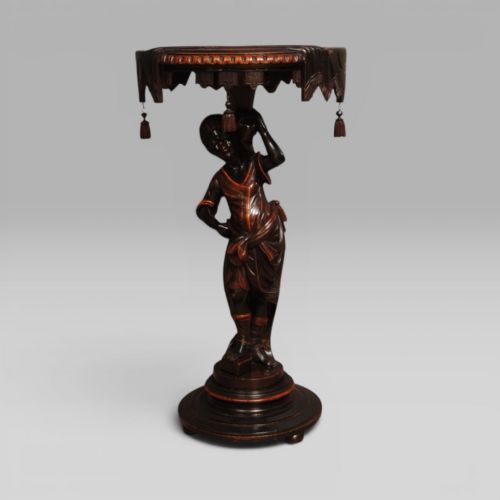


Figural Wood Table
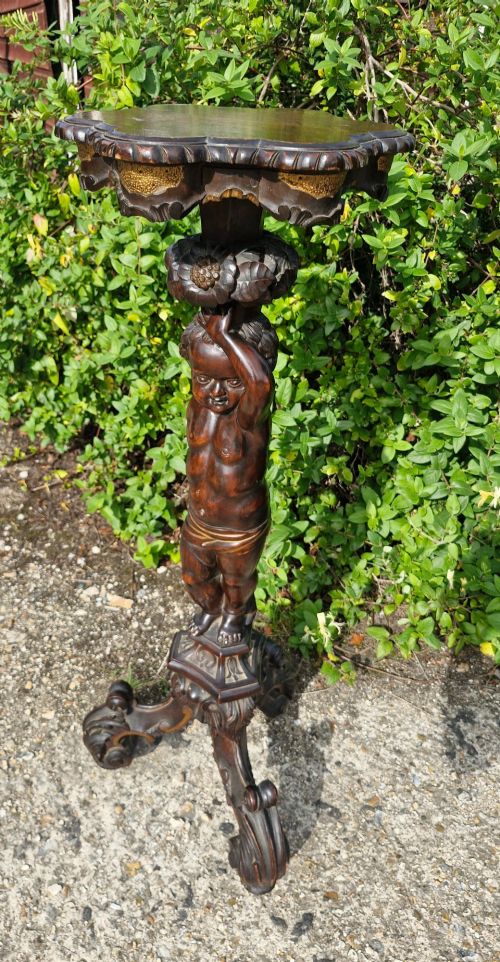
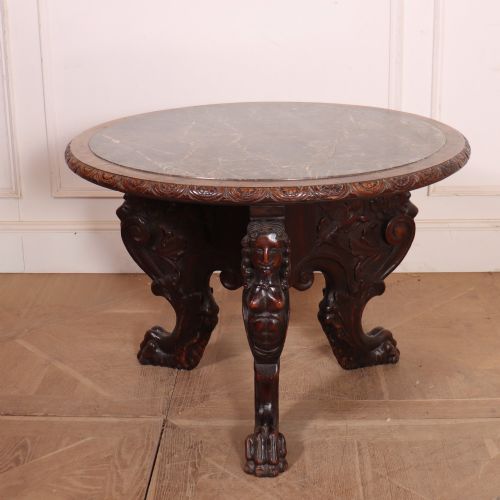
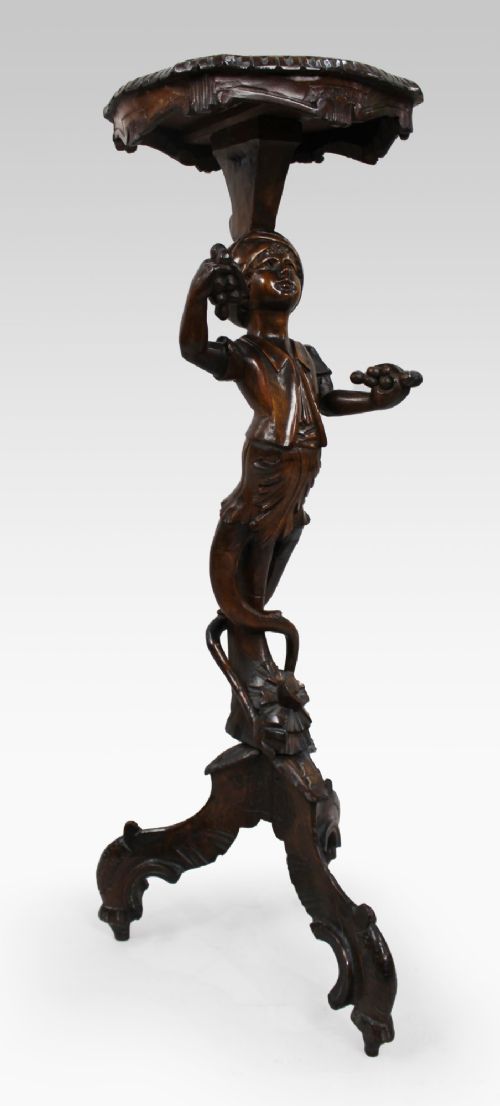
When you want a figural wood table, you are looking at carved human and animal forms serving functional furniture roles.
Figural Wood Table
A figural wood table combines sculptural carving with utilitarian form, using figures to support surfaces or act as standards. These pieces draw on styles like Venetian Baroque, Black Forest, and Neo-Classical Revival across the nineteenth and early twentieth centuries.
The versions most common here include stands, pedestal tables, and small side tables, often taking the shape of Blackamoor figures, crouching forms, or carved animal supports.
Origins range widely from European workshops in Italy, Switzerland, and England to Asian and African traditions, reflecting varied regional carving practices.
How they were made
Carvers shaped these pieces primarily from hardwood, walnut, linden wood, and root wood, utilising the natural grain and density of the timber to achieve fine anatomical detail. Hand carving remained the central method for rendering complex human and animal subjects.
Surface treatments included polychrome paint, gilt highlights, and polished finishes that enhanced the theatricality of Venetian styles or the rustic depth of Black Forest work.
Figural Wood Table Retail Price Guide 2026
Typical asking prices for figural wood table among the pieces listed under this phrase on Sellingantiques today, from the lower quarter to the upper quarter. They describe what is for sale here now, not the wider market.
What varies in quality
The standard of carving dictates the success of a figural wood table, separating fluid, anatomically convincing figures from stiff or generic execution. Expression in the face and proportion in the limbs show the carver's skill.
Integration between the sculptural base and the functional table top or support also varies, with superior examples achieving a balanced composition where support and sculpture function as one cohesive object.
The Figural Wood Table Glossary
- Black Forest
- A style of wood carving originating from the Swiss and German regions near the Black Forest, known for naturalistic animals and rustic subjects.
- Polychrome
- Painted in several colours, often used on carved wooden figures to add realistic skin tones, garments, or decorative patterns.
- Root wood
- Timber sourced from the root system of a tree, prized by carvers for its dense, gnarled grain patterns that lend organic movement to sculptural furniture.
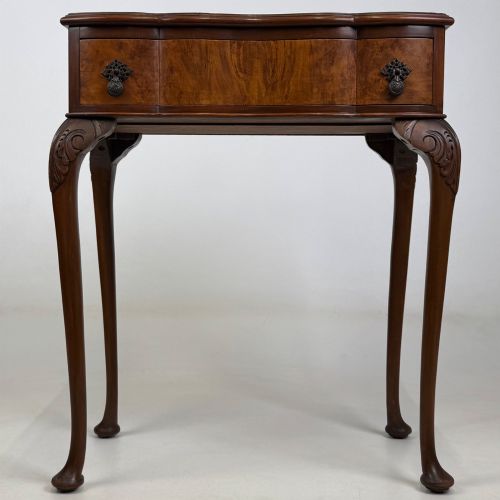
- Cabriole leg
- A furniture leg that curves out and then in, resembling the shape of an animal's leg, common on period side tables.
- Marquetry
- The art of applying pieces of veneer to a structure to form decorative patterns, seen on revival bedside cabinets.
Figural Wood Table: Frequently Asked Questions
What is a figural wood table?
A figural wood table incorporates human or animal figures into its structural design, acting as the support or base for a top.
These pieces range from Venetian stand designs to Black Forest animal carvings and root wood lamp bases.
How do I date these tables?
Dating relies on stylistic clues, timber types, and construction methods associated with periods like the nineteenth century or Edwardian era.
Revival styles and regional traditions often provide specific markers for when a piece was carved.
Where were these tables placed?
These tables served as decorative accent pieces in reception rooms, halls, and parlours, often holding lamps or small decorative objects.
Their sculptural presence meant they were positioned where they could be viewed in the round.
How do I care for carved wood?
Carved wood requires dusting with a soft brush to reach into crevices without damaging the fine details of the sculpture.
Keep the timber away from direct heat sources and sudden humidity changes to prevent splitting.