

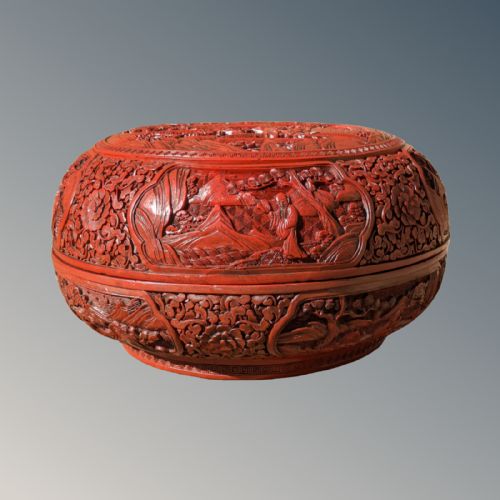


Figural Trinket Box
These figural trinket box examples range from porcelain powder bowls to chased silver caskets, offering a decorative surface for small personal items.
Figural Trinket Box
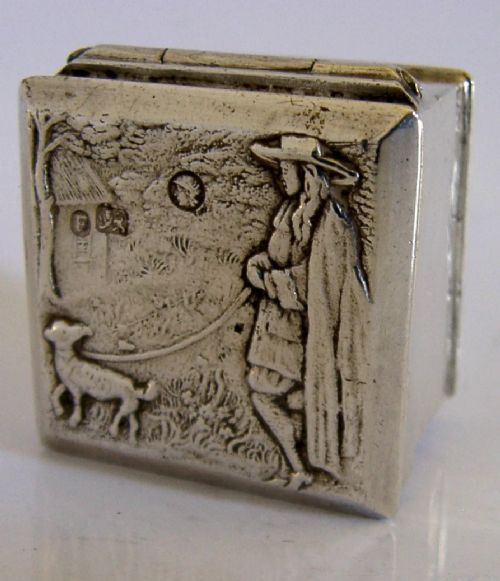
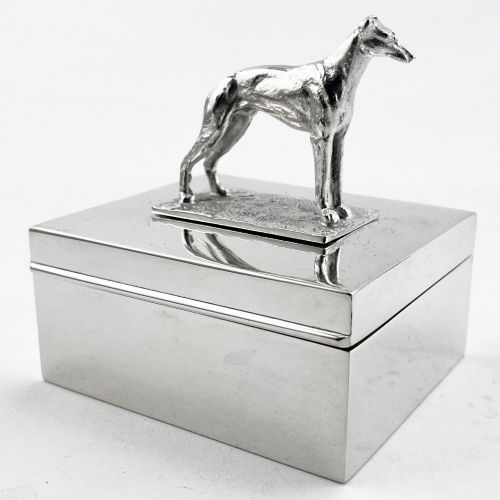
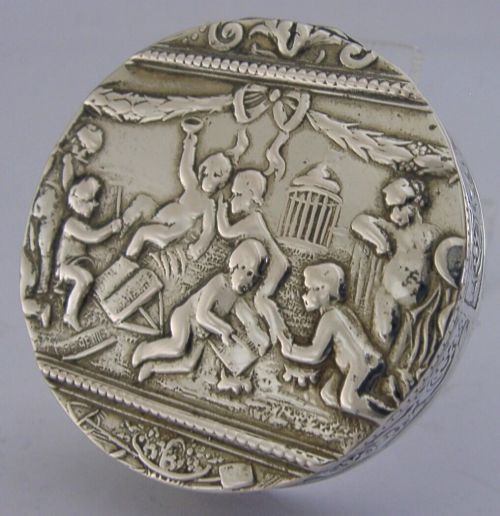
A figural trinket box combines utility with sculptural form, appearing across periods from the eighteenth century to the art deco era. These pieces serve to hold dressing table accessories, jewellery, or powder, taking the shape of animals, cherubs, or carved scenes.
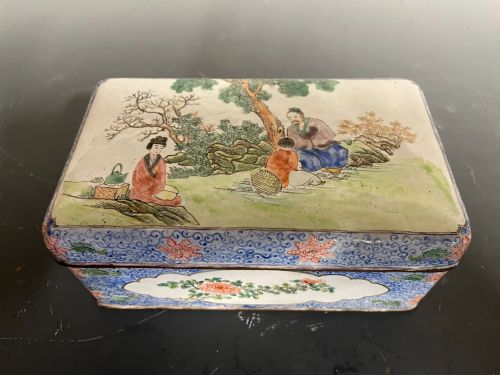
The selections available here include sterling silver boxes featuring greyhounds or dogs walking, solid silver cherub scenes, and ceramic powder bowls from France. Buyers will also encounter carved wood caskets from Qajar Iran and cinnabar lidded boxes alongside walnut marquetry pieces.
Materials and construction
Makers utilised sterling silver, solid silver, and silver plate to fashion chased metal boxes, often incorporating figural lids and fitted mirrors. Woodworkers employed walnut with marquetry inlay or carved dense materials to create substantial caskets and lidded containers.
Ceramic pieces rely on porcelain bodies shaped into powder bowls and boxes, particularly from Limoges, while Asian works demonstrate carved cinnabar lacquer techniques. Each medium dictated the method of ornament, from metal chasing to wood inlay.
Figural Trinket Box Retail Price Guide 2026
Typical asking prices for figural trinket box among the pieces listed under this phrase on Sellingantiques today, from the lower quarter to the upper quarter. They describe what is for sale here now, not the wider market.
The listings span from the eighteenth century through the Victorian period and into nineteen-thirty art deco designs.
Judging quality in figural trinket boxes
The distinction between tiers rests upon the crispness of the figural detail, whether cast in silver or carved in wood and cinnabar. Superior examples display high definition in animal forms, cherub scenes, and inlaid marquetry patterns.
Material choice and origin further define the piece, distinguishing standard silver plate from solid sterling and marked German or English silver. Fine ceramic powder bowls show precise painting and moulding characteristic of their French manufacture.
The Figural Trinket Box Glossary
- Marquetry
- Inlaid wood veneers arranged to form decorative patterns on boxes and caskets. This technique adds pictorial or geometric interest to walnut surfaces.
- Cinnabar
- Carved lacquer built up in numerous layers over a core before being deeply cut with figures and scenes. This material appears on Qing dynasty lidded boxes.
- Powder box
- A ceramic or metal vessel designed to hold cosmetic powder on a dressing table. These often feature figural or decorative ceramic lids.
- Sterling silver
- A silver alloy containing ninety-two point five percent pure silver by mass. British and Dutch pieces in this metal frequently bear hallmarks.
Figural Trinket Box: Frequently Asked Questions
What were figural trinket boxes used for?
These vessels held small personal items such as rings, pins, and vanity accessories on dressing tables.
Ceramic variations specifically functioned as powder bowls for cosmetics, while larger caskets stored valuable keepsakes.
How do I date a silver trinket box?
Examination of style indicators such as art deco geometric lines or Victorian revival ornamentation provides initial clues.
Silver pieces often rely on hallmarks stamped into the metal to determine the exact year and place of manufacture.
Are wooden caskets different from trinket boxes?
Wooden examples often take the form of larger caskets with marquetry inlay or carved panels from regions like Qajar Iran.
Trinket boxes generally refer to smaller containers utilised for vanity items, though both categories served similar decorative storage purposes.
How do I care for antique porcelain powder boxes?
Ceramic bowls and lids require gentle cleaning with a dry or barely damp cloth to protect the painted surfaces.
Harsh abrasives must be avoided to preserve the delicate glazes and figural decorations applied during manufacture.