



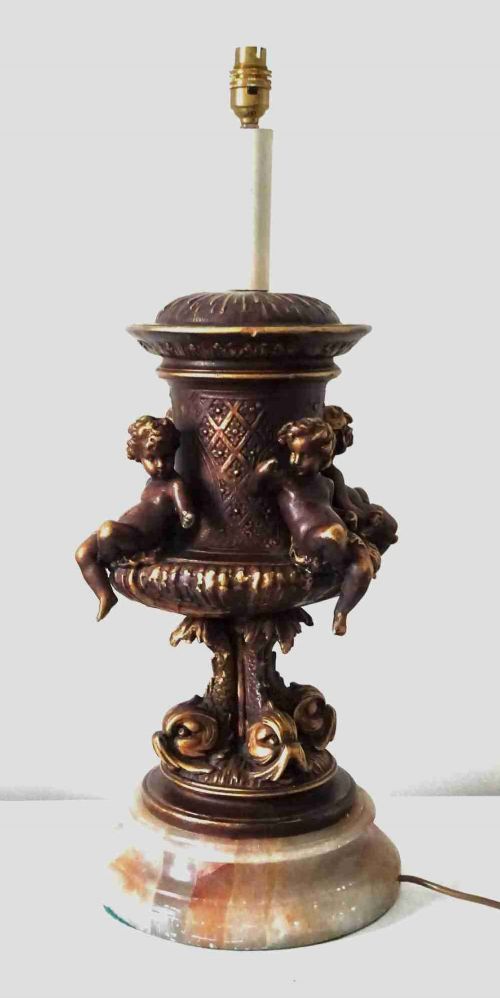


Figural Accent Lamp
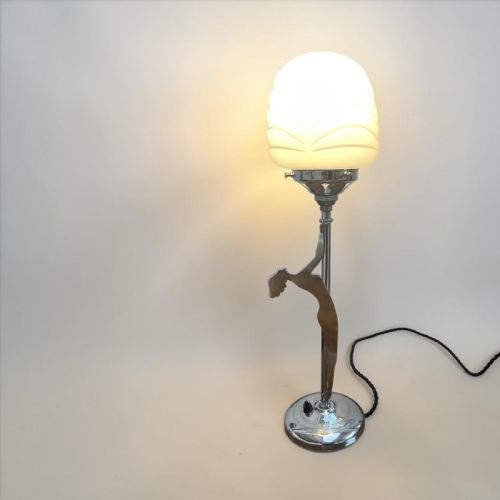
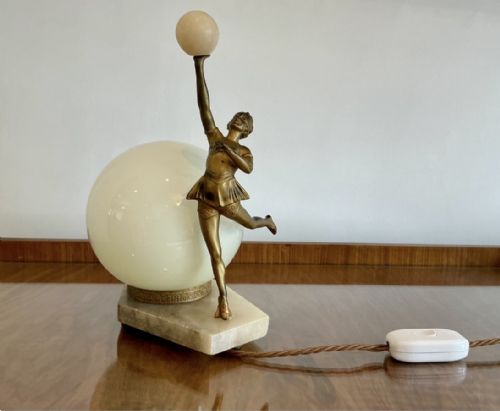
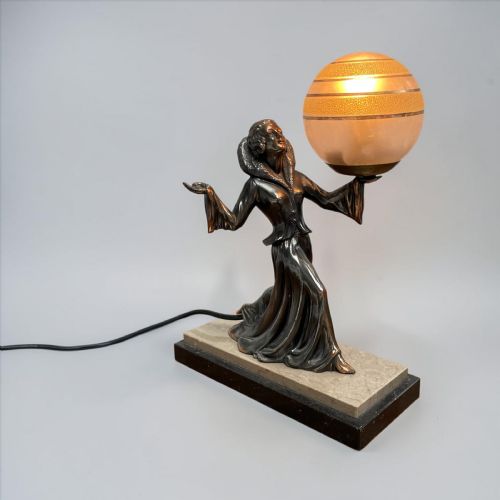
These figural accent lamp pieces bring sculptural presence to a room, cast in bronze, spelter and marble.
Figural Accent Lamp
A figural accent lamp combines functional domestic lighting with sculptural form, featuring human or animal figures cast in bronze, spelter, or brass. These pieces stand as decorative objects by day and provide soft illumination by night.
The selection here leans heavily towards the Art Deco period, alongside earlier Edwardian and nineteenth-century examples. Figures range from classical cherubs and mythological subjects to athletic nudes and dancers.
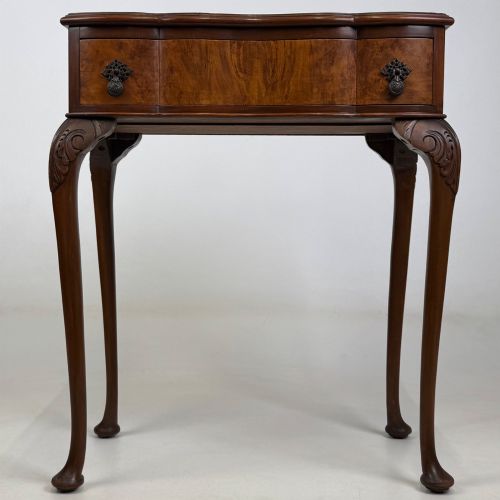
Most entries function as table lamps, though occasional side tables appear alongside the lighting. French and Italian origin dominate the manufacturing styles seen across the inventory.
Materials and construction methods
Foundry casting using bronze and spelter forms the structural core of many figures. Spelter, a zinc alloy, offers a lighter and cheaper alternative to bronze, often finished with cold-painted or patinated coatings to mimic heavier metals.
Bases frequently incorporate contrasting materials such as marble, alabaster, or carved stone to provide weight and stability. Glass components, including frosted and moulded shades, complete the lighting assemblies.
Figural Accent Lamp Retail Price Guide 2026
Typical asking prices for figural accent lamp among the pieces listed under this phrase on Sellingantiques today, from the lower quarter to the upper quarter. They describe what is for sale here now, not the wider market.
The listings on this site combine Art Deco spelter and bronze figures with nineteenth-century Italian and French table lamps.
Distinctions in manufacture
Original surface treatments, whether cold-painting, silver plating, or patination, hold greater appeal than later refinishing attempts. The integrity of the original pairing between figure, base, and shade determines overall cohesion.
Ivan Zaiec·Bruno Zach
The Figural Accent Lamp Glossary
- Spelter
- A zinc alloy commonly used in European manufacturing as a substitute for bronze. It takes patination and cold-painted finishes well, though it remains softer than true bronze.
- Patinated Metal
- Metal treated with chemicals or heat to produce a coloured surface layer or artificial aged finish. This process protects the underlying metal while enhancing sculptural depth.
- Alabaster
- A fine-grained stone used for lamp bases and sculptural elements. Its translucent qualities diffuse light softly when placed near bulbs.
- Cold-Painted
- A technique where paint is applied to metal objects without subsequent high-temperature firing. This finish appears frequently on Art Deco figural bronzes.
Figural Accent Lamp: Frequently Asked Questions
What is a figural accent lamp?
A figural accent lamp is a lighting fixture built around a sculpted human or animal figure. These pieces serve primarily as decorative sculpture while casting ambient light.
They sit on side tables, desks, or mantelpieces to draw the eye in a room.
How do I date a figural lamp?
Dating relies on stylistic clues, materials, and manufacturing signatures found on the base or figure. Art Deco pieces often feature stylised nudes and chrome, while nineteenth-century versions lean towards classical foundry work.
Construction methods, such as the use of spelter versus cast bronze, also help narrow down the decade of production.
Where were these lamps made?
Many examples originate from French and Italian workshops active during the early twentieth century. Foundries in Paris and Vienna produced numerous figural castings for the international market.
British and Italian interpretations also appear within nineteenth-century and Edwardian categories.
How do I care for antique metal lamps?
Dust surfaces gently with a soft dry cloth and avoid harsh chemical cleaners that strip patination. Preserving the original finish maintains the character and historical integrity of the piece.
Wiring should be checked by a qualified professional to ensure safety during daily use.