

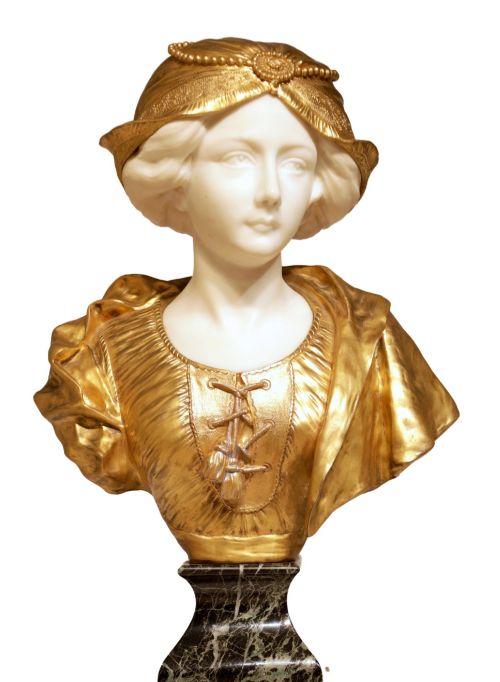

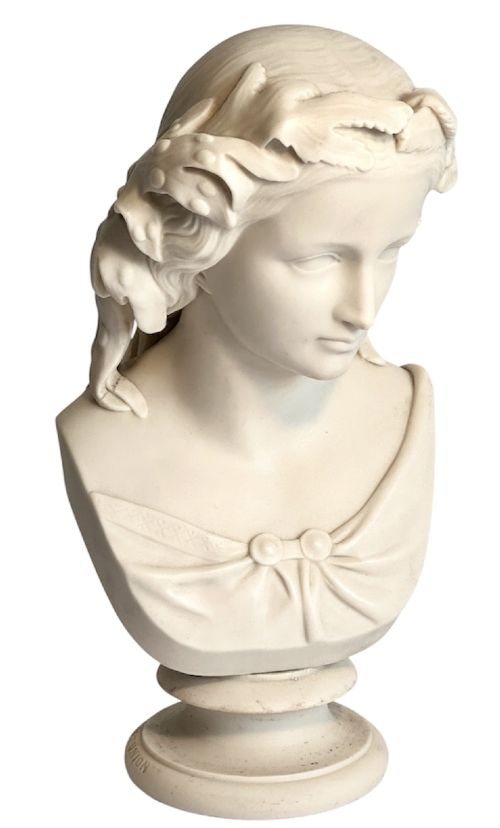
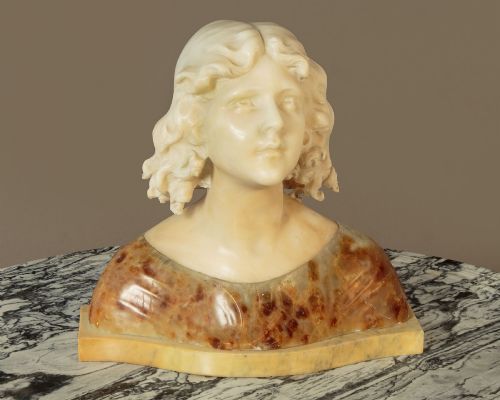
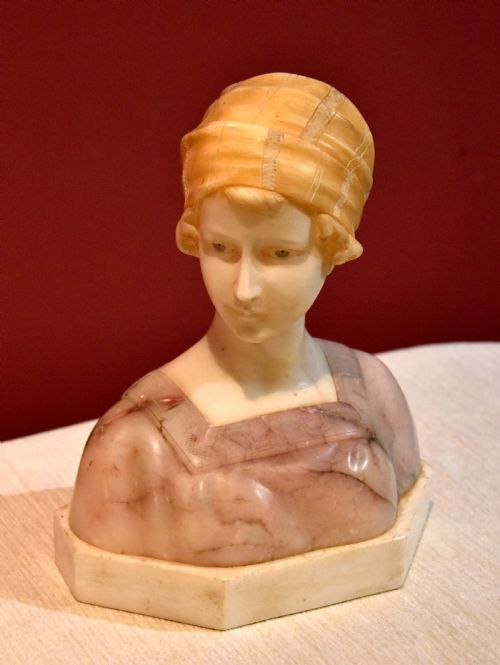

Female Marble Bust
A female marble bust brings classical grace and finely carved character into a room.
Female Marble Bust
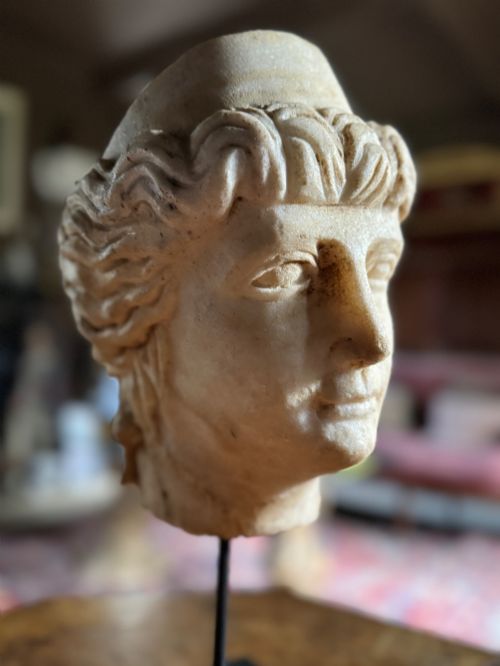
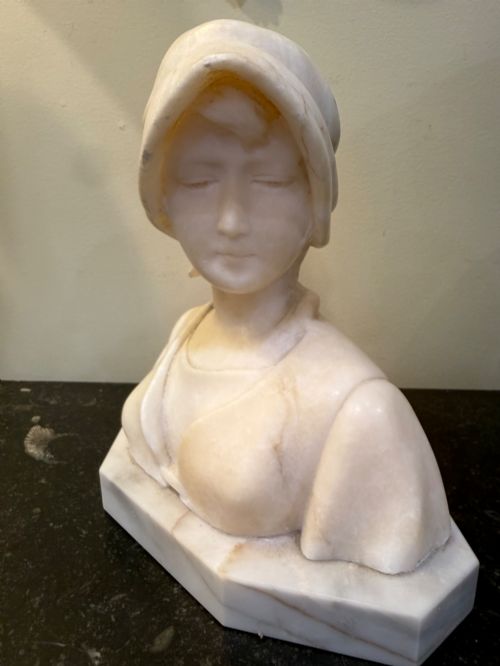
A female marble bust captures the likeness of women, mythological figures and classical heroines in solid stone. These sculptures range from seventeenth-century antiquities to nineteenth-century neoclassical and art nouveau creations.
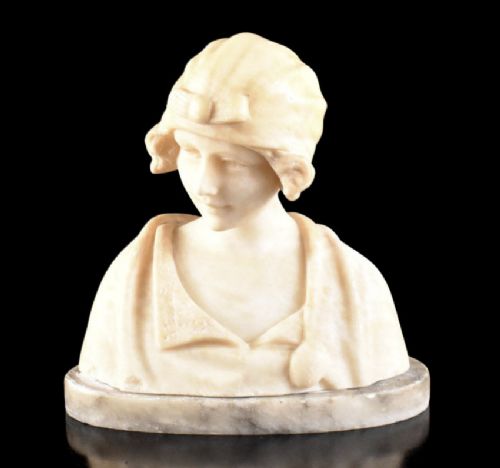
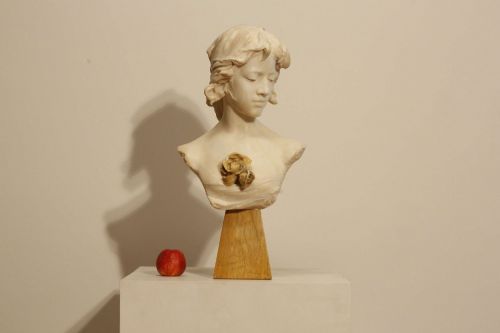
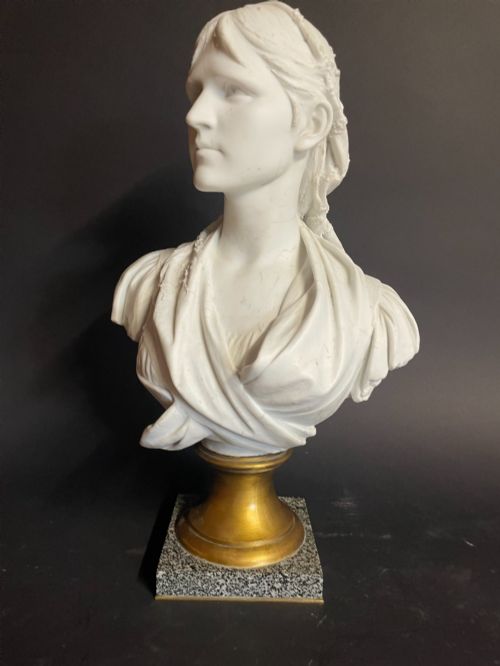
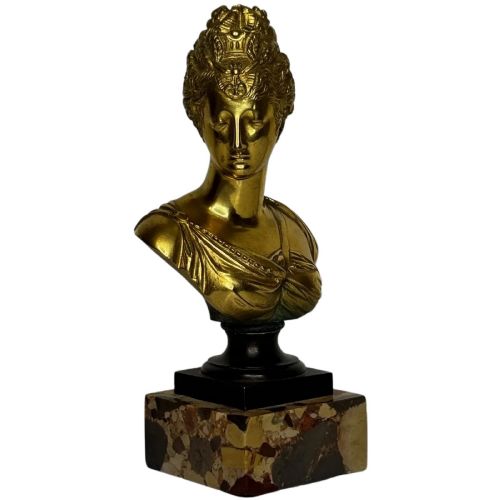
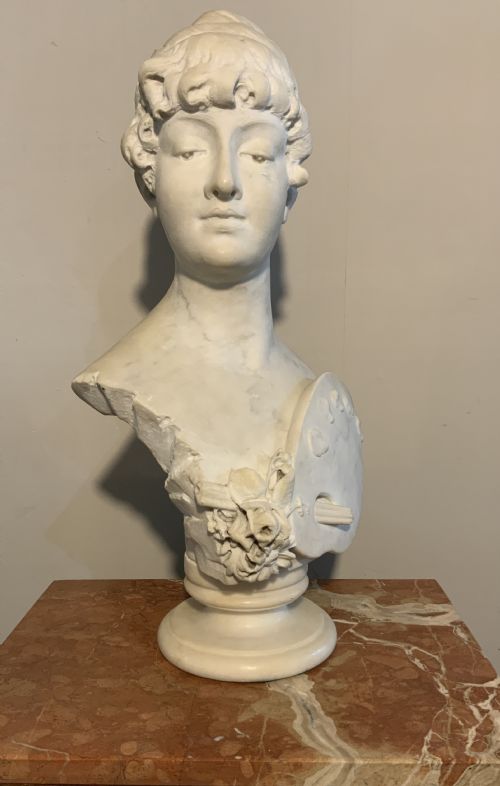
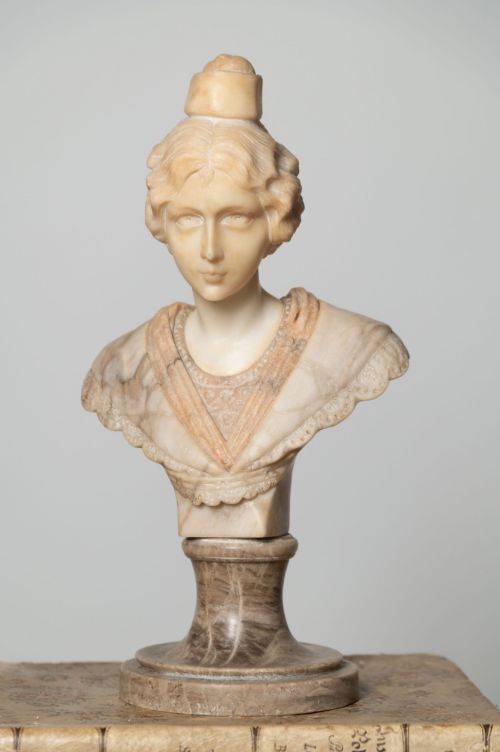
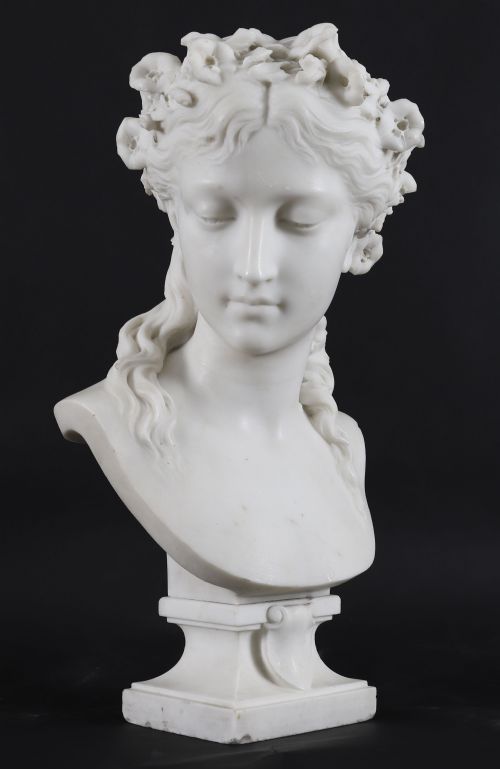
The versions most commonly met on this page are nineteenth-century French and Italian carvings. They appear in pure white marble, Carrara marble, and warm alabaster, often mounted upon contrasting marble bases.
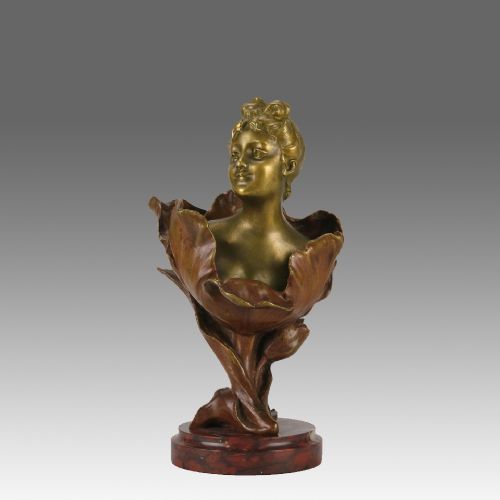
Subjects span historical portraits, literary characters, and idealized young women. Makers frequently combine white stone with gilt bronze, ormolu, or patinated bronze details to accentuate robes and hair.
How they were made
Sculptors shaped these pieces using hard stone, alabaster, and fine marble blocks. Carvers relied on chisels, rasps, and drills to render the delicate folds of drapery, flowing hair, and facial expressions.
Foundry casters utilised bronze, gilt bronze, and spelter for mixed-media works. Metal elements were cast separately and integrated with stone plinths or bases made from contrasting materials like Vert de Mer or rouge marble.
Female Marble Bust Retail Price Guide 2026
Typical asking prices for female marble bust among the pieces listed under this phrase on Sellingantiques today, from the lower quarter to the upper quarter. They describe what is for sale here now, not the wider market.
Several ladies depicted here wear veils carved so thinly from solid stone that they appear soft enough to flutter.
What varies in quality
The refinement of the carving dictates the distinction between standard works and exceptional pieces. Superior sculptures display subtle transitions in the stone that render skin soft and cloth pliable.
The handling of fine details such as eyelashes, carved irises, and intricate hairstyles separates ambitious studio pieces from routine decorative output. Signature marks from recognised artists also elevate the standing of a sculpture.
Affortunato Gory·Eugene Aizelin·Henri Godet·Georges-Charles Coudray·Auguste Henri Carli·Emmanuel Villanis·E. Laurent·Eutrope Bouret·Auguste Moreau·Georges Van Der Straeten
The Female Marble Bust Glossary
- Carrara marble
- A type of white or blue-grey marble from the city of Carrara in Italy. Sculptors have prized it since classical antiquity for its fine grain and consistent texture.
- Alabaster
- A fine-grained, translucent stone that is softer than marble. It permits delicate, shallow carving and warm light diffusion.
- Ormolu
- Gilded bronze produced by applying a mercury and gold amalgam to cast bronze. It provides bright golden highlights on mixed-media busts.
- Parian porcelain
- A fine biscuit porcelain developed in the nineteenth century to imitate carved marble. It takes its name from Parian marble of the Greek island of Paros.
- Neoclassical
- A style spanning the eighteenth and nineteenth centuries that revived the aesthetic of classical Greece and Rome. Works in this mode emphasise restraint, balance, and mythological subjects.
Female Marble Bust: Frequently Asked Questions
What periods do these busts cover?
The pieces span from the seventeenth century through the nineteenth century and into the early twentieth century. Neoclassical and art nouveau movements heavily influence the Victorian-era examples.
Earlier items include seventeenth-century Italian marble heads, while later pieces incorporate art deco elements and mixed metals.
How were mixed-media busts constructed?
Makers combined carved white marble or alabaster heads with cast bronze, gilt bronze, or spelter garments and hair. These mixed elements were then secured onto stone plinths or coloured marble bases.
This technique allowed sculptors to contrast the pale texture of stone with rich metallic patinas.
Where should I display a marble bust?
These sculptures require sturdy surfaces such as sturdy sideboards, wooden pedestals, or mantels capable of supporting heavy stone weight. Placing them away from direct sunlight protects the polished surface finishes.
Allowing adequate clearance around the piece highlights the carved profiles and contrasting marble bases.
How do I distinguish marble from alabaster?
Marble is a hard, metamorphic rock that resists scratching and feels cool and dense to the touch. Alabaster is softer, slightly translucent under bright light, and more easily marked.
Both materials appear frequently across nineteenth-century sculptures and portrait busts.