



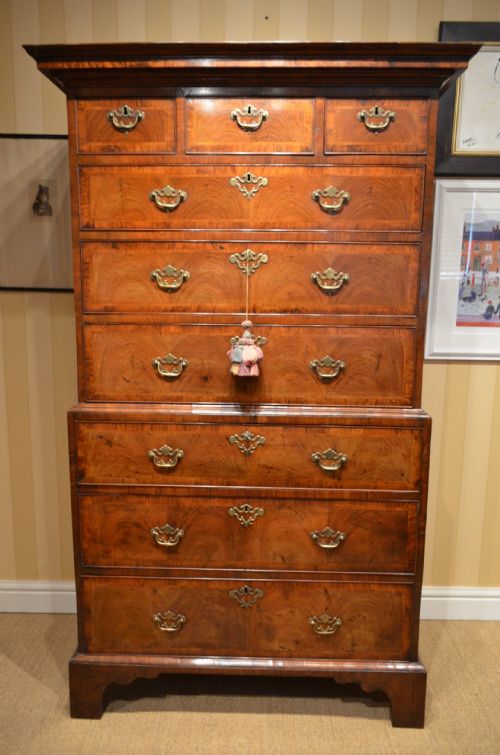

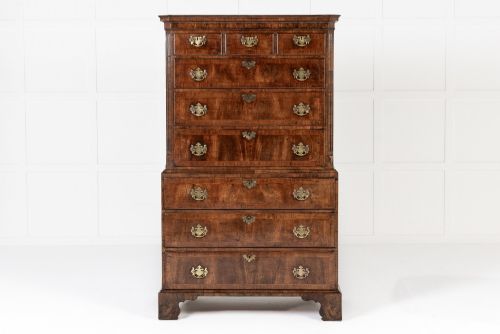
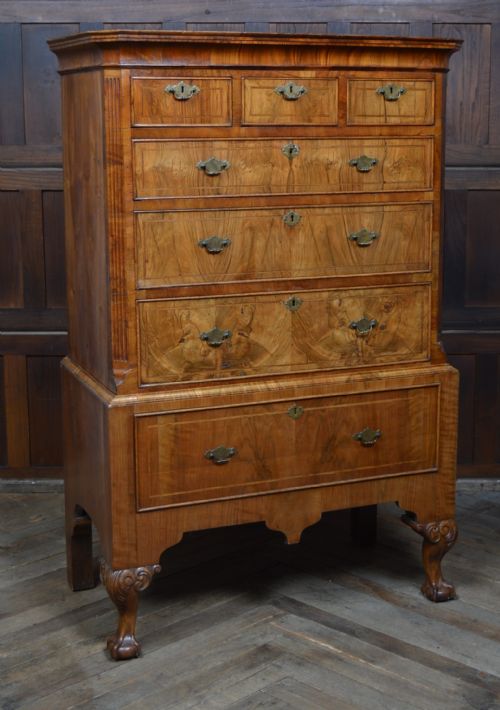
Featherbanded Walnut Cabinet
A featherbanded walnut cabinet combines rich figured timber with meticulous banding, offering serious storage and striking presence in a traditional interior.
Featherbanded Walnut Cabinet
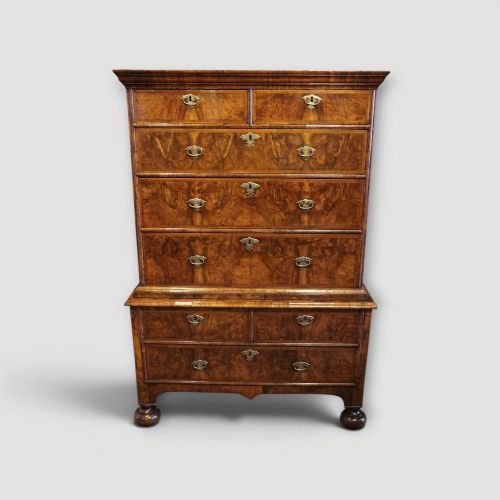
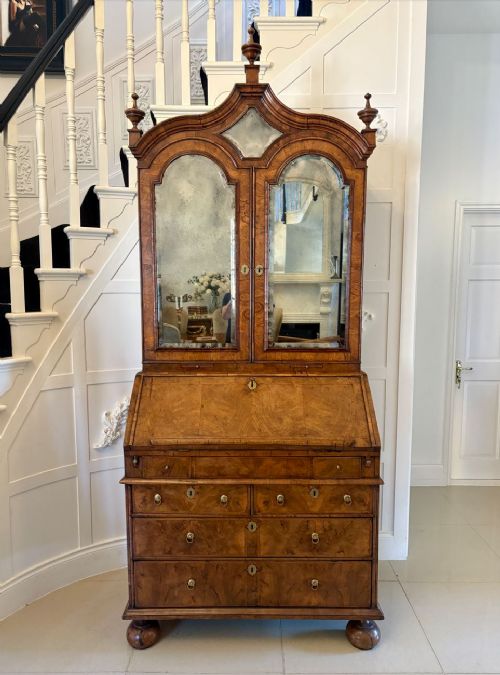
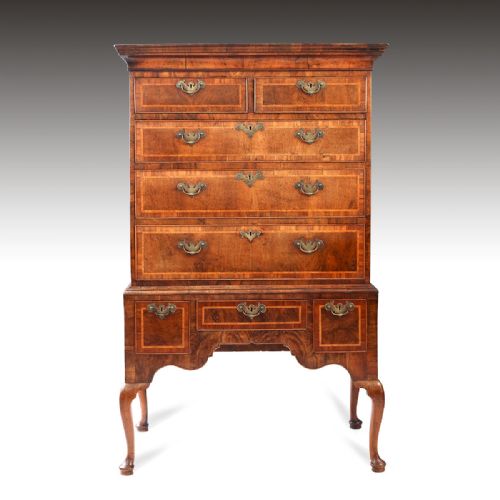
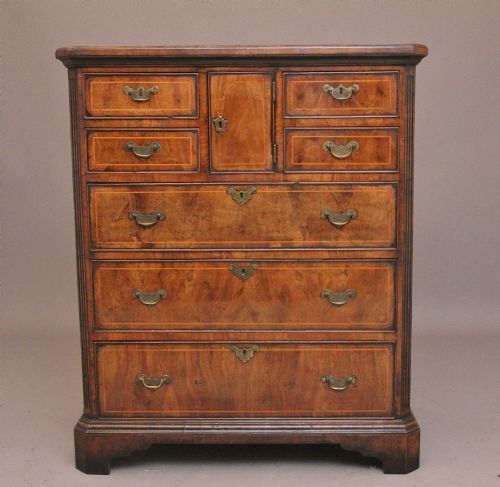
A featherbanded walnut cabinet represents the pinnacle of early English cabinet-making, encompassing complex forms such as chest-on-chest tallboys, bureau bookcases, and multi-drawer chests on stands. These substantial pieces date primarily from the eighteenth century, spanning the Queen Anne, George I, and George II periods, with examples appearing from around seventeen fifty and the seventeenth century.
The version most commonly encountered on this page is the chest-on-chest, or tallboy, constructed in two distinct parts to maximise storage while maintaining architectural proportions. Bureau bookcases and chests on stands also feature within these listings, combining writing compartments or raised stands with deep sets of graduated drawers.
Makers constructed these cabinets using rich native timbers, building carcass structures in oak while displaying figured walnut across the primary facades. The defining decorative motif remains the featherbanding, a meticulous form of inlay that frames the drawer fronts and doors with contrasting diagonal grains.
Materials and construction methods
Cabinet-makers built the internal carcases of these pieces predominantly from solid oak, providing a stable and heavy frame to support the external decorative veneers. Walnut veneer and burr walnut formed the primary visible surfaces, selected for their deep colour and complex natural figuring.
The distinctive featherbanding was created by cutting thin strips of veneer across the grain at an angle and laying them together in a herringbone pattern within a contrasting border. Brass drop handles and escutcheons, secured through the drawer fronts, completed the hardware on these timber-intensive forms.
Featherbanded Walnut Cabinet Retail Price Guide 2026
Typical asking prices for featherbanded walnut cabinet among the pieces listed under this phrase on Sellingantiques today, from the lower quarter to the upper quarter. They describe what is for sale here now, not the wider market.
Early cabinet-makers occasionally hid secret compartments behind false drawer dividers in bureau bookcases to guard family currency.
Distinctions in quality and execution
The separation between standard and superior pieces rests on the choice of timber and the precision of the veneering work. Finer examples utilise highly figured burr walnut and perfectly matched featherbanding across multiple graduated drawers, whereas lesser pieces display plainer grain and simpler borders.
Proportion and architectural integrity dictate the standing of a cabinet within its period. Pieces of smaller proportions with undisturbed original surfaces and integrated brass hardware hold a distinct advantage over altered or heavily restored examples.
The Featherbanded Walnut Cabinet Glossary
- Featherbanding
- A decorative inlay technique using two strips of veneer cut across the grain and laid together to form a V-shape resembling a feather. This delicate banding frames drawer fronts and panel edges on walnut furniture.
- Burr walnut
- A highly prized timber obtained from walnut tree growths, featuring swirling, knotty grain patterns. Cabinet-makers used burr veneers on prominent surfaces to create dramatic visual texture.
- Chest-on-chest
- A tall storage form consisting of a smaller upper chest mounted directly on a larger lower chest, often referred to as a tallboy. This two-part construction allowed makers to move heavy furniture through domestic spaces more easily.
- Bureau bookcase
- A combination piece featuring a sloping desk flap that opens for writing, surmounted by a glazed or panelled bookcase section. These dual-purpose items served domestic study and display needs in the eighteenth century.
- Chest on stand
- A drawer unit raised on a separate support frame with legs, offering a lighter visual profile than a floor-standing chest. This form gained popularity during the late seventeenth and early eighteenth centuries.
Featherbanded Walnut Cabinet: Frequently Asked Questions
What is featherbanding?
Featherbanding is a decorative wood inlay technique where thin strips of veneer are cut and arranged in a diagonal V-pattern. It creates a subtle, textured border around drawer fronts and panels.
Craftsmen used this method during the seventeenth and eighteenth centuries to highlight the edges of walnut furniture and provide a refined contrast to the main timber.
How do I date a walnut cabinet?
Dating relies on examining the construction methods, timber choices, and overall architectural style of the piece. Queen Anne and early Georgian examples often feature proportions and hardware specific to those reigns.
Drawer construction, such as the use of hand-cut dovetails and oak linings, provides further physical evidence to help narrow down the decade of manufacture.
Where should I place a tallboy?
A tallboy requires a stable wall position in a bedroom, dressing room, or hallway where its height can be accommodated safely. Because these pieces are tall and heavy, securing them to the wall prevents tipping.
Position the cabinet away from direct sunlight and heat sources to protect the delicate walnut veneer and burr surfaces from drying out.
How do I care for walnut veneer?
Walnut veneer needs stable indoor humidity and protection from direct sunlight to prevent the timber from fading and the glue from drying. Dusting with a soft, dry cloth maintains the surface without building up residue.
Applying a traditional beeswax polish occasionally helps nourish the wood and preserves the natural lustre of the eighteenth-century finish.