




Farming Landscape Picture
A farming landscape picture brings the quiet rhythm of rural labour, livestock and wide fields directly onto your wall.
Farming Landscape Picture
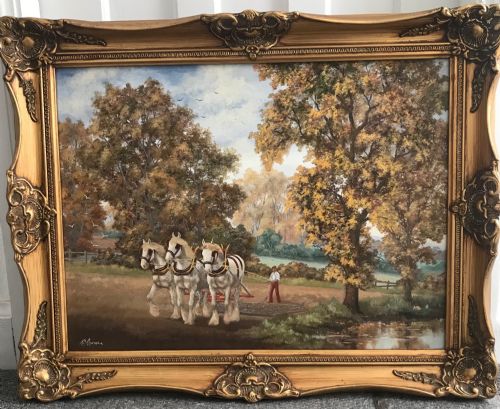
A farming landscape picture captures the heritage of the countryside, showing scenes of harvest, farmyards, livestock and agricultural workers. These artworks range across the nineteenth and twentieth centuries, documenting rural life through the eyes of artists working in oil and watercolour.
You will encounter works spanning periods from the early nineteenth century through to the mid-twentieth century, including Victorian rural scenes and twentieth-century British school watercolours. These pieces often depict horses, sheep, cattle and figures engaged in daily farm tasks.
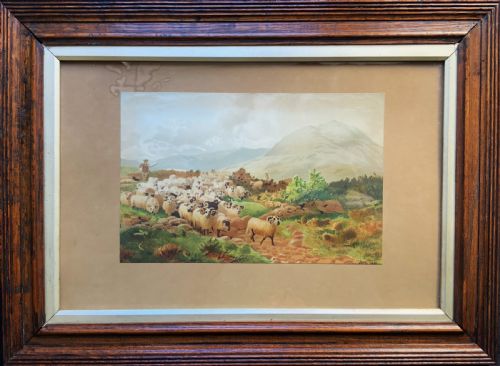
The selection here includes framed paintings, oil on canvas, and watercolours set behind glass in wooden frames. Some pieces feature specific regional locations such as Yorkshire, Cumberland and Welsh landscapes.
How They Were Made
Artists working on canvas or paper utilised oil paint, watercolours and board to build these rural scenes. Oils allowed for rich, layered textures in depictions of farmyard animals and heavy horses, while watercolours offered a lighter touch for open skies and rolling hills.
Framing typically involves wood and gold leaf mouldings that protect the paper or canvas beneath glass. These traditional mountings complete the presentation of nineteenth and twentieth-century paintings.
The selection includes regional depictions from Yorkshire, Cumberland and Wales alongside continental European landscapes.
What Varies in Quality
The strength of a composition rests on the artist's handling of light, atmosphere and anatomical accuracy in rendering livestock and human figures. Works by accomplished painters display a confident command of brushwork that brings movement to horses, sheep and farm workers.
Condition and provenance elevate specific pieces, particularly when an artwork retains studio sale documentation or clear signatures from recognised regional painters. The integration of the medium to the support, whether canvas or board, dictates the enduring stability of the visual surface.
John Frederick Herring Jnr·Eugene Verboeckhoven·John Atkinson·Claude Cardon·Rowland Henry Hill·Henry Birtles·Jack R Mould·Hermanus van Brussel
The Farming Landscape Picture Glossary
- Watercolour
- A painting method in which the paints are made of pigments suspended in a water-based solution. This technique creates transparent washes often seen on paper supports.
- Oil Paint
- A slow-drying paint made of pigments suspended in a drying oil, commonly linseed. It permits deep colour saturation and textured application on canvas or board.
- Canvas
- A heavy woven fabric used as a surface for oil painting. It is typically stretched across a wooden frame before work begins.
- Gold Leaf
- Gold beaten into extremely thin sheets used for gilding frames. It provides a bright, reflective border to enclose the artwork.
- Framed Artwork
- A picture fitted within a protective and decorative structure of wood and glass. This secures the paper or canvas for display.
Farming Landscape Picture: Frequently Asked Questions
What subjects appear in these paintings?
These artworks focus on agricultural life, depicting farmyards, harvest time, barns and cottages. Animals such as Shire horses, sheep, cattle and poultry frequently populate the foregrounds.
Human figures also feature prominently, showing farm workers, milkmaids and herdsmen engaged in daily rural labour across British and European countryside settings.
How do I date a farming picture?
Dating relies on stylistic clues, artist signatures, framing materials and inscribed dates on the reverse or front of the piece. Victorian works often show detailed realist tendencies, while twentieth-century examples lean towards impressionism or naive school aesthetics.
Costume and agricultural machinery depicted in the scene also provide reliable chronological markers for the period in which the artist worked.
Where should I hang a watercolour?
Watercolours require placement away from direct, strong sunlight to prevent the pigments and paper from fading over time. Because these works are usually framed under glass, positioning them on an interior wall with stable ambient light preserves their delicate tones.
Keep them away from damp environments such as unheated walls to protect the paper and mount board from moisture damage.
What is the difference between oil and watercolour?
Oil paintings utilise pigment bound in drying oil applied to canvas, panel or board, offering a heavier texture and deeper colour opacity. Watercolours use water-soluble pigment applied to paper, producing lighter, translucent effects with visible paper grain.
Oils are traditionally displayed without glass protection, whereas watercolours require glass to shield the paper surface from dust and atmospheric moisture.