
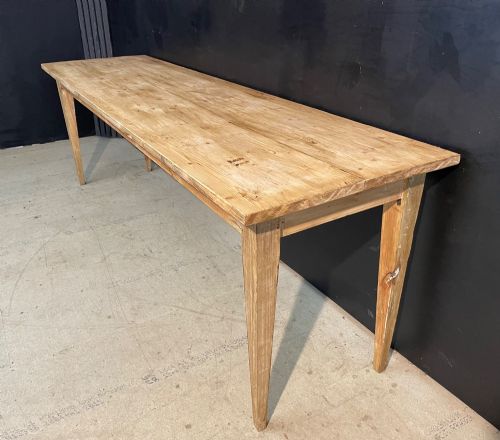
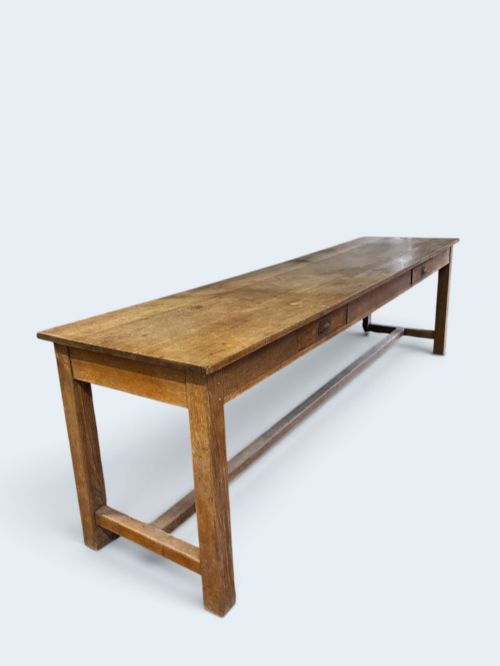
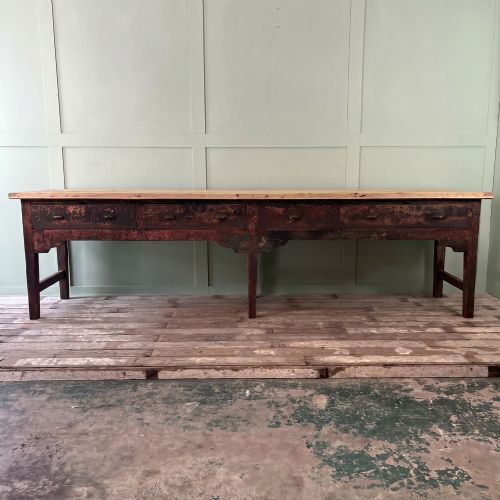
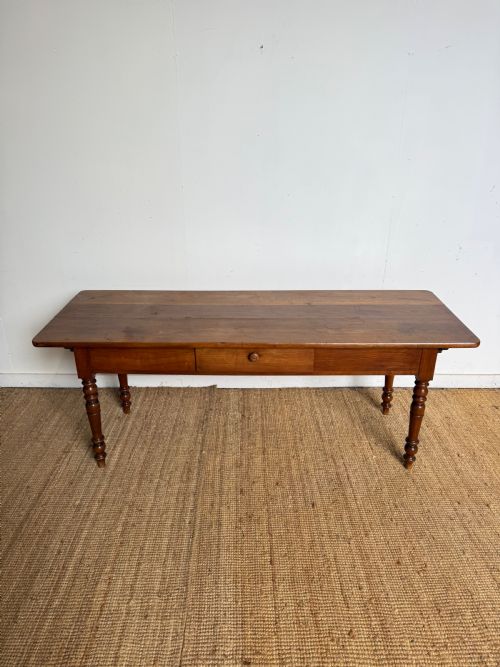


Farmhouse Serving Table
Farmhouse serving table pieces bring honest country utility to a room, offering sturdy timber surfaces built for daily service and gathering.
Farmhouse Serving Table
A farmhouse serving table provides a robust surface rooted in domestic utility, historically serving kitchens, dining halls, and sculleries for food preparation and meal service. These pieces bridge the gap between a standard dining table and a side console, often incorporating drawers or lower potboards for storage.
The versions most commonly met on this page span the nineteenth century, including specific dates like 1810, 1850, 1860, 1880, and 1910. They emerge from various regional traditions such as English Country, French Provincial, and Rustic Farmhouse styles.
Makers shaped these forms from timber suited to hard labour, producing serving tables, console tables, and dining tables with distinct regional proportions. Buyers encounter designs that range from simple painted softwood to substantial hardwood constructions.
How they were made
Craftsmen built these tables primarily using solid timbers like pine, oak, and cherrywood, supplemented by structural iron, brass, and metal hardware. Wood selection dictated the strength of the top boards and the longevity of the legs and stretchers.
Construction techniques focused on utility and endurance, utilising thick tabletops, sturdy aprons, and deep drawers where specified. Potboards and lower shelves were integrated into the framing to support heavy earthenware and provisions off damp flagstone floors.
Object forms span serving tables, console tables, dining tables, and kitchen furniture.
What varies in quality
Quality depends upon the integrity of the timber and the depth of the regional character, separating utilitarian boards from finely proportioned vernacular examples. Hardwoods like oak and cherrywood generally command more attention than basic pine, though well-used softwood surfaces retain their own honest appeal.
The presence of original fitted elements, such as drawers with period brass pulls and integrated pot-shelves, elevates the piece. Proportion and structural honesty dictate the success of the design, ensuring the table looks balanced rather than clumsy.
The Farmhouse Serving Table Glossary
- Potboard
- A lower shelf fitted beneath the main tabletop designed for storing pots and pans. This feature is particularly common in English country furniture.
- Refectory
- A long narrow table traditionally used for communal dining in monastic or large domestic settings. It denotes significant length relative to width.
- Console table
- A table designed to stand against a wall, sometimes sharing proportions with serving tables in narrow spaces. They often feature finished backs or simpler rear legs.
- Vernacular
- Architecture and furniture built by local craftsmen using traditional methods and regional materials. These pieces reflect the specific needs and timber availability of their locale.
- Bleached oak
- Oak timber treated to lighten its natural tone, a finish seen on nineteenth-century examples. This process highlights the grain while softening the overall colour.
Farmhouse Serving Table: Frequently Asked Questions
Where did farmhouse serving tables stand?
These tables traditionally stood against walls in kitchens, dining halls, or passage areas to hold dishes during large meals.
Their narrow profile allowed them to sit out of the way while providing immediate surface area for food service.
How do I use one today?
A farmhouse serving table functions well as a sideboard in a dining room or a console in a hallway.
The lower potboard provides convenient storage for baskets or heavy ceramics.
What woods were used?
Carpenters relied on local hardwoods such as oak and cherrywood alongside softer pine for everyday domestic furniture.
Metal, iron, and brass appeared in hardware fastenings and drawer pulls.
How do I spot regional styles?
French Provincial and French Country examples often feature painted finishes and softer fruitwood timbers like cherrywood.
English Country pieces frequently display exposed oak or pine with practical potboard lower shelves.