
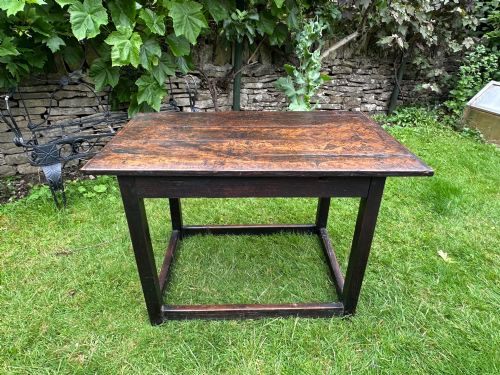
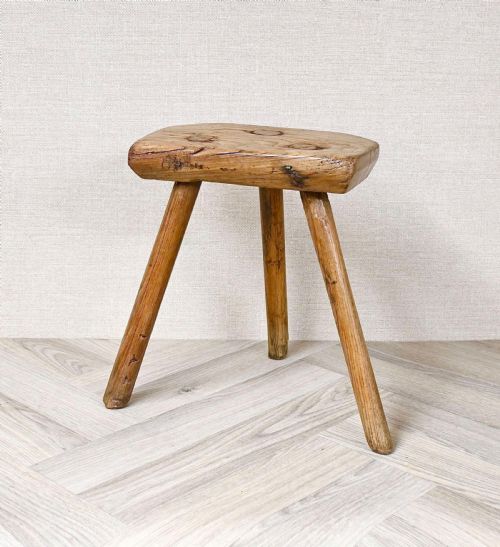


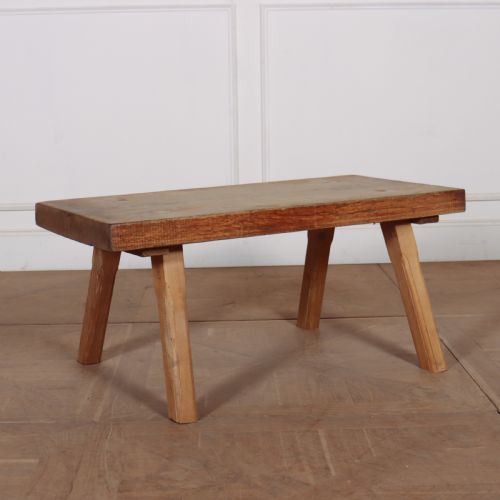

Farmhouse Oak Stools
Farmhouse oak stools bring honest vernacular seating into daily life, offering sturdy construction and tactile timber surfaces shaped by generations of practical use.
Farmhouse Oak Stools
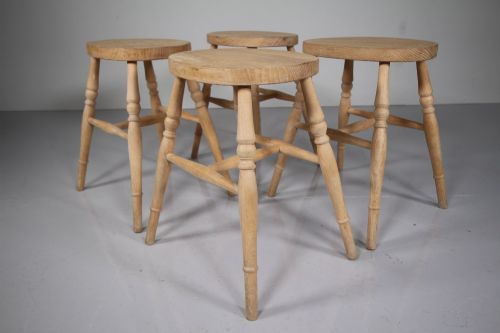
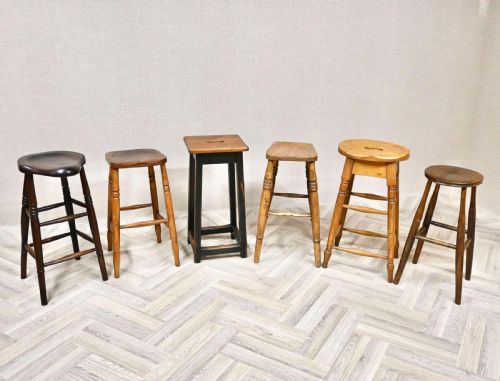
Farmhouse oak stools encompass sturdy utilitarian seating designed for domestic and agricultural tasks across the eighteenth, nineteenth, and early twentieth centuries. When searching for farmhouse oak stools, buyers encounter low country stools, tall bar formats, and primitive milking designs that reflect regional British and European vernacular traditions.
The pieces listed on this page span several distinct periods, most notably the nineteenth century alongside eighteenth-century examples and Edwardian pieces. Formats range from single occasional seats and dining sets to tall bar variants and low rustic seating intended for everyday utility.
Materials and construction
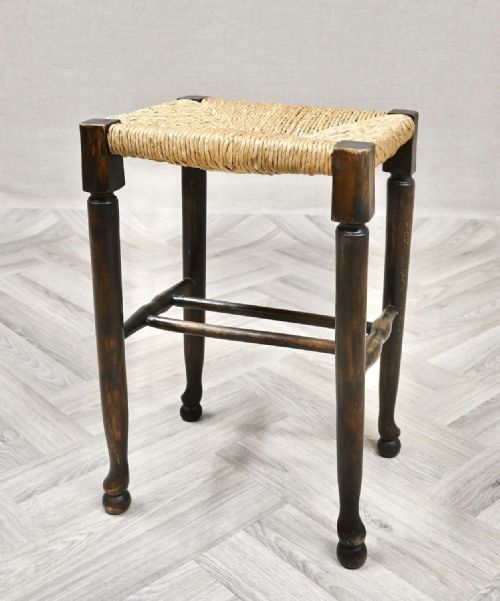
Makers utilised solid timber such as oak, elm, and beech, frequently combining resilient hardwoods for legs and seats to withstand heavy domestic demands. Rush seating also appears, providing a woven surface that complements wooden frames.
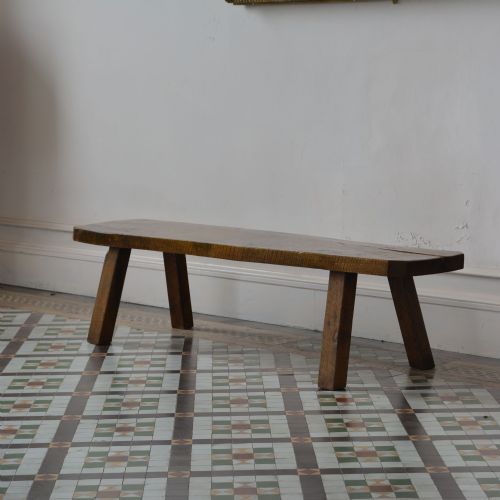
Construction relied on straightforward vernacular techniques, joining plank tops or carved seats directly to turned or splayed legs without superfluous ornamentation. This direct approach produced durable furniture built entirely for function.
Some milking stools were built with a single leg so the milker could strap it on and walk about the cow shed.
Assessing quality
Quality rests in the integrity of the timber and the honesty of the wear, where deep patination from decades of use distinguishes superior survivals from ordinary items. The selection of wood, such as figured oak or well-chosen elm for seats, elevates a piece beyond basic utility.
Proportion and structural balance also separate simpler variants from more considered vernacular design. Strong joints and untouched surfaces carry greater distinction than overly restored examples.
The Farmhouse Oak Stools Glossary
- Vernacular
- Everyday furniture made by local craftsmen for practical use rather than following high-style metropolitan fashions. These pieces rely on regional traditions and readily available local timber.
- Patina
- The surface sheen and softening of colour developed over decades through handling, polishing, and natural ageing. This quality is valued by collectors as a sign of authenticity.
- Primitive
- A description for early, unpretentious items constructed with basic tools and direct methods. Such pieces often display charming irregularities in their shape and joinery.
- Plank top
- A solid wooden top constructed from one or more boards joined edge to edge. This method was standard for heavy tables and benches.
Farmhouse Oak Stools: Frequently Asked Questions
How were farmhouse stools used?
These stools served versatile roles around the home, dairy, and farm, functioning as seating for dining, milking, or reaching high shelves. Their robust build allowed them to be dragged across uneven stone floors without losing stability.
Over time, many transitioned from purely agricultural or kitchen tasks into general domestic seating, valued for their compact footprint and unpretentious character.
How do I live with them?
Integrating these pieces into modern spaces works best when letting their aged timber contrast with clean lines or sit naturally among other rustic textures. They function well as extra seating, bedside surfaces, or simple display stands.
Maintenance requires little beyond occasional cleaning with appropriate wax or oil to nourish the dry wood without obscuring the historic surface character.
How do I tell periods apart?
Eighteenth-century examples often display simpler, heavier plank construction and deeper hand-worn patination shaped by long use. Nineteenth-century and Edwardian pieces frequently incorporate turned legs and slightly more refined joinery while retaining country charm.
Examining tool marks, fastener types, and the depth of the wood's surface grain helps contextualise the era of production.