

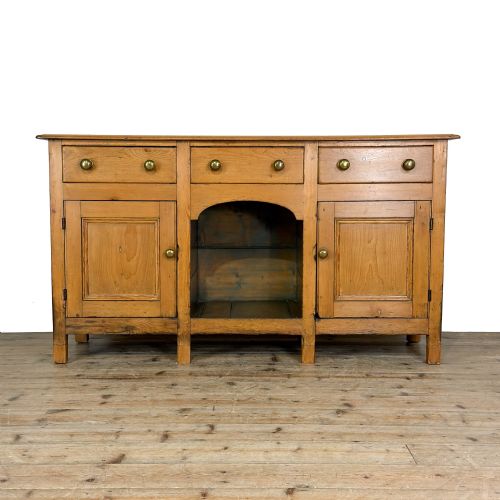
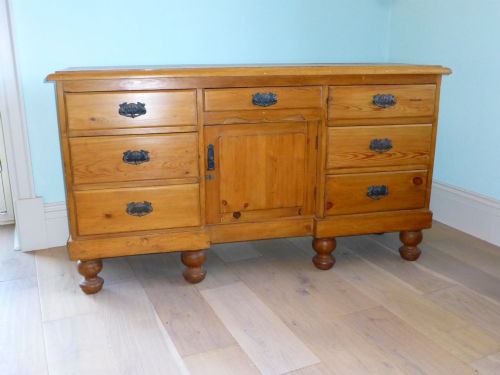
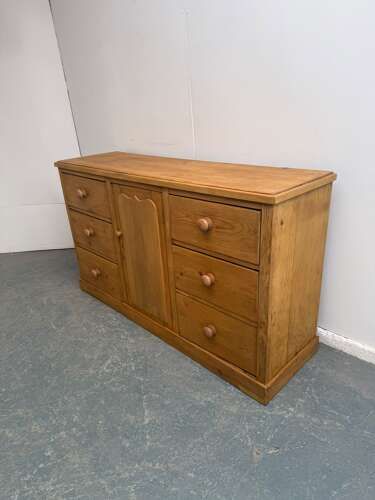


Farmhouse Kitchen Cabinet
These farmhouse kitchen cabinet pieces bring genuine utility and warmth to a room, offering honest storage rooted in centuries of vernacular tradition.
Farmhouse Kitchen Cabinet
A farmhouse kitchen cabinet provides practical storage through robust sideboards, dressers, and cupboards designed for daily domestic service. These utility items range from long Georgian oak Cheshire dresser bases to taller two-part cupboards and painted Alpine pieces.
The pieces seen here span the Georgian and Victorian eras up through the early twentieth century, showing both waxed timber surfaces and original paint finishes. Scottish vernacular and rustic country styles appear frequently alongside more formal Georgian proportions.
Buyers will most commonly encounter solid pine and oak construction configured as dresser bases, sideboards, or multi-tier kitchen dressers. These functional forms reflect the changing storage needs of rural households over successive generations.
Construction and materials
Makers relied primarily on solid pine and oak, selecting timbers for strength and availability rather than ornamental display. Cabinetry construction involved straightforward joinery suited to heavy daily use in busy domestic kitchens.
Surfaces were either left as bare waxed wood or treated with original paint, including traditional folk art decorations seen on Alpine examples. Brass hardware typically provided functional fastening for doors and drawers without excessive decoration.
Farmhouse Kitchen Cabinet Retail Price Guide 2026
Typical asking prices for farmhouse kitchen cabinet among the pieces listed under this phrase on Sellingantiques today, from the lower quarter to the upper quarter. They describe what is for sale here now, not the wider market.
Some Alpine cupboards carry hand-painted folk art motifs, painted by makers who clearly wanted a cheerful kitchen rather than a gloomy one.
Assessing quality and character
Quality rests in the integrity of the original construction and the survival of untouched surfaces, whether aged wax or early paint. Better examples retain their original proportions and structural soundness without heavy timber replacement.
Regional vernacular characteristics distinguish standard utility items from more distinctive pieces like Scottish or Alpine variants. The handling of mouldings, drawer construction, and backboards reveals the competence of the regional maker.
The Farmhouse Kitchen Cabinet Glossary
- Dresser base
- A low sideboard or cabinet featuring drawers and cupboards, historically used for food preparation and storage in the kitchen. It often stood beneath open wall shelves or a plate rack.
- Vernacular
- Architecture and furniture created from local traditions and materials by regional makers, rather than following metropolitan academic styles. These pieces prioritize practical function over fashionable ornament.
- Sideboard
- A long storage unit designed for dining rooms and kitchens to hold tableware and provisions. It typically combines cupboards with a row of drawers along the upper section.
- Folk art
- Decorative work produced within a traditional cultural community, often featuring hand-painted motifs and straightforward construction. Alpine and regional examples demonstrate this vernacular artistic expression.
Farmhouse Kitchen Cabinet: Frequently Asked Questions
What is a farmhouse kitchen cabinet used for?
These cabinets served as the primary storage units for provisions, crockery, and utensils in traditional domestic kitchens. Their sturdy surfaces also provided extra space for food preparation.
Today, they function well in modern kitchens or living areas to store tableware, dry goods, or linens while adding historical character to a room.
How do I date an old pine cupboard?
Dating relies on examining construction methods, timber preparation, and hardware details like hinges and drawer joints. Machine-cut elements generally point towards the later Victorian period or the twentieth century, whereas hand-planed boards suggest earlier origins.
Comparing the piece to documented examples from periods like the Georgian era or the late nineteenth century helps narrow down the decade of manufacture.
Are painted farmhouse cabinets original?
Many pieces survive with their original surface treatments, which can include early layers of paint or traditional wax finishes. Original paint often shows natural wear and patination that reflects decades of domestic use.
Closer inspection of the paint layers reveals whether the colour dates to the period of manufacture or represents a later decorative layer applied during the twentieth century.
How do I care for waxed pine furniture?
Waxed timber requires occasional maintenance with a quality beeswax polish to nourish the wood and maintain its soft lustre. Avoid placing these pieces in direct sunlight or near heat sources that could dry out the pine.
Regular dusting with a dry cloth keeps the surface clean without stripping away the historic patina built up over generations of use.