



Farm Landscape Painting
A farm landscape painting captures the rural working life of past centuries through oil and watercolour, bringing the quiet dignity of the countryside into a modern room.
Farm Landscape Painting
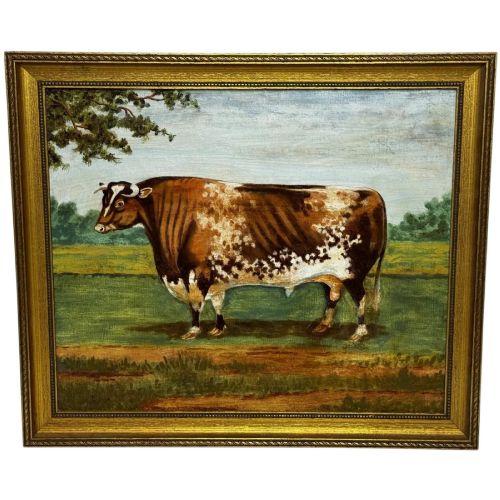
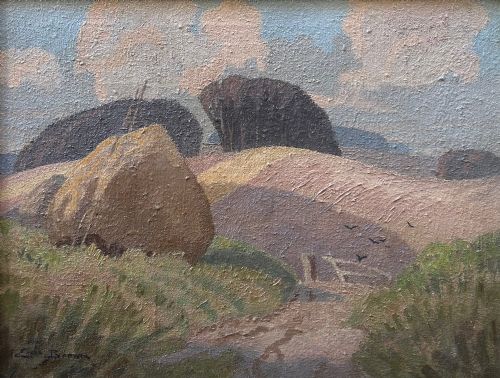
When you search for a farm landscape painting, you encounter works spanning the nineteenth and twentieth centuries, including Victorian pastoral scenes and Edwardian views. These pieces typically depict working farmyards, cattle by streams, hay carts, and laborers resting beneath oak trees.
The subjects range from detailed depictions of prize livestock and poultry to sweeping Yorkshire dales and French provincial farmsteads. Most examples on this page are oil paintings on canvas or board, alongside watercolours on paper capturing rural daily life.
Materials and Technique
Artists relied primarily on oil paint applied to canvas, wood panels, or board, building rich textures for fields, animals, and farm buildings. Watercolours on paper also feature frequently, offering lighter, transparent renderings of rural light and atmosphere.
Framing often plays an integral role, with pieces housed in period ebonised or gilt frames that complement the depth of the pigments. Mixed-media approaches appear occasionally, combining traditional brushwork with supportive mediums on paper.
Farm Landscape Painting Retail Price Guide 2026
Typical asking prices for farm landscape painting among the pieces listed under this phrase on Sellingantiques today, from the lower quarter to the upper quarter. They describe what is for sale here now, not the wider market.
Listings feature works spanning the nineteenth century through the nineteen-fifties, utilising canvas, wood, and paper.
Distinctions in Quality
The distinction between standard works and exceptional examples lies in the precision of draftsmanship, particularly in the rendering of working horses, cattle, and human figures. Masterful brushwork captures the play of light across a harvest field or the distinct texture of animal coats with convincing depth.
Provenance and attribution elevate certain pieces, especially when associated with named artists of the British and continental schools. Compositional balance and the preservation of the original canvas and frame further determine the standing of each painting.
John Frederick Herring Jnr·Herbert Royle·Owen Bowen·Charles Vickers·Franz van Severdonck
The Farm Landscape Painting Glossary
- British Impressionism
- A style of painting that emerged in Britain, focusing on loose brushwork and the accurate depiction of light in outdoor scenes.
- Oil on Canvas
- A traditional painting medium where pigments suspended in oil are applied to stretched fabric, allowing for rich colour blending and durability.
- Watercolour Painting
- Artwork created using water-soluble pigments on paper, valued for its luminous washes and delicate transparency.
- Provenance
- The documented history of ownership of an artwork, helping to establish its authenticity and origin.
- Gilt
- A thin layer of gold leaf applied to frame surfaces to provide a decorative, reflective finish.
Farm Landscape Painting: Frequently Asked Questions
What subjects appear most often?
These works focus primarily on rural scenes, featuring farmyards, horses, cattle, sheep, and agricultural laborers at work.
Views frequently incorporate hay carts, farmstead buildings, and rivers running through Yorkshire or continental countryside settings.
How do I date these paintings?
Dating relies on stylistic clues, framing methods, and artist signatures recorded alongside the piece.
Victorian and Edwardian works often display specific costume details and brushwork conventions characteristic of their decade of creation.
Are these works painted on canvas?
Many examples utilise oil paint on canvas or wooden boards, while others consist of watercolours on paper.
Support materials varied according to the artist's preference and whether the painting was executed outdoors or inside a studio.
How do I care for an oil painting?
Keep the artwork away from direct sunlight and fluctuating humidity levels to protect the canvas and pigments.
Dust the surface gently with a soft, dry brush and avoid using liquid cleaners on either the paint or the frame.