

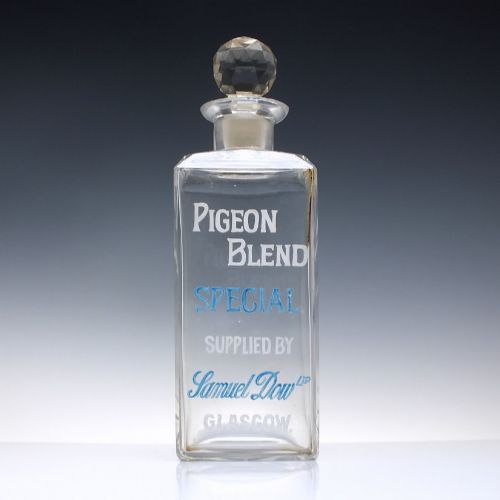
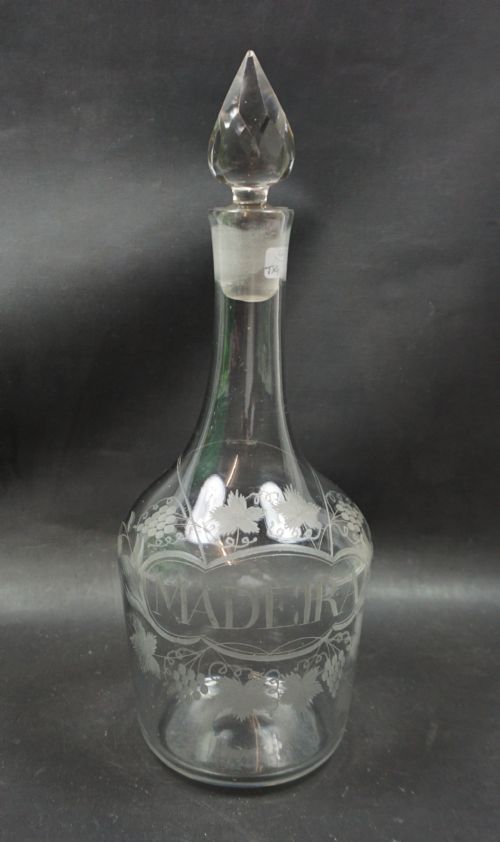

Faceted Glass Bottle
A faceted glass bottle offers a brilliant interplay of light and heavy material, spanning centuries of functional design from the Georgian era onward.
Faceted Glass Bottle
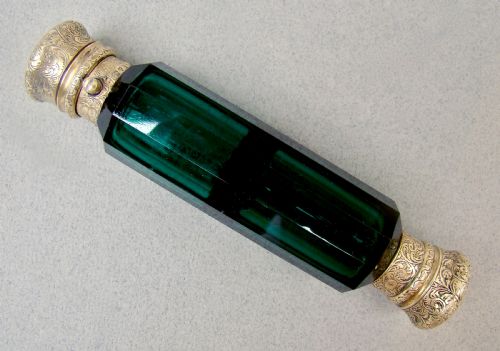
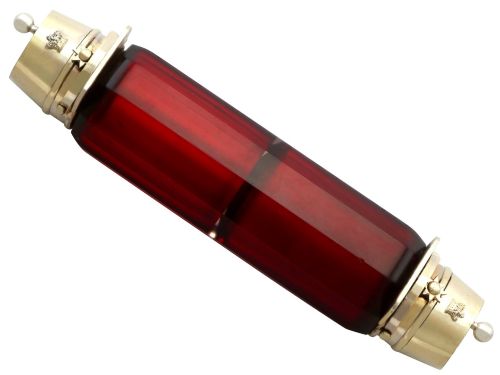
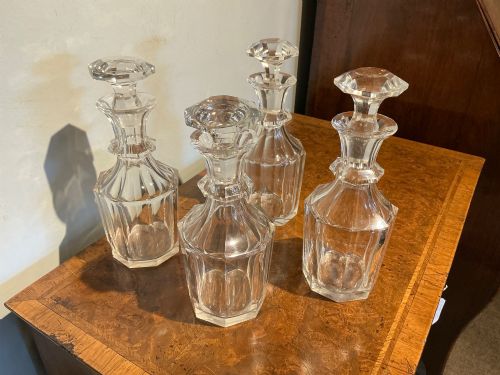
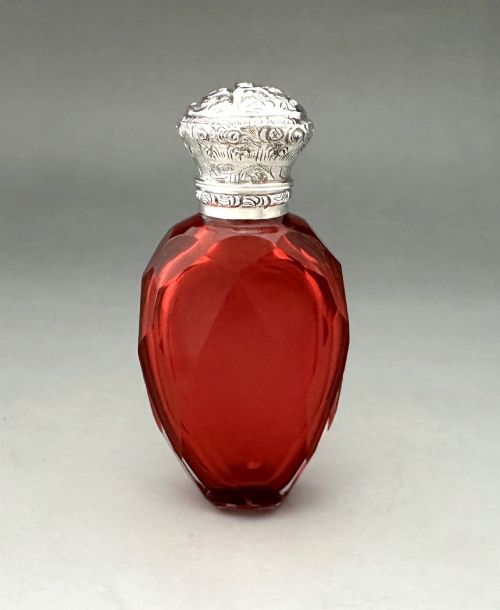
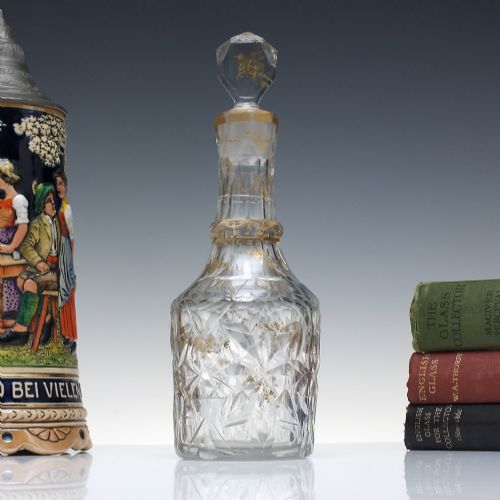
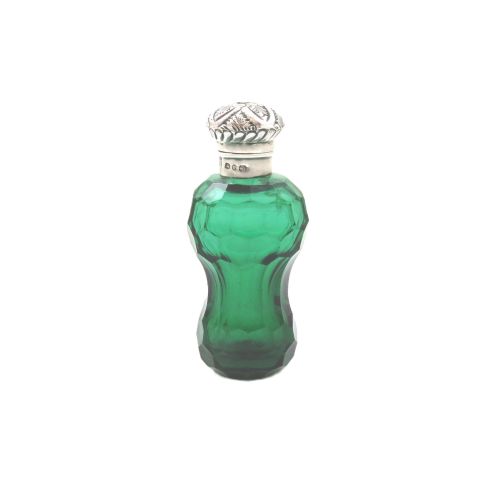
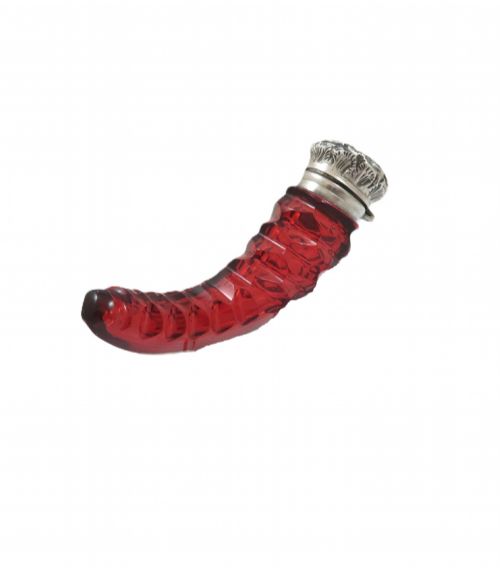
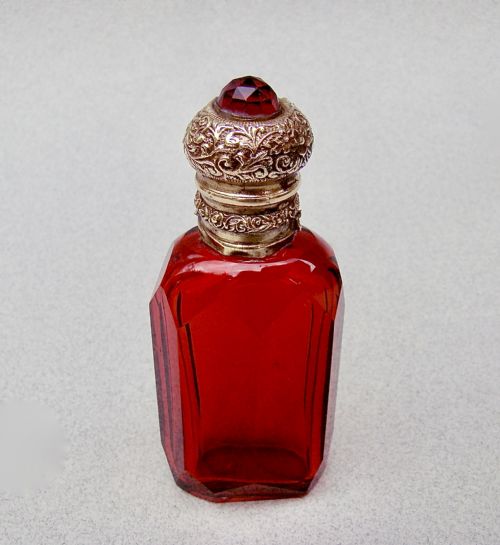
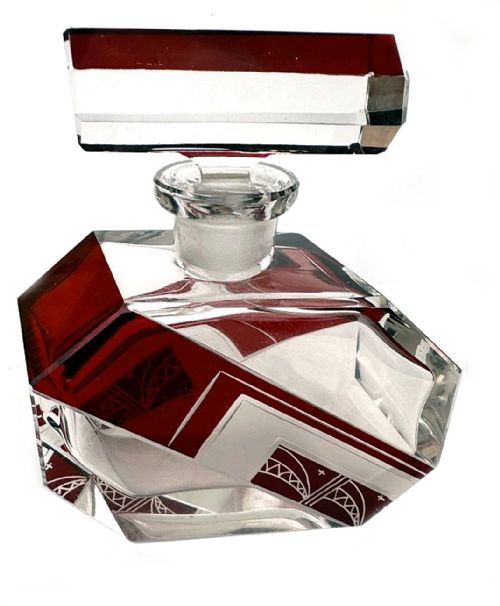
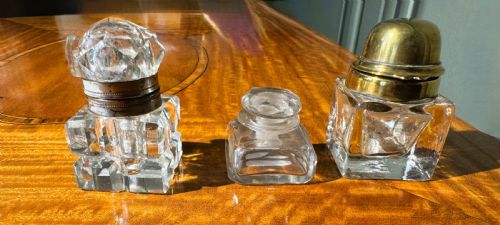
A faceted glass bottle encompasses practical containers designed for liquids, most commonly taking the form of decanters, scent bottles, perfume bottles, and inkwells. These items appear across multiple periods, with strong representation from the Victorian and Edwardian eras, alongside Georgian and Art Deco examples.
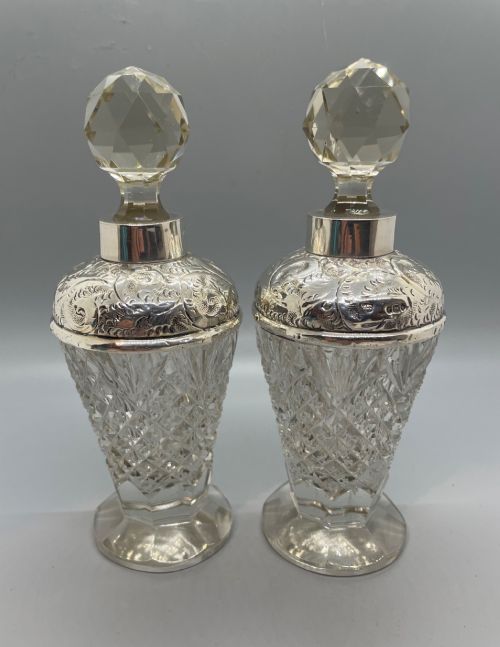
The objects serve varied domestic functions, from holding spirits like whisky and liqueur to housing perfumes or writing fluids. Buyers searching for a faceted glass bottle will frequently encounter coloured glass vessels paired with sterling silver collars, mounts, or ormolu details.
How they were made
Makers shaped these pieces using glass, cut glass, crystal, and lead crystal, often incorporating vibrant hues such as ruby, cranberry, green, amethyst, and blue alongside clear glass. The manufacturing process relies on cutting facets into the body of the vessel to catch and refract light.
Many examples integrate metalwork components, securing sterling silver collars, mounts, or ormolu casings around the glass necks and stoppers. Specific pieces receive surface decoration through gilding or enamel work applied by notable studios.
Listings feature items spanning the Georgian, Victorian, Edwardian, and Art Deco periods, created in clear and coloured glass.
What varies in quality
The precision and crispness of the facet cutting dictate the visual sharpness of the vessel, separating standard production from finer workmanship. Heavier lead crystal and deeply polished surfaces contribute to a more substantial weight and superior light refraction.
The integration of precious metal mounts also differentiates the tier of the piece, where hallmarked sterling silver or detailed ormolu and enamel work elevate the standard of the hardware accompanying the glass.
James Giles·Karl Palda·Rudolf Hlousek
The Faceted Glass Bottle Glossary
- Decanter
- A vessel used for holding and serving liquids, typically wine or spirits. These objects often feature heavy stoppers and cut glass bodies.
- Scent bottle
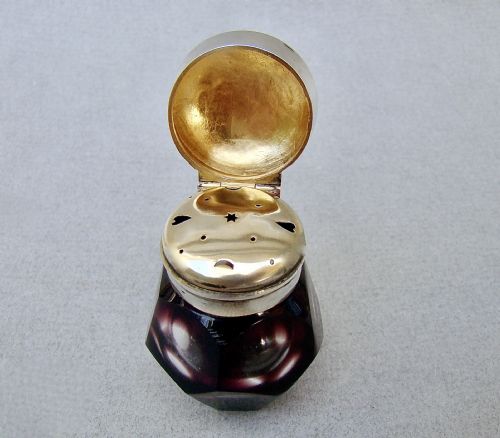
- A small container designed to hold liquid perfume or salts. They frequently incorporate precious metal screw caps or hinged lids.
- Ormolu
- Gilded bronze used widely for decorative mounts on nineteenth-century glassware. It provides a rich metallic contrast to coloured glass bodies.
- Lead crystal
- A type of glass containing lead oxide that increases clarity and weight. This material allows for deeper and sharper facet cutting.
Faceted Glass Bottle: Frequently Asked Questions
How do I date a faceted glass bottle?
Dating relies heavily on the style of the glass cutting, the colour palette, and associated metal components like silver hallmarks.
Victorian and Edwardian pieces often feature saturated colours paired with sterling silver mounts, whereas Georgian examples tend toward clear lead crystal with distinct form proportions.
Were these bottles used for perfume or alcohol?
Both functions remain common among these items, depending entirely on the scale and proportions of the specific vessel.
Smaller vessels with tight stoppers generally served as scent or perfume bottles, while larger containers functioned as whisky, liqueur, or wine decanters.
How should I clean my glass bottle?
Maintenance requires gentle washing with warm water and mild soap to protect the delicate surfaces and any historic metal collars.
Harsh scrubbing should be avoided, particularly on pieces featuring surface gilding or enamel work that can wear away over time.
What is the difference between cut glass and crystal?
Crystal contains lead oxide which adds significant weight and enhances the refractive index of the material.
Cut glass encompasses a broader category of vessels shaped by grinding facets, though lead crystal yields sharper edges and greater brilliance.