



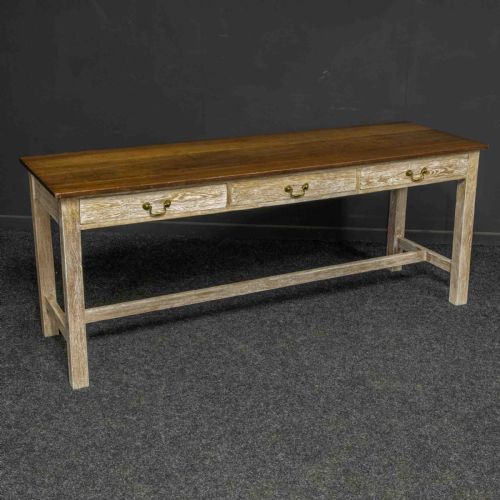

Extra Long Table
An extra long table seats large gatherings comfortably, offering substantial timber surfaces from the nineteenth and early twentieth centuries.
Extra Long Table
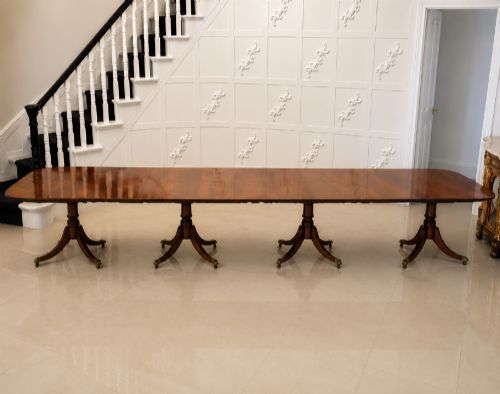
An extra long table provides expansive seating for large dining rooms, boardrooms, and country kitchens. Buyers searching for an extra long table frequently encounter grand banquet designs, refectory pieces, and communal harvest styles.
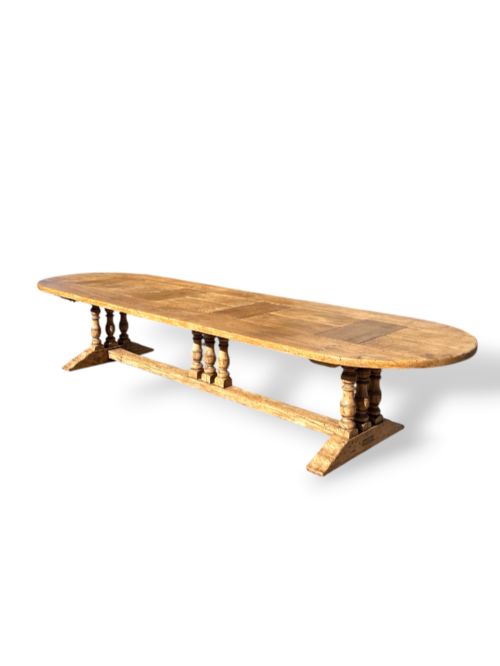
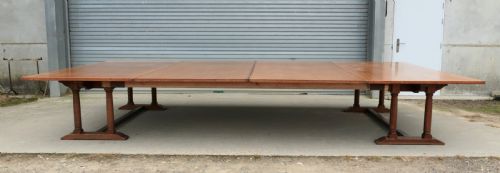
The pieces on this page span the nineteenth century and the early twentieth century, drawing on French country, rustic farmhouse, Grand Regency, and Arts and Crafts traditions. Oak, pine, and cherrywood dominate the forms, offering generous proportions for extended seating.
Dining tables and trestle forms appear alongside benches and occasional console pieces. Buyers most commonly meet heavy timber constructions designed for communal dining and large-scale hospitality.
Construction and materials
Makers utilised heavy domestic and continental hardwoods, predominantly solid oak and cherrywood, alongside durable pine for large-scale surfaces. Timber boards were selected for their ability to span immense lengths without losing structural integrity under daily use.
Joinery techniques relied on sturdy trestle frames, multi-pedestal supports, and robust framing to stabilise tables measuring up to several metres in length. Surfaces frequently show the natural grain of the wood, sometimes finished with traditional polish or left in a simpler waxed state.
Assessing quality and proportion
Quality in an extended dining piece rests upon the stability of the central supports and the thickness of the top boards. Tables with multiple pedestals or sturdy trestle bases distribute weight evenly across expansive lengths.
The selection of timber grain and the integrity of historical joints distinguish robust regional pieces from standard utilitarian builds. Original timber patination and honest signs of age add character without compromising the structural balance of the frame.
The Extra Long Table Glossary
- Banquet table
- A large dining table designed to accommodate numerous guests, often constructed with multiple pedestals or removable leaves. These pieces are typically found in formal dining halls and large country houses.
- Refectory table
- A long, narrow dining table historically used in monasteries and communal halls. They feature sturdy linear legs connected by substantial stretchers for added rigidity.
- Trestle table
- A table consisting of two or more support frames connected by a horizontal beam over which the top rests. This design allows for maximum legroom along the length of the surface.
- Harvest table
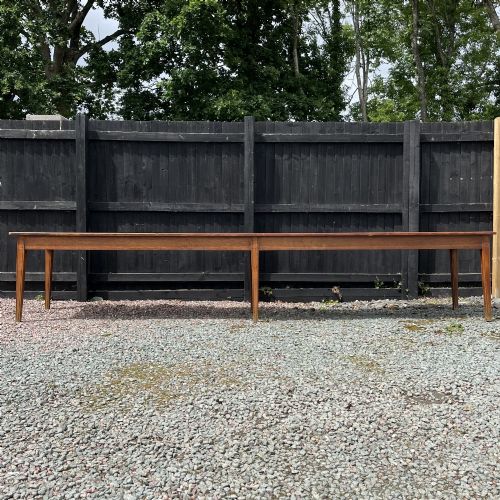
- A utilitarian wooden table traditionally used for seasonal communal meals and farm labour. They generally feature simple rectangular tops supported by straightforward wooden legs.
- Pedestal base
- A central column or cluster of columns supporting a table top rather than standard corner legs. This configuration aids seating arrangements around large furniture.
Extra Long Table: Frequently Asked Questions
How many people do these tables seat?
These pieces accommodate large groups comfortably, with lengths often exceeding three or four metres. Many examples seat upwards of twelve to thirty guests depending on the specific design.
Buyers should measure their dining space carefully, allowing ample clearance around the perimeter for chairs and movement.
What rooms suit an extra long table?
Expansive dining rooms, open-plan kitchens, and large boardroom settings provide ideal environments for these substantial pieces. Their generous proportions anchor a large room effectively.
Placing such furniture in smaller spaces can overwhelm the floor plan, so verifying room dimensions before purchase remains essential.
How do I care for antique wood surfaces?
Maintain timber surfaces by dusting regularly with a soft, dry cloth and applying natural beeswax periodically to nourish the grain. Avoid placing hot items or liquids directly onto untreated wood to prevent marking.
Consistent indoor humidity levels help protect old timber from warping or splitting over time.
Are these tables sturdy enough for daily use?
Solid hardwood construction in oak, pine, and cherrywood provides exceptional durability for everyday dining and gatherings. Their original purpose demanded robust framing that withstands regular activity.
Checking the central stretchers and leg joints ensures the structure remains stable under frequent loads.